











We also considered 10 others:


Our Top Choice
Compare Features


The order above is not editorial opinion, and it is not paid placement. It comes from what shoppers across our network actually do - which stainless cookware they compare, and which they ultimately buy. We re-rank as new data comes in, so the long-term favorites have to keep earning their spot against new entrants. The full method, including how we make money.
Stainless Cookware Buyer's Guide
Stainless cookware is the long-life, high-heat alternative to coated pans, but it asks more from the buyer and the cook. The sharpest tradeoffs are construction and technique: a well-built clad pan can sear and last for years, while a thin or poorly used one can stick, stain, or warp.
Quality
You’ll notice quality in how the cookware feels in your hand: solid construction, smooth finishes, secure handles, and materials that seem built to withstand daily heating, washing, and movement on the stove. Look for pieces that feel balanced and well-finished, and watch out for flimsy walls, rough edges, loose fittings, or coatings that seem thin or easily scratched.
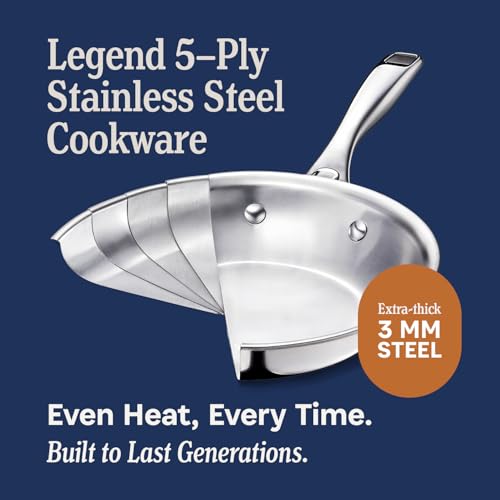
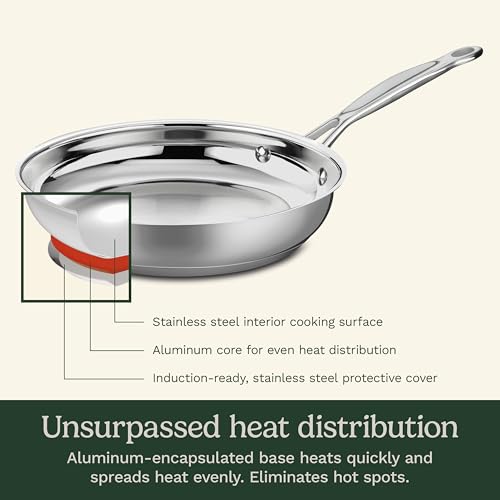
Look first at construction, not piece count: for stainless cookware, fully clad tri-ply or 5-ply bodies are usually better for skillets, sauté pans, and sauciers because heat runs up the walls, while disc-bottom pots can be fine for boiling but may scorch around the edges during thicker sauces. Check for a flat magnetic base if you use induction, comfortable riveted or welded handles, tight lids, smooth rims, and enough weight to resist warping without becoming awkward to lift when full. Owner feedback supports this focus: the most-praised sets are described as solid, polished, professional-feeling, heavy-duty, and a clear step up from cheaper starter cookware.
Cleaning
Cleaning matters because cookware that releases food easily and resists staining is more pleasant to use day after day. Look for smooth, nonporous interiors, rivets and seams that don’t trap residue, and care instructions that match how you actually cook and wash up. Be cautious with surfaces that discolor easily, need special scrubbing, or lose their easy-clean qualities if overheated or cleaned with the wrong tools.
Buy stainless only if you are willing to clean it like stainless: expect water spots, rainbow heat tint, and occasional browned residue, and make sure you are comfortable using soaking, a non-scratch scrubber, and stainless-safe cleaners rather than relying on the dishwasher alone. Prefer pans with smooth interiors, accessible rivets or welded handles, and no unnecessary crevices; avoid bleach, chloride-heavy cleaners, and shocking a hot pan under cold water. Owners often say cleanup is easy when pans are preheated, cooled before washing, briefly soaked, and dried, but they also flag sticking, water marks, and iridescent discoloration as the main surprises for people new to stainless.
Cooking
Cooking performance matters because a set should help you get consistent results across everyday tasks like searing, sautéing, simmering, and boiling. Look for pieces that heat evenly, respond predictably to temperature changes, and feel practical to use on your cooktop; watch out for cookware that scorches easily, has hot spots, or requires fussy handling to deliver good results.
For cooking performance, match the pan build to the task: fully clad skillets and sauté pans are better for searing, browning, pan sauces, and even edge-to-edge cooking, while heavier stockpots are useful for heat retention but can feel sluggish. Stainless usually performs best on medium or medium-low once preheated, so avoid judging it by high-heat habits learned from thinner pans; also check oven and broiler limits, lid fit, handle comfort, and induction compatibility if relevant. Owner sentiment strongly backs even heating, fast response, strong heat retention, good searing, and reliable results without hot spots, especially when cooks avoid excessive burner settings.
Durability
You want a cookware set that can handle daily cooking without warping, scratching easily, or developing loose, wobbly handles. Look for durable materials, sturdy construction, scratch-resistant interiors or surfaces suited to your utensils, and securely riveted or welded handles. Watch out for thin pans, delicate coatings, or handle designs that feel flimsy, especially if you cook often or use high heat.
Durability depends on flatness, thickness, handle attachment, and lid material more than on a shiny finish: inspect for a base that sits dead flat, substantial sidewalls, secure rivets or welds, and metal lids if you want fewer breakage concerns than glass. If long life is your priority, be cautious with hybrid or coated interiors marketed alongside stainless, because any coating can become the limiting wear item; also avoid very thin pans that may bow on high heat or induction. Owners commonly praise solid tri-ply and 5-ply pieces as long-haul daily cookware that keeps a polished look, but some reports of bowed or wobbling bottoms show why warp resistance matters.
Value
Value matters because a cookware set should give you the performance, durability, and useful pieces you’ll actually use without making you pay for filler. Look for even heating, sturdy construction, comfortable handles, and lids or pan sizes that match your cooking habits, not just a high piece count. Watch out for sets that seem like good value for money but include many small or redundant items while cutting corners on the core pots and pans.
Evaluate value by the useful pieces and construction you actually get: a good stainless set should include workhorse sizes such as a large skillet, medium saucepan, sauté pan, and stockpot, not just lots of small or duplicate pieces counted with lids. Paying for fully clad pans where heat control matters can be smarter than buying a larger set of thin pieces, while a disc-bottom stockpot may be acceptable if it frees budget for a better skillet. Owner feedback supports stainless as a strong value when it feels sturdy, polished, and premium for the spend, but the best buy is still the set whose pieces fit your cooking habits rather than the one with the highest item count.
Nonstick
A good nonstick surface helps food release cleanly, so you can cook delicate items like eggs, fish, and pancakes with less frustration and less oil. Look for cookware that releases food evenly across the whole pan, not just in the center, and watch for reviews noting that stickiness develops after regular use or cleaning.
Do not expect bare stainless to be truly nonstick: for eggs, fish, tofu, and delicate foods, you need proper preheating, enough fat, patience before flipping, and sometimes a separate coated pan if effortless release is your priority. If choosing hybrid or coated stainless for easier release, verify whether the surface has nonstick care limits, utensil restrictions, maximum heat limits, or a shorter expected lifespan than plain stainless. Owner reports line up with this split: coated or hybrid surfaces are praised for easy release and quick cleanup, while bare stainless release is described as technique-dependent, with sticking most common when food is moved too soon or the pan is used like a conventional nonstick pan.
1,000,000+ shoppers use Buyer's Guide every week to find the best products and services online.

Helping millions of users make smarter purchases online.


