











We also considered 10 others:


Our Top Choice
Compare Features


The order above is not editorial opinion, and it is not paid placement. It comes from what shoppers across our network actually do - which solar power banks for camping they compare, and which they ultimately buy. We re-rank as new data comes in, so the long-term favorites have to keep earning their spot against new entrants. The full method, including how we make money.
Solar Power Banks for Camping Buyer's Guide
For camping, the key tradeoff is between carryable weight and enough real watt-hours to survive cloudy solar days, cold nights, and multiple devices after sunset. The sharpest checks are whether the unit can actually run your essential loads—especially CPAPs, fridges, fans, lights, and phones—and whether its solar input, ports, and weather durability match how you camp rather than how it performs on a sunny patio.
Reliability
You want a portable generator that feels dependable under real load, not just one that looks good on a spec sheet. Look for sturdy build quality, clean assembly, protected outlets and controls, effective airflow, and a reputation for running consistently during extended use. Be cautious of flimsy frames, poor ventilation, hard-starting engines, or reports of unstable power, since those can turn backup power into another problem.
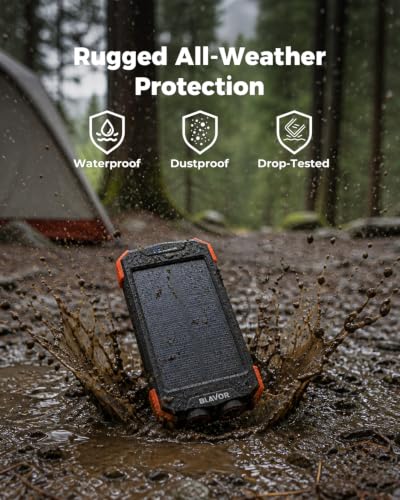
Prioritize a camping solar power bank with protected ports, a rugged casing, clear battery/status indicators, and enough reserve capacity that one missed solar day does not leave you without navigation, lighting, medical-device, or communication power. For overnight essentials, also check whether it can deliver stable output continuously and whether AC output is clean enough for sensitive electronics; avoid vague output claims if you need CPAP, networking, laptop, or fridge support. Owner feedback supports this focus: buyers consistently describe well-built units as dependable for camping, road trips, docks, outages, and emergency backup, with successful use on phones, laptops, CPAP machines, mattress pumps, and portable fridge/freezers.
Power
You need enough power output to handle the appliances, tools, or devices you plan to run, including the higher starting watts many motors require. Look for a generator with appropriate running and surge capacity, stable power quality for sensitive electronics, and built-in protections that reduce the risk of overloads or unsafe delivery. Be careful not to size it only by peak wattage—your real-world backup needs depend on what you will run at the same time.
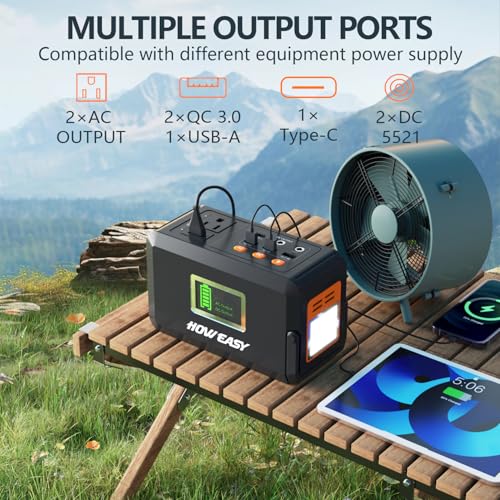
Match power by watts first, then watt-hours: phones and lights can use small USB banks, but CPAPs, laptops, fans, pumps, and compressor coolers usually need a power station with adequate continuous wattage, surge headroom, and the right AC/DC/USB-C ports. If you camp with medical devices or electronics with motors, look for pure sine wave AC, enough startup surge capacity, and the ability to run the load for the full night without dipping into unsafe reserve. Owners most often praise these units when used for small-to-moderate essentials—phones, tablets, laptops, lights, fans, CPAPs, pumps, and smaller outage needs—while the sentiment points away from expecting compact models to handle large appliances.
Battery
Battery life and charging performance determine how long you can keep essentials running when fuel is unavailable, noise is a concern, or you need backup power between generator uses. Look for realistic runtime at the loads you expect to power, plus practical charging capability such as fast wall charging, solar input, or car charging if you’ll be off-grid. Watch out for vague battery backup claims that don’t state the watt-hours, recharge time, or what devices were used to measure runtime.
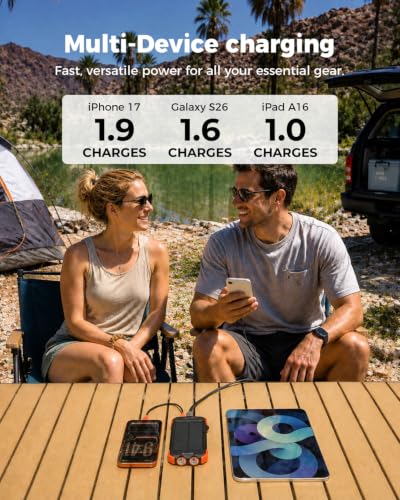
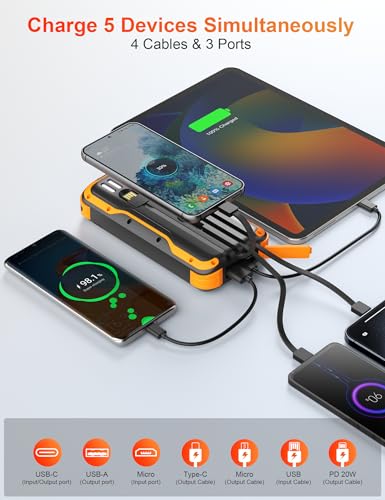
Judge the battery by usable watt-hours, cycle life, recharge speed, and solar-input limits, not just a large mAh number; for camping, confirm how many full phone charges or overnight CPAP hours you get after inverter losses. Look for USB-C input/output for fast top-ups, MPPT or clearly specified solar charging, compatible panel voltage/amperage, and safe battery chemistry if you will store it in a vehicle or tent; avoid relying on solar alone unless the panel wattage and weather window can realistically refill it. Owner reports back up these priorities, with strong praise for units that recharge from wall, car, and solar sources, support built-in cables or high-watt USB-C, and last through extended camping use.
Portability
Portability matters because a generator that is too heavy or bulky can be difficult to move, load, store, or position safely when you need it. Look at the unit’s weight, overall size, handle design, wheels, and balance, and consider whether one person can realistically move it over the surfaces you expect. Watch for compact models that save space but may trade off fuel capacity, runtime, or power output.
Choose the smallest form that meets your load: backpacking usually favors a lightweight USB power bank plus a foldable panel, while car camping can justify a heavier power station for AC outlets and overnight gear. Check handle design, packed shape, cable storage, panel foldability, and whether the unit can sit safely off wet ground or hang a panel in sun while the battery stays shaded; avoid bulky emergency-style units if you need to move it between tent, picnic table, vehicle, and trail. Owner sentiment aligns with this: buyers repeatedly value slim, compact, lightweight designs for camping, hunting, travel, tents, backpacks, and tool bags, and they appreciate fold-up solar designs that can be hung in sunlight.
Value
Portable generators can vary widely in cost once you factor in power output, fuel use, runtime, noise, build quality, and included features, so the best value is not always the cheapest option. Look for a generator that reliably covers your essential power needs without making you pay for capacity or extras you will rarely use, and watch out for low upfront prices that may come with shorter runtimes, flimsy components, or limited support.
Good value in this niche means paying for usable camping capability, not headline capacity: compare watt-hours you can actually use, outlet mix, solar-panel compatibility or inclusion, battery chemistry, warranty support, and whether it replaces disposable batteries, lantern cells, or a noisy generator for your trips. Avoid overbuying a large station if you only need phones and lights, but do not underbuy if you need AC output for CPAP, a cooler, or laptop work over multiple nights. Owners tend to view bundles with useful outlet mixes, included panels, durable construction, LiFePO4 batteries, compact high-capacity designs, and versatile AC/USB charging as strong value for camping and outage backup.
Ease
You’ll appreciate a portable generator that’s easy to set up, starts reliably, and has clear controls when power is out or you’re working away from an outlet. Look for simple starting options, intuitive gauges and outlets, accessible fuel and oil fill points, and features like remote start or connectivity if you want to operate it from a distance. Watch out for heavy, awkward designs or confusing control panels that can make day-to-day use more frustrating than the power is worth.
For camp use, favor controls you can operate in the dark or with cold hands: a readable screen, simple power buttons for each output group, clear input/output watt readings, and obvious state-of-charge information are more important than complicated app-only controls. Also check whether setup is quick for panels and cables, whether pass-through charging is supported safely, and whether the unit remembers settings or shuts off low-draw devices like headlamps or trickle chargers. Owner feedback supports this emphasis, with buyers praising units that have readable displays, simple menus, useful ports, straightforward campsite operation, and easy pack-up or storage systems.
1,000,000+ shoppers use Buyer's Guide every week to find the best products and services online.

Helping millions of users make smarter purchases online.


