



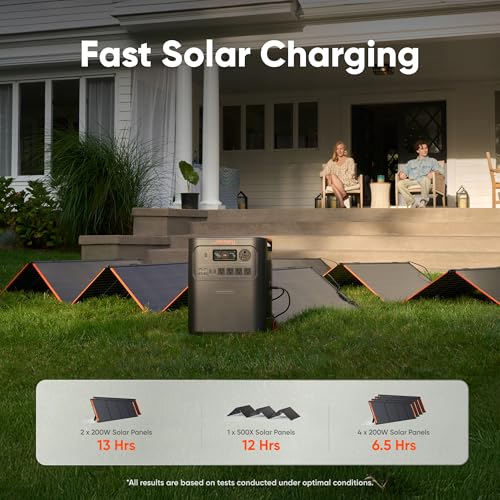


Our Top Choice
Why These Features Matter:
Portable generators are one of those purchases that feel slightly paranoid right up until the night your lights flicker, your phone is at 6%, and you realize your fridge is basically a very expensive cooler. The tricky part is that “portable generator” can mean anything from a whispery little box that keeps your Wi‑Fi alive to a loud, stubborn machine that can run half your house and also make your neighbors learn new facts about you.
Most people don’t need maximum power. They need predictable power, a setup they’ll actually use when they’re tired and it’s raining sideways, and something that won’t make the backyard feel like an airport tarmac. The right features are less about bragging rights and more about: can you move it, store it, start it, and live with it?
Noise: The Feature You’ll Care About After 10 Minutes
On paper, noise is a number. In real life, it’s whether you can hear the news inside without shouting, whether your baby stays asleep, and whether you feel mildly ashamed running it during a blackout while everyone else is standing on porches listening to the silence.
- What to look for: “Inverter” style generators (or inverter modes) tend to sound more like a steady hum than an angry lawnmower. They also ramp up and down instead of blasting at full volume constantly.
- Real-life tell: If owners describe it as “conversation-level” or say they can run it overnight without wanting to move to a hotel, pay attention.
- Small annoyance: Some of the quieter units have fans that whine in a higher pitch — less loud, more… mosquito-adjacent. Not everyone notices, but once you do, you can’t un-hear it.
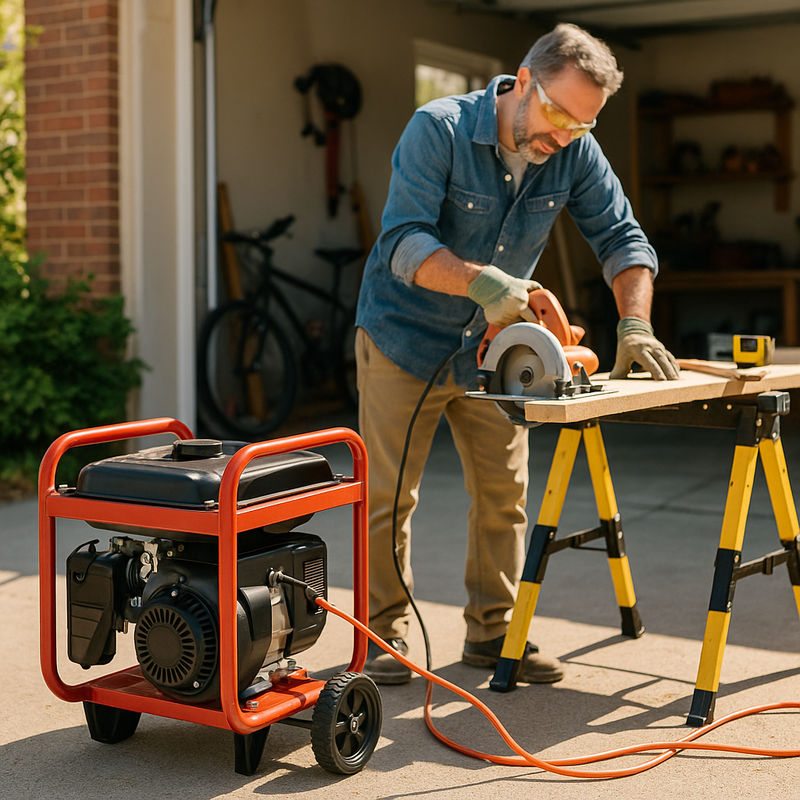
Weight & Wheels: “Portable” Is a Personality, Not a Promise
Portable generators have a funny way of being portable only for the person in the family who also carries all the luggage in one trip. The difference between “I can roll this out” and “I need a neighbor and a prayer” comes down to wheels, handle design, and how the weight is distributed.
- What to look for: A telescoping suitcase-style handle and real wheels (not the tiny hard-plastic kind that hate gravel).
- Apartment/basement reality: If you have stairs, measure your emotional tolerance now. Even a “compact” generator is still an awkward box you have to grip with purpose.
- Honest caveat: Big wheels are great until you try to store the thing and discover the handle sticks out just enough to block the shelf you swear used to fit everything.
Starting It: You Want Easy, Not Heroic
In an outage, you’re not in a DIY mood. You want the generator to start like a well-trained dog: immediately, reliably, and without drama.
- What to look for: Push-button or electric start is the quality-of-life upgrade people become evangelical about. Remote start can be genuinely useful if the unit lives outside under a cover.
- Cold-weather note: If you live somewhere winter behaves like a grudge, check owner reviews for cold starts. Some units get stubborn when temperatures drop.
- Small annoyance: Electric start often means a battery you have to maintain. Neglect it for a year, and suddenly you’re back to yanking a recoil cord like you’re auditioning for a ruggedness commercial.
Fuel Choices: Gas Is Familiar; Dual-Fuel Is Sanity Insurance
Gasoline is easy to find — until it isn’t. And gas stored “just in case” has a habit of turning into a science project. Dual-fuel models (gas + propane) tend to feel more forgiving for real households because propane stores cleanly and doesn’t go stale.
- What to look for: Dual-fuel capability if you’re planning for storms or longer outages. Propane can be less messy and less smelly.
- Daily-life detail: Gas cans are never as leak-proof as they promise, and the smell has a way of clinging to garages, sheds, and your hands.
- Honest caveat: Propane setups can be slightly fussier — you’re managing tanks, checking connections, and finding a place to store a metal cylinder that looks like it belongs behind a restaurant.
Power Output: Think in Appliances, Not Numbers
People get distracted by big wattage claims. What matters is what you actually want running at the same time. Most households are trying to cover: refrigerator, a few lights, phone charging, maybe Wi‑Fi, and possibly a space heater or window AC depending on the season. That’s a very different lifestyle than “run the whole house like nothing happened.”
- What to look for: Enough capacity to handle startup surges (fridges and pumps can be dramatic at the moment they kick on) without tripping everything.
- Smart guidance: Make a short list now of your “must-run” items. Then add one comfort item you’ll be grateful for at 2 a.m. (a fan in summer, a lamp in winter). Shop for that list, not for your ego.
- Honest caveat: Higher output often means more weight, more noise, and more fuel use. Power is never free; it’s just paid for in different annoyances.
Outlets & Layout: The Stuff That Will Make You Curse
Outlet selection is the part you’ll ignore until you’re outside in the dark, holding two cords that don’t fit, wondering how you’ve become this person. Good outlet layout is quietly life-changing; bad layout is a tangle of adapters and regret.
- What to look for: A mix of standard household outlets plus a higher-capacity option if you ever plan to connect a transfer switch or power bigger appliances. USB ports are nice for keeping phones from monopolizing the good outlets.
- Real-life detail: Some generators place outlets so close together that bulky plugs fight like siblings in the back seat.
- Honest caveat: Covered outlets can be great for weather resistance and terrible when the covers are stiff enough to require two hands and an oath.
Run Time & Fuel Efficiency: The Sleep Factor
Run time is less about spreadsheets and more about whether you can get through the night without setting an alarm to refuel like you’re caring for a needy mechanical pet.
- What to look for: Longer run time at a modest load. Efficiency matters most if outages in your area tend to stretch from “annoying evening” to “new way of life.”
- Nice-to-have: Eco modes that throttle down when demand is low — especially if you’re mainly powering small electronics overnight.
- Honest caveat: Some efficiency modes can make power delivery feel slightly less steady for sensitive devices. If people report finicky behavior with laptops, routers, or medical devices, take that seriously.
Safety & Indoor Reality: Carbon Monoxide Isn’t a Vibe
This is the part where the editor voice gets stern: generators need ventilation. Not “cracked garage door” ventilation — outside. Carbon monoxide is odorless, fast, and deeply uninterested in your good intentions.
- What to look for: Carbon monoxide shutoff features and clear placement guidance. They don’t replace common sense, but they add a layer of protection when you’re exhausted.
- City-home complication: If you’re in a dense neighborhood, you may need to think about where it can run without blasting exhaust toward open windows — yours or your neighbor’s.
- Honest caveat: Some safety shutoffs can be overly sensitive in weird airflow conditions. That’s frustrating, but also a hint you need to rethink placement.
Storage & Weather: The Generator’s Off-Duty Life
The generator will spend most of its time doing nothing. That “nothing” still matters: it’ll gather dust, fight for space with strollers and holiday decorations, and demand a cover that fits like it was made for it (spoiler: it rarely does).
- What to look for: A design that stores neatly, a solid cover option, and controls that don’t feel like they’ll crack the first time you look at them in February.
- Real-life detail: If it’s going in a shed, you’ll want something you can roll out without playing Tetris with rakes and patio cushions.
- Honest caveat: “Weather-resistant” isn’t “leave it uncovered in a storm.” A decent cover is boring until it saves you from soggy controls and rust freckles.
Maintenance: The Part Nobody Brags About (But Everyone Lives With)
A portable generator is a small engine, which means it has opinions about fuel, oil, and being ignored for long stretches. The low-drama models are the ones that owners say “just start” even after months — and that’s usually because they’re easy to maintain.
- What to look for: Clear oil access, straightforward oil changes, and a brand with replacement parts that don’t require a scavenger hunt.
- Good-to-know: Some units have maintenance reminders or simple hour meters. It sounds fussy until you realize you’ve been running it for two days straight and have no sense of time.
- Honest caveat: If you hate maintenance, budget for it emotionally. The best generator is the one you actually keep ready.
How to Choose the Right One for Your Life
- If you live in an apartment or have close neighbors: Prioritize low noise, compact storage, and easy starting. Also, be realistic about where you can safely run it.
- If you have a house and want to keep basics running: Aim for a model that can handle fridge + lights + Wi‑Fi without drama, with enough run time to get you through the night.
- If outages are frequent or long: Dual-fuel capability and fuel efficiency start to matter more than sleekness. You’ll care less about aesthetics and more about not having to babysit it.
- If you want “normal life” during an outage: Plan for higher capacity, better outlet options, and potentially professional integration (like a transfer switch). This is where buying too small becomes a recurring irritation.
The Sensible Take
A good portable generator is the one you can roll out without swearing, start without performing a ritual, and live with without feeling like you’ve invited a motocross rally into your yard. Focus on noise, usability, and fueling before you get hypnotized by power numbers. You’re not shopping for a fantasy cabin survival montage. You’re shopping for a calmer Tuesday night when the grid decides to be dramatic.
1,000,000+ shoppers use Buyer's Guide every week to find the best products and services online.

Helping millions of users make smarter purchases online.

