

















We also considered 10 others:


Our Top Choice
Compare Features


The order above is not editorial opinion, and it is not paid placement. It comes from what shoppers across our network actually do - which smart projectors they compare, and which they ultimately buy. We re-rank as new data comes in, so the long-term favorites have to keep earning their spot against new entrants. The full method, including how we make money.
Smart Projectors Buyer's Guide
Smart projectors trade raw theater performance for all-in-one convenience: streaming apps, wireless casting, speakers, and auto setup are built in, but brightness, app compatibility, audio latency, and placement flexibility still decide whether the experience feels seamless. The sharpest checks are whether it will work with your actual streaming services and devices, and whether it can produce a bright, square, focused image in the room where you will really use it.
Connectivity
You’ll want a projector that connects easily to the devices and services you actually use, whether that means HDMI sources, wireless screen mirroring, Bluetooth audio, or built-in streaming apps. Check that its smart features support your preferred apps and that wireless casting works with your phone, tablet, or laptop ecosystem. Watch out for projectors with limited app stores, outdated software, or “wireless” features that still require extra adapters for common setups.
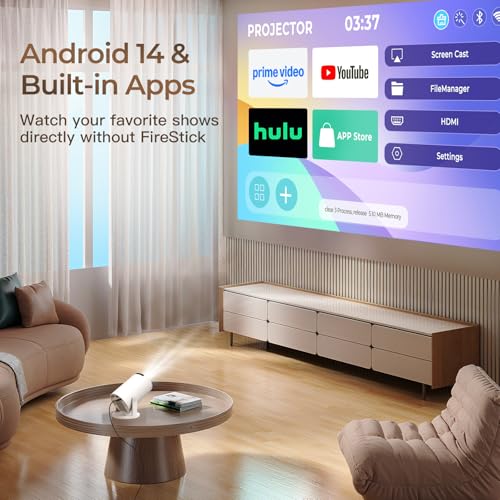
For a smart projector, prioritize the connections that prevent the “smart” part from becoming a dead end: dual-band Wi-Fi for stable streaming, current built-in apps or a full smart-TV interface, at least one HDMI input for a backup streaming stick or game console, and Bluetooth or audio-out support for external speakers. Check whether phone casting works with your devices, whether protected streaming apps are natively supported, and whether Bluetooth audio has noticeable lip-sync delay. Owner feedback supports this priority: buyers repeatedly describe Wi-Fi setup, built-in streaming, HDMI use, AirPlay/phone mirroring, and Bluetooth speaker pairing as easy and stable for everyday watching.
Setup
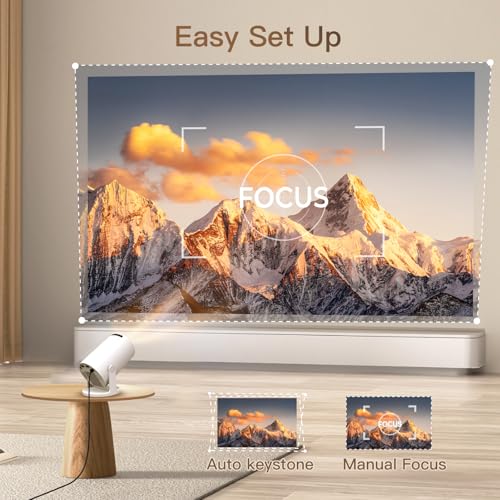
A projector that’s easy to set up saves you from fighting with placement, focus, and image alignment every time you want to watch something. Look for helpful features like autofocus, keystone correction, lens shift, zoom, clear menus, and flexible mounting or tabletop placement options. Be cautious if a projector requires a very exact position or relies heavily on digital correction, since that can make setup fussier or slightly reduce image quality.
Look for setup automation that solves real projector placement problems, not just a quick first boot: reliable autofocus, automatic keystone correction, manual fine-tuning, and enough throw-distance flexibility for your room. Avoid relying too heavily on extreme digital keystone, because it can reduce usable resolution and create softer edges; the best pick is one that can physically sit close to centered and then use auto correction for small adjustments. Owners consistently praise fast, low-effort setup, especially models with autofocus, auto-keystone, 6D correction, and built-in smart-TV software that gets streaming running without extra devices.
Picture
Picture quality determines how clear, bright, and natural your projected image looks, especially as screen size increases or room lighting changes. Look for enough brightness for your space, sharp resolution for the content you watch, and accurate color that doesn’t look washed out or overly artificial. Be careful not to judge by “4K” alone, since contrast, lens quality, and light output can matter just as much to how good the image actually looks.
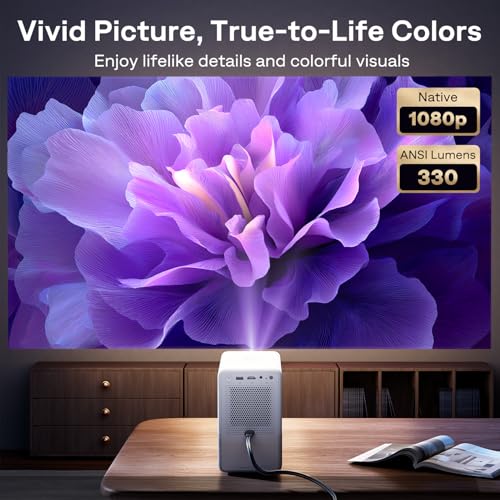
For picture quality, verify the specs that matter in real rooms: native resolution, ANSI or ISO lumens rather than vague brightness claims, contrast performance, color accuracy, and whether the image stays sharp at the screen size you plan to use. If you watch with lamps on or during daytime, be cautious—most compact smart projectors still need a dim room or controlled light for a satisfying large image. Owner sentiment backs the appeal when conditions are right: buyers commonly praise sharp, vivid, colorful images, strong big-screen movie and sports performance in dimmer rooms, and some models that remain usable with a little ambient light.
Quality
A projector’s quality affects how well it holds focus, handles heat, and delivers a consistent image over repeated use. Look for sturdy construction, dependable controls and inputs, stable brightness and color, and signs of good thermal design; be cautious of flimsy housings, noisy fans, loose ports, or user feedback pointing to early failures or inconsistent performance.
Judge overall quality by the parts most likely to affect long-term satisfaction: thermal design and fan noise, lens uniformity across the whole image, focus stability after warm-up, app/software reliability, remote responsiveness, and whether firmware updates are available. Also check for included accessories only after confirming the core projector is solid, since a bundled screen or extras cannot compensate for weak optics or buggy software. Owners tend to view quality positively when the image is sharp and colorful, wireless features work smoothly, setup is straightforward, and the projector delivers a convincing home-theater experience for everyday movies, gaming, and shows.
Value
A projector’s value for money comes down to whether its image quality, brightness, features, and reliability justify what you pay. Look for a balance of performance and practical extras you’ll actually use, such as easy setup, useful ports, or low-maintenance operation, and be wary of paying more for specs or features that won’t improve your viewing experience.
The best value in smart projectors is not simply the lowest cost; it is the model that avoids forcing immediate add-ons. Look for a package with usable brightness, native high-definition image quality, dependable smart apps, autofocus/keystone, enough ports, and acceptable built-in audio, while still allowing an external streaming device or speaker if the built-in platform ages. Owner feedback aligns with this: buyers often call these projectors strong values when picture quality, smart-TV features, portability, autofocus, accessories, and overall performance feel better than expected for an affordable model.
Sound
You’ll want to consider sound quality because built-in speakers can determine whether a projector is convenient on its own or needs an external speaker system to feel complete. Look for audio that is loud enough for your room, clear at higher volumes, and not overly thin or distorted; compact projectors often have limited bass and separation, so plan for external audio if you want a more immersive movie or gaming experience.
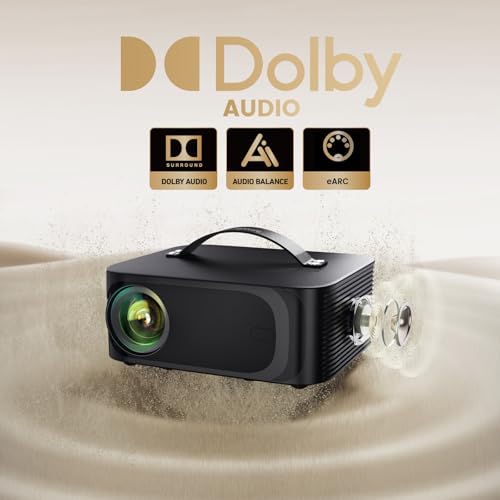
For sound, decide whether the projector will be used as a self-contained movie-night device or as part of a home-theater setup. Built-in speakers can be fine for bedrooms, patios, and casual viewing, but check for Bluetooth audio, 3.5 mm output, HDMI ARC/eARC, or another reliable way to connect a soundbar or speaker; also watch for fan noise and Bluetooth latency, which can matter more than volume. Owners generally report that built-in speakers are clearer and louder than expected for compact units, often good enough for casual viewing, while Bluetooth pairing and streaming-device compatibility make external audio easy when needed.
1,000,000+ shoppers use Buyer's Guide every week to find the best products and services online.

Helping millions of users make smarter purchases online.


