









We also considered 10 others:


Our Top Choice
Compare Features


The order above is not editorial opinion, and it is not paid placement. It comes from what shoppers across our network actually do - which silent air purifiers they compare, and which they ultimately buy. We re-rank as new data comes in, so the long-term favorites have to keep earning their spot against new entrants. The full method, including how we make money.
Silent Air Purifiers Buyer's Guide
Silent air purifiers have to balance two things that often fight each other: enough airflow and filtration to actually clean the room, and low enough noise and light to run all night. The sharpest checks are whether the purifier cleans effectively on its quiet speeds—not just turbo—and whether it uses safe, sealed mechanical filtration rather than noisy or ozone-producing shortcuts.
Purification
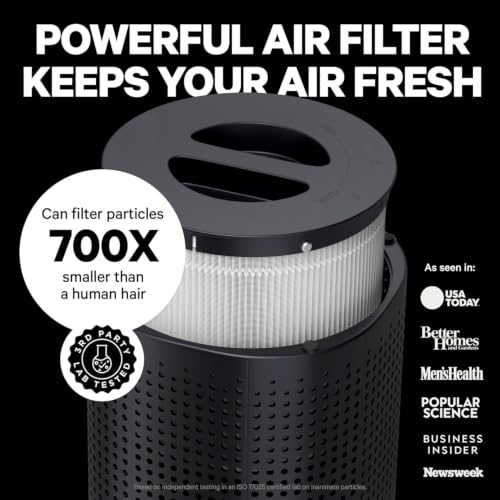
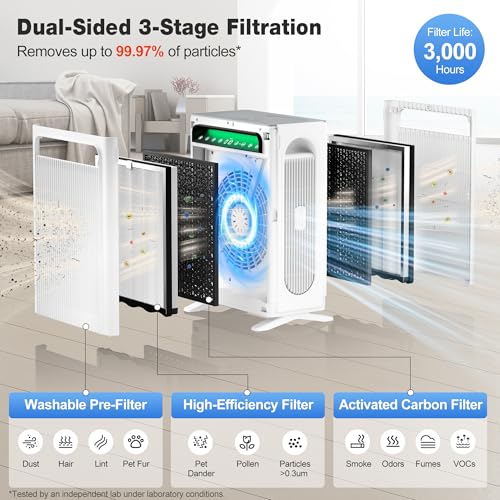
You want an air purifier that can actually move enough air through effective filtration to reduce particles, odors, and other common indoor pollutants in the room size you plan to use it in. Look for clear performance ratings such as CADR, a suitable recommended room coverage, and true HEPA or other well-specified filtration, while watching out for vague “air quality” claims that don’t explain airflow, filter type, or cleaning capacity.
For a silent air purifier, judge cleaning power at the fan speed you will actually tolerate overnight, not just the maximum setting: check CADR, room-size rating, sealed HEPA-style filtration, and whether the unit can cycle the room’s air several times per hour on low or sleep mode. Avoid models that advertise huge coverage only on turbo, rely on ionizers/ozone for performance, or have loose filter fit that lets dust bypass the media. Owner reports support this priority: buyers often describe noticeably cleaner air, easier breathing, fewer floating dust particles, and better nighttime comfort when a quiet bedroom mode still moves enough air to matter.
Ease
You’ll use an air purifier more consistently if it’s simple to set up, adjust, and understand at a glance. Look for clear controls, intuitive settings, useful automation such as auto or sleep modes, and app control only if it genuinely makes operation easier for you. Watch out for confusing menus, overly bright display lights, noisy mode changes, or features that add complexity without improving day-to-day use.
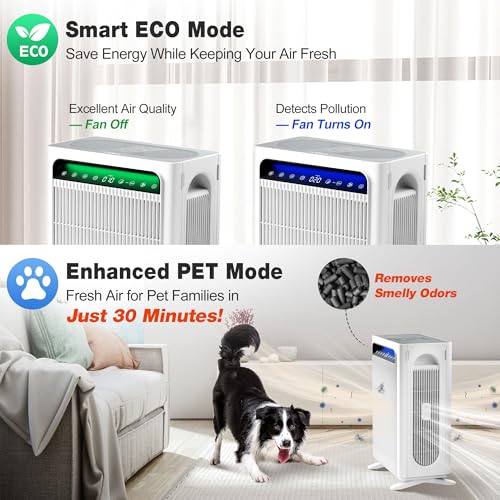
For quiet daily use, prioritize controls that let you set-and-forget the purifier without waking anyone: true sleep mode, lights that fully dim or shut off, a timer, simple fan steps, filter-change reminders, and an air-quality display or auto mode that does not surge noisily at night unless you want it to. If using it in a bedroom, nursery, office, or shared space, also check that app or voice controls are optional rather than required, because network issues should not stop basic operation. Owner sentiment lines up with this: users commonly praise unobtrusive low settings, night modes that dim the display, straightforward setup, easy fan adjustments, and convenient smart or voice controls where included.
Noise
Noise matters because an air purifier often runs for hours at a time, including while you work, relax, or sleep. Look for quiet operation on low or sleep settings, but also check how loud it gets on higher fan speeds, since some units are only truly quiet when they’re moving very little air.
Do not buy on a single “quiet” claim; look for decibel ratings by fan speed, especially low/sleep and medium, because the highest setting may be too loud for sleep even if the lowest is whisper-quiet. A good silent purifier should have a low mode suitable for bedside use while a higher mode can be used temporarily after cooking, smoke, cleaning, or opening a dusty room; smooth fan tone matters too, since rattles, high-pitched whine, or abrupt auto-mode ramping are more disruptive than steady white noise. Owners repeatedly describe the best units as very quiet on low or sleep settings, practical for overnight use, and only more like background white noise when turned up.
Build
Build quality matters because an air purifier may run for long stretches, so a sturdy housing, stable base, well-fitted panels, and a durable fan can reduce rattles, vibration, and premature wear. Look for solid materials, secure filter doors, smooth controls, and evidence of reliable long-term operation; be cautious of flimsy plastic, loose seams, weak handles, or complaints about buzzing, cracking, or fan failure.
For a purifier that will run many hours a day, inspect build details that preserve quiet operation over time: a stable base, tight panels, a well-sealed filter compartment, no rattly grille, and easy access for cleaning the pre-filter without bending tabs or breaking clips. Match the physical size to the room instead of choosing the smallest unit; undersized purifiers must run faster and louder, while better-built, correctly sized units can stay effective on quieter speeds. Buyer feedback supports this: users often connect solid construction, easy maintenance features, and reliable quiet operation with units they can keep running in bedrooms, living areas, offices, and larger shared spaces.
Value
You want an air purifier that delivers clean-air performance, reliable build quality, and useful features that justify what you spend. Look for strong coverage for your room size, effective filtration, reasonable filter replacement costs, and quiet operation; watch out for models that seem inexpensive upfront but underperform, feel flimsy, or become costly to maintain.
Value in this niche is the cost of quiet clean air over time, so compare replacement-filter availability, filter lifespan, electricity use for continuous operation, and whether washable parts are only pre-filters rather than substitutes for the main particle or carbon filter. Pay extra only for features that help your real use case—sleep mode, dimmable display, auto sensing, pet mode, timers, or remote controls—not for oversized coverage claims that require noisy high-speed operation. Owner sentiment reinforces this practical definition of value: buyers tend to feel satisfied when the purifier is easy to set up, dependable over long periods, solidly made, and supported by convenient controls and manageable maintenance.
Odor
If you’re dealing with cooking smells, pet odors, smoke, or stale rooms, odor reduction matters because not all air purifiers handle gases and scent molecules equally well. Look for a purifier with a substantial activated carbon or other gas-phase filter, and watch out for units that rely only on particle filtration, since HEPA-type filters can trap dust and smoke particles but won’t do much for lingering smells without a dedicated odor-control medium.
If odor is a main reason for buying, make sure the purifier has a meaningful activated-carbon stage, not just a thin deodorizing sheet; HEPA-style particle filtration helps with smoke particles, pet dander, and dust, but carbon capacity is what handles cooking smells, litter-box odor, mustiness, and stale smoke gases. Avoid ozone generators or ionizer-heavy “freshening” modes in occupied rooms, especially around pets, children, asthma sufferers, or bedrooms; for strong odors, plan to replace carbon filters more often and place the unit near the odor source without blocking airflow. Owner reports strongly support odor use cases, with shoppers noticing less pet smell, litter odor, cooking smoke, mustiness, laundry smell, campfire or pipe-smoke residue, and generally fresher rooms after regular quiet operation.
1,000,000+ shoppers use Buyer's Guide every week to find the best products and services online.

Helping millions of users make smarter purchases online.


