















We also considered 10 others:


Our Top Choice
The order above is not editorial opinion, and it is not paid placement. It comes from what shoppers across our network actually do - which dog collars they compare, and which they ultimately buy. We re-rank as new data comes in, so the long-term favorites have to keep earning their spot against new entrants. The full method, including how we make money.
Dog Collars Buyer's Guide
Buying a dog training or bark collar is a balance between reliable control and safe, clear communication. The sharpest concerns are whether the collar can get a dog’s attention without overcorrecting, whether the remote and signal work when distractions are high, and whether the fit, battery, and waterproofing hold up outdoors.
Training Modes
A training collar is only useful if it communicates clearly without overcorrecting. Dogs vary widely in sensitivity, so adjustable non-static cues and predictable output matter as much as raw power.
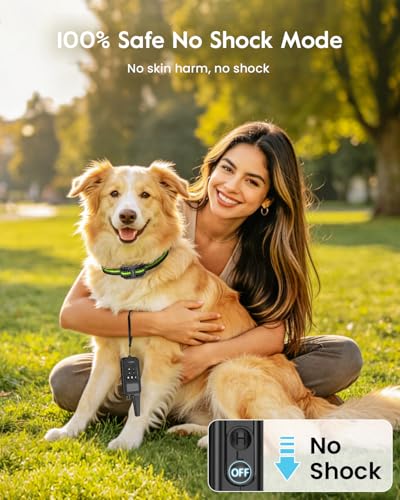
Look for collars that offer separate beep, vibration, and static levels, with fine adjustment rather than a few harsh jumps. For recall, barking, and boundary work, the safest practical setup is one where beep or vibration can be used first, static can be locked out or kept low, and the collar lets you match intensity to the dog’s size, coat, temperament, and training goal. Avoid models that make it easy to trigger the wrong correction or that lack predictable level control, because inconsistent output can confuse a dog and undermine training. Owner feedback strongly supports this: many dogs responded quickly to beep and vibration for barking, recall, and behavior correction, and owners often found those modes enough without using shock. Buyers also praised collars that reinforced obedience and helped dogs respond well, while noting that inconsistent settings or output made training less predictable for some.
Range
Range determines whether the collar still works when the dog is far away, moving fast, or distracted. Advertised distance is usually best-case, so a careful buyer should leave margin for terrain and obstacles.
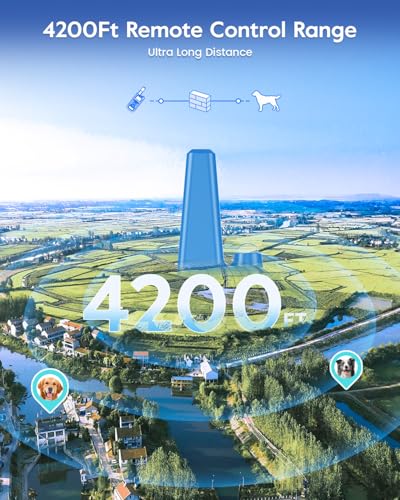
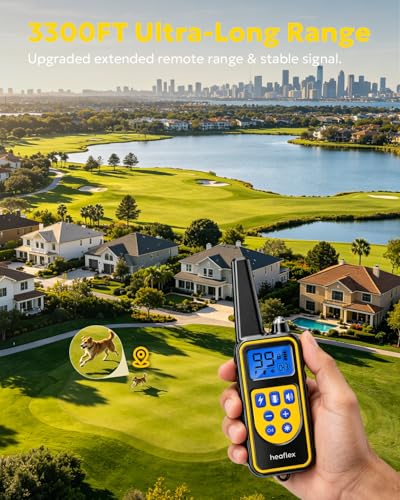
Choose range based on the hardest place you will use the collar, not just the printed maximum. Open fields, farms, and large yards need stronger range than sidewalks, while parks with trees, hills, metal fencing, or other interference can reduce real-world signal. For off-leash recall, prioritize fast remote response, stable pairing, and enough reach to call the dog back before it crosses a boundary or reaches a distraction. Owners consistently valued reliable off-leash control in parks, yards, farms, and distracting outdoor settings. Range and outdoor performance were praised as major strengths, especially where dependable signal made recall and property-boundary work easier.
Fit & Comfort
A collar that does not fit correctly can fail to deliver cues or become uncomfortable during movement. Proper sizing is especially important for training collars because receiver position and contact consistency affect both safety and effectiveness.
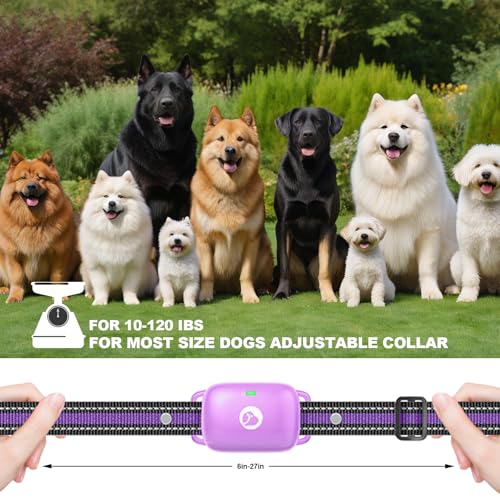
Fit matters as much as electronics: the collar should adjust securely without choking, sit high enough for contact points to touch through the coat, and stay stable when the dog runs or shakes. Check receiver weight for small dogs, strap width for neck comfort, and whether long- and short-hair contact points are included if static correction is part of the design. A poor fit can cause missed cues, rubbing, pressure spots, or accidental over-tightening, especially if the dog wears it during active outdoor training. Owners appreciated collars that were easy to fit, adjust, and match to different dogs. That feedback points to a key buying filter: the best collar is not just effective electronically, but also simple to size correctly for daily sessions.
Controls
Training depends on timing, so controls must be fast and unambiguous. A confusing remote can turn a useful collar into a source of mistimed cues or accidental corrections.
The remote should be usable without looking down for long: distinct buttons, clear mode labels, quick level changes, and a lock or layout that prevents accidental static correction. If training more than one dog, check how channels switch and whether the remote makes it obvious which collar is active. Avoid designs with tiny switches, buried settings, laggy response, or confusing mode cycling, because timing is critical when rewarding recall or interrupting barking. Owner sentiment shows this dimension cuts both ways. Many buyers praised straightforward setup, clear buttons, quick response, and easy daily operation, but the remote was also a notable watch-out when controls were hard to use, switches caused trouble, or replacement was needed.
Battery
A training collar must be ready when the dog is already outside and distracted. Runtime, charge visibility, and cable reliability all affect whether the collar can be trusted for real sessions rather than just short tests.
For rechargeable training collars, look for real multi-session runtime, separate battery indicators for both collar and remote, a clear low-power warning, and a charging method you can easily replace or pack. Magnetic or proprietary cables can be convenient, but they become a liability if the cable is easy to lose or charging is finicky. If the collar is used for off-leash work, do not rely on a model that gives little warning before power drops, because a dead collar removes your backup communication at the worst time. Battery life was one of the strongest positives, with many owners describing long runtime and convenient charging for both collar and remote. At the same time, feedback was mixed for some units, with complaints about charging issues, proprietary magnetic cables, unclear low-power warning, or functions fading over time.
Durability
Dog collars take abuse from weather, scratching, rolling, and hard outdoor play. Electronics add more failure points, so waterproofing and hardware quality are central to long-term usefulness.
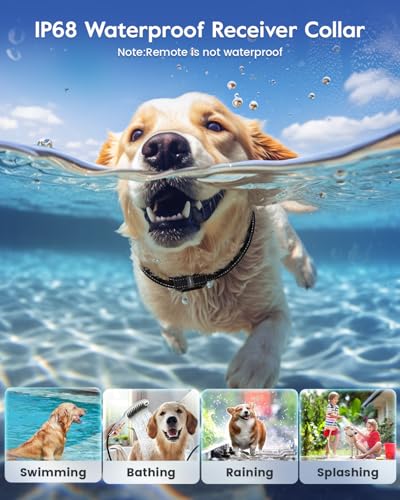
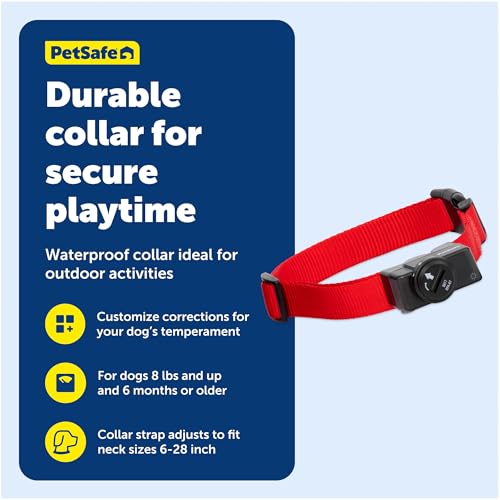
For outdoor dogs, prioritize water resistance suited to your use: rain and wet grass are different from swimming, mud, or repeated rinsing. Check that the receiver housing, charging contacts, buttons, strap hardware, and remote are all built for field use, not just the collar strap. The main failure modes to avoid are sticky buttons, cracked housings, corroded contacts, weakening vibration or static functions, and remote or charging failure after a few months. Owners often described collars as sturdy, waterproof, reliable, and worth buying again for multiple dogs. Still, durability was a mixed area, with some reports of early button, hardware, charging, shock, or vibration issues, so build quality and long-term reliability deserve close attention.
1,000,000+ shoppers use Buyer's Guide every week to find the best products and services online.

Helping millions of users make smarter purchases online.


