


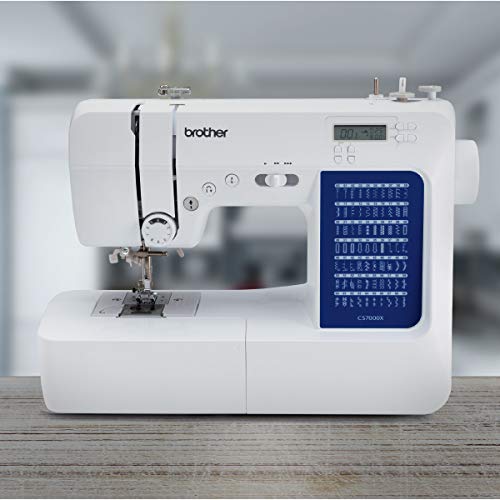





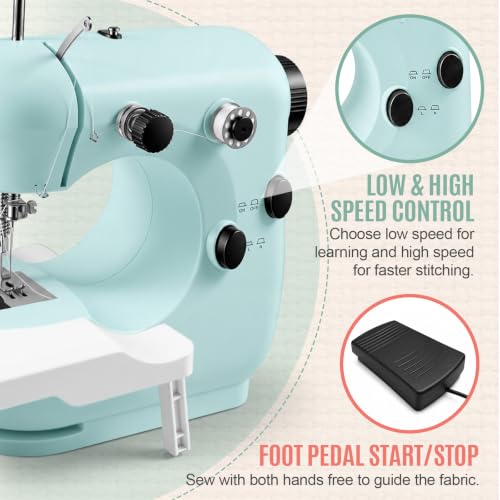


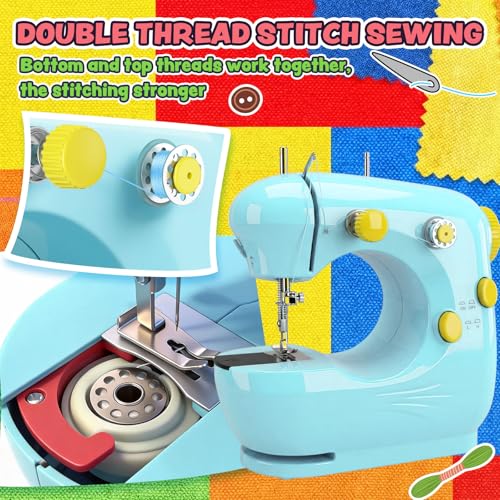
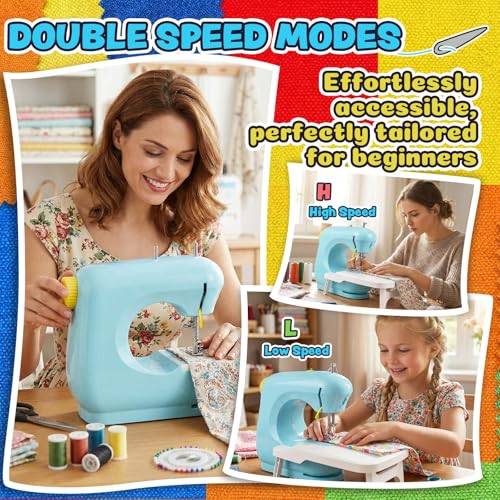








We also considered 10 others:



Our Top Choice
Compare Features


The order above is not editorial opinion, and it is not paid placement. It comes from what shoppers across our network actually do - which sewing machines they compare, and which they ultimately buy. We re-rank as new data comes in, so the long-term favorites have to keep earning their spot against new entrants. The full method, including how we make money.
Sewing Machines Buyer's Guide
Choosing a sewing machine is a tradeoff between enough power and feeding control for real fabric layers and enough simplicity that you will actually use it. The sharpest checks are whether it can handle your heaviest planned projects without jamming or going out of timing, and whether its feet, bobbins, needles, and stitch functions match the sewing you intend to do.
Build
A well-built sewing machine runs more smoothly, stays steadier at higher speeds, and is more likely to handle repeated use without loosening, rattling, or falling out of alignment. Look for sturdy construction, a stable base, durable internal parts, and controls that feel solid rather than flimsy; be cautious of machines that flex, vibrate heavily, or struggle with thicker fabrics, since those can be signs of weaker long-term durability.
For sewing machines, “build” should be judged by whether the frame, motor, feed system, and presser-foot lift match the fabrics you actually sew: denim hems, canvas, quilts, and light upholstery need torque, stable feeding, and enough clearance, while delicate garments need smooth low-speed control and tension stability. Look for a rigid internal frame, secure needle bar with minimal side play, consistent feed dogs, accessible bobbin area, and compatibility with common needles, bobbins, and replacement feet; avoid very lightweight machines if you expect to sew thick seams, because they can vibrate, stall, jam, or get knocked out of timing. Owner sentiment supports this emphasis: buyers repeatedly praise machines that feel solid, quiet, dependable, and capable of basic sewing without constant fiddling, and heavier-duty models are especially valued when they push through jeans, layered projects, and light upholstery.
Ease
A sewing machine that’s easy to set up, thread, and operate helps you spend more time sewing and less time troubleshooting. Look for clear controls, straightforward threading paths, helpful markings, and guidance you can actually follow, such as a well-written manual or video instructions. Watch out for machines with confusing menus, vague diagrams, or features that add complexity without making your projects easier.
Ease of use matters most in the exact steps that cause sewing-machine frustration: threading the top path correctly, inserting the bobbin, raising the bobbin thread if required, adjusting tension, changing needles and feet, and recovering from a thread jam. For beginners or occasional menders, prioritize clear threading diagrams, a top drop-in bobbin with visible cover, easy reverse, simple stitch selection, speed control, needle up/down if available, and a manual that explains needle, thread, and fabric matching; avoid interfaces that bury basic functions in menus unless you are comfortable with computerized controls. Owner feedback aligns with this: shoppers often describe approachable machines as easy to set up, easy to thread, quick to learn, and unfussy, with mechanical dial-based controls or beginner-friendly computerized layouts reducing intimidation.
Features
Features determine what you can actually make with a sewing machine, from basic repairs to quilting, embroidery, buttonholes, or heavier fabrics. Look for practical functions and included accessories you’ll use often, such as presser feet, stitch options, automatic needle threading, speed control, extension tables, or embroidery hoop sizes, and be wary of long feature lists that add complexity without matching your projects. Good organization for accessories also matters, because it helps you keep the machine usable instead of frustrating.
Features should be chosen around real sewing tasks, not the highest stitch count. For garments and repairs, check for a free arm, zipper foot, buttonhole function, adjustable stitch length and width, reverse, good lighting, and snap-on or standard presser-foot compatibility; for quilting, look for drop feed or feed-dog lowering, walking-foot/free-motion-foot compatibility, extension-table support, and enough throat space; for small mending only, a compact machine may work, but it should still use real needles, thread, bobbins, and adjustable tension. Avoid paying for decorative stitches while missing practical essentials like adjustable presser-foot pressure, a usable buttonhole, or reliable bobbin access. Owner sentiment backs up the practical-feature approach: buyers value conveniences such as snap-on feet, drop-in bobbins, broad stitch selections, quilting capability, and versatility for hemming, mending, straps, and everyday projects.
Stitches
Stitching performance matters because even, consistent stitches make your seams stronger, cleaner, and easier to finish across different fabrics. Look for a machine that maintains good stitch quality at various speeds and offers the stitch options you’ll actually use, such as straight, zigzag, buttonhole, stretch, or decorative stitches. Also make sure stitch selection and adjustment feel straightforward, since confusing controls or limited fine-tuning can slow you down and lead to uneven results.
Stitch quality is the core test: the machine should form balanced stitches on the fabrics you use without skipped stitches, loops underneath, puckering, fabric chewing, or bird-nesting at startup. Check straight stitch, zigzag, stretch stitch, buttonhole, and overcasting performance; garment sewers need stretch options for knits, quilters need even straight stitching and smooth feed, and heavy-fabric users need traction through seams without shortening stitches or breaking needles. More built-in stitches can be useful, but only if the feed and tension stay consistent across fabric weights. Owner reports support this priority, with strong praise for machines that produce clean, even seams, smooth feed, good traction through denim, reliable buttonholes, and enough built-in stitches for hemming, mending, decorative work, quilting, and larger creative projects.
Value
A sewing machine should feel worth what you pay by matching your skill level, project needs, and expected use without charging extra for features you will not touch. Look for solid stitch quality, reliable feeding, useful accessories, and enough adjustability to grow with you; watch out for low-cost machines that save money upfront but feel flimsy, struggle with thicker fabrics, or limit basic repairs and replacements.
Value in this category comes from avoiding both underpowered “starter” machines that you quickly outgrow and over-featured machines whose extras you never use. A good-value purchase should include the feet and functions needed for your projects, accept standard consumables, have available parts and service information, and save money on repairs and alterations without constant needle breaks, jams, or tension battles. If you plan to sew bulky fabric, the value calculation should include whether the machine can actually handle layers; if you only hem curtains or mend seams occasionally, compact simplicity may be enough. Owner sentiment reflects this: buyers often feel value is strongest when a machine covers everyday sewing needs, includes useful accessories and stitch options, runs smoothly, and handles repairs or bulkier work that would otherwise cost money to outsource.
Beginner
If you’re new to sewing or mainly want a machine for small projects and quick repairs, beginner suitability determines how easy it will be to set up, thread, control, and troubleshoot without frustration. Look for simple controls, clear stitch selection, reliable basic stitches, an easy bobbin system, and enough included guidance to help you learn; watch out for machines with overly complex features or inconsistent tension that can make basic work harder than it needs to be.
For a beginner, the safest and most successful machine is not necessarily the smallest or the one with the most stitches; it is the one that lets you control speed, see the needle area clearly, thread it without guessing, and fix common mistakes without panic. Look for adjustable speed or a gentle foot pedal, clear stitch labels, a stable full-size base for learning straight seams, simple bobbin loading, finger-guard options for children, and enough basic stitches to learn seams, hems, knits, and buttonholes. Mini machines can be fine for kids, crafts, doll clothes, and light mending, but they are often limiting for garments, thick hems, and long-term skill growth. Owner feedback supports this distinction: beginners appreciate machines described as approachable, easy to set up, simple to learn, supported by directions or videos, and welcoming enough for first projects while still offering room to grow.
1,000,000+ shoppers use Buyer's Guide every week to find the best products and services online.

Helping millions of users make smarter purchases online.


