





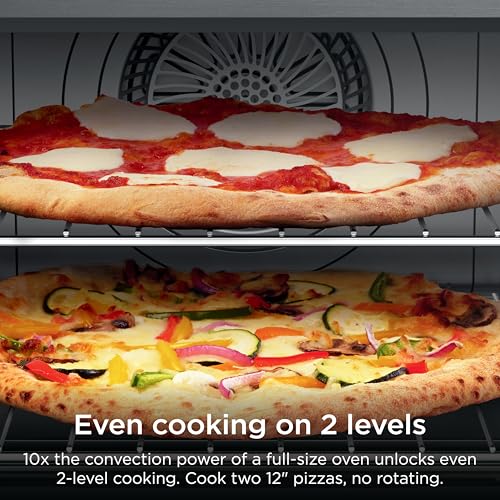


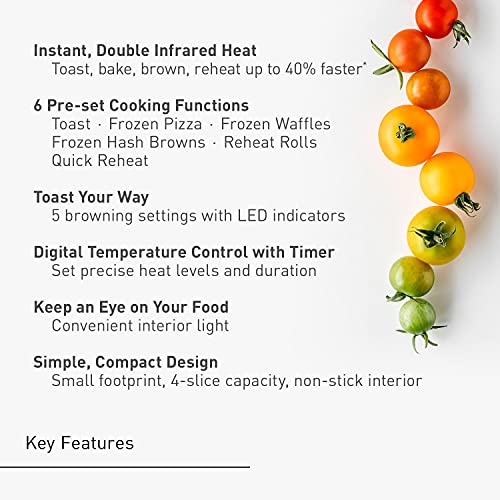
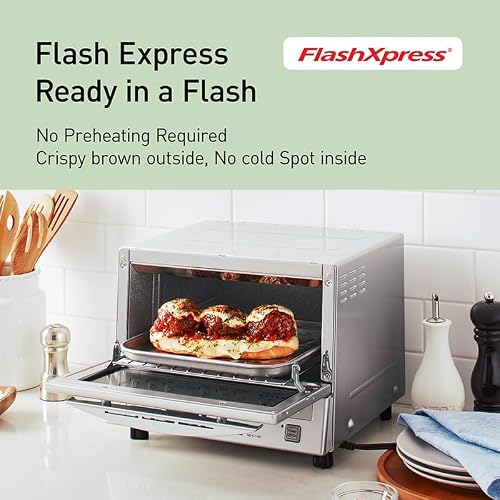


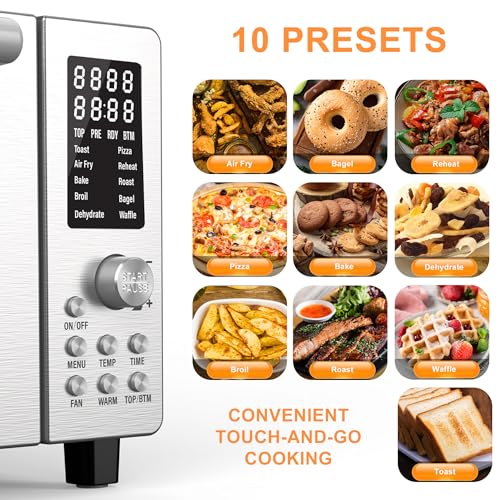


We also considered 10 others:


Our Top Choice
Compare Features


The order above is not editorial opinion, and it is not paid placement. It comes from what shoppers across our network actually do - which self-cleaning toaster ovens they compare, and which they ultimately buy. We re-rank as new data comes in, so the long-term favorites have to keep earning their spot against new entrants. The full method, including how we make money.
Self-Cleaning Toaster Ovens Buyer's Guide
Self-cleaning toaster ovens promise less scrubbing, but the real tradeoff is convenience versus heat, smoke, coating wear, and residue management in a small countertop appliance. The sharpest checks are whether crumbs and grease can actually exit or loosen safely, and whether the cleaning system interferes with consistent toasting, ventilation, or long-term durability.
Toasting
If you use a toaster oven for breakfast staples, you’ll want one that browns bread evenly from edge to edge and gives you repeatable results without constant guessing. Look for consistent shade settings, good top-and-bottom heat balance, and enough room for bagels or multiple slices without crowding. Watch out for ovens that toast unevenly, dry bread out before browning, or require frequent flipping and repositioning.
For a self-cleaning toaster oven, prioritize models that keep crumbs and grease away from the heating elements without disrupting airflow: a full-width removable crumb tray, smooth wipeable interior walls, and rack positions that place bread at the recommended distance from the elements matter as much as the toast setting itself. Avoid designs where the cleaning system leaves residue, odor, or trapped moisture near the elements, because that can affect quick toast cycles and create smoke on the next use. Owner feedback supports making toast performance a front-line check: many users praise strong results for toast, pizza, reheating, and small jobs, but others note that timing and evenness can take adjustment and some ovens run hot enough to burn food if not dialed in.
Usability
A toaster oven should make everyday tasks feel quick and straightforward, so look for clear controls, easy-to-read settings, and presets that match how you actually cook. Watch out for crowded dials, confusing icons, or menus that make simple jobs like toast, reheat, and bake harder than they need to be. The easier it is to set the time, temperature, and mode accurately, the more consistently you’ll use it.
The self-cleaning feature should be simple enough that you will actually use it: look for a dedicated clean mode or clearly explained wipe-down process, easy crumb-tray access from the front, removable racks and pans, and instructions that plainly say which parts can go through the clean cycle or dishwasher. Be cautious of ovens that bury cleaning steps in complicated menus, require awkward disassembly, or have grooves around the door where grease and crumbs collect despite the “self-cleaning” label. Owner sentiment lines up with this: shoppers tend to like straightforward knobs, practical presets, quick heating, included trays and racks, and cleanup that feels low-effort rather than app-driven or fussy.
Size
Size matters because you need a toaster oven that fits your counter with enough clearance around it while still having the interior capacity for what you actually cook. Check both the exterior footprint and the usable interior dimensions, since an oven that looks compact may be too small for a pizza, baking pan, or multiple slices, while a larger one can crowd your workspace or be harder to store.
Choose size by balancing cooking capacity with cleanability and heat clearance: a roomy oven is useful, but the interior should still be reachable for wiping the back wall, corners, door glass, and crumb channels after a cleaning cycle. Check the actual pan and pizza dimensions, rack spacing, door swing, and required side/top clearance, especially because self-cleaning or high-heat cleaning modes can vent heat, steam, or smoke and should not be crowded under cabinets. Owners report success at both ends of the spectrum—compact units that fit tight counters and larger models that handle family batches, pizza, two-level cooking, or larger dishes—so the right size is the one that fits your countertop and is not too deep to maintain.
Build
Build quality matters because a toaster oven deals with frequent heating and cooling, door movement, crumb buildup, and daily handling, all of which can expose weak construction over time. Look for a sturdy door and hinges, solid-feeling knobs or buttons, stable racks and trays, and materials that resist warping, rattling, or peeling. Be cautious of flimsy controls, uneven gaps, loose parts, or interiors that seem hard to clean, since those can affect both reliability and long-term durability.
Because self-cleaning exposes the oven to repeated heat, moisture, grease loosening, and wiping, inspect the parts most likely to fail: door seal, hinge tension, interior coating, glass, crumb tray rigidity, rack glide, vent placement, and whether electronic controls are protected from steam and heat. Prefer smooth interiors with few seams, sturdy removable trays, durable racks, and coatings or liners specifically rated for the cleaning method; avoid flimsy crumb trays, rough seams that trap grease, exposed hard-to-clean element areas, or plastic trim near hot exhaust paths. Owner sentiment generally describes these ovens as dependable countertop workhorses that can bake, roast, toast, air fry, and reheat often, but for this niche the long-term build question is whether the cleaning system stays safe and effective after repeated use.
Value
A toaster oven should justify its cost with reliable heating, useful cooking functions, and build quality that fits how often you’ll use it. Look for the features you’ll actually benefit from—like consistent toast, enough capacity, intuitive controls, and easy cleaning—rather than paying extra for settings or accessories that won’t change your daily cooking. The best value is not always the cheapest option, but the one that performs well enough to replace or reduce use of other appliances without feeling overbuilt for your needs.
Value in a self-cleaning toaster oven is not just the number of cooking modes; it is whether the cleaning design reduces real maintenance without shortening the oven’s life or requiring special consumables. Before buying, verify what “self-cleaning” actually means, which accessories are included, whether replacement trays and racks are available, and whether the oven can replace enough appliances to justify the space it occupies. Owner feedback often frames these ovens as strong values because they combine toaster, oven, air-fryer, reheating, and baking functions in one countertop appliance, with included accessories and everyday usefulness making them feel worthwhile.
1,000,000+ shoppers use Buyer's Guide every week to find the best products and services online.

Helping millions of users make smarter purchases online.


