









We also considered 10 others:


Our Top Choice
Compare Features


The order above is not editorial opinion, and it is not paid placement. It comes from what shoppers across our network actually do - which self-cleaning humidifiers they compare, and which they ultimately buy. We re-rank as new data comes in, so the long-term favorites have to keep earning their spot against new entrants. The full method, including how we make money.
Self-Cleaning Humidifiers Buyer's Guide
Self-cleaning humidifiers promise less scrubbing, but the real tradeoff is between low-maintenance moisture and the risk of dispersing minerals, microbes, or too much humidity if the design is hard to inspect. In this category, the sharpest checks are whether the cleaning system covers the actual water path and whether the unit can maintain a safe, steady room humidity instead of simply making a lot of mist.
Performance
You want a humidifier that can raise the humidity in your room to a comfortable level and keep it there without constant adjustment. Look for performance that matches your room size, maintains steady output, and includes reliable humidity control so the air doesn’t stay too dry or become damp enough to encourage condensation, musty smells, or mold.
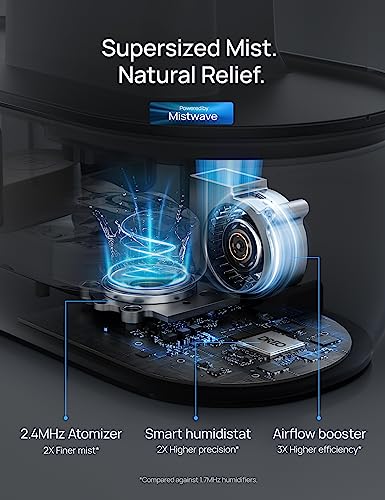
For performance, prioritize a self-cleaning model that can hold a stable target humidity—not just produce visible mist—because the niche risk is trading dry-air relief for over-humidification, condensation, and microbial growth on nearby surfaces. Look for a real humidistat, auto mode, adjustable target humidity, and capacity matched to the room with doors, ceiling height, and HVAC use in mind. Owner feedback supports this: shoppers most often valued units that noticeably raised humidity in bedrooms and larger rooms, improved dry-air discomfort during sleep, and could maintain a chosen level automatically without constant attention.
Ease
A humidifier should be simple enough that you’ll actually use and maintain it: easy to fill, straightforward to set up, and intuitive to adjust as room conditions change. Look for clear controls, a visible water level, practical humidity settings or auto mode, and convenient features like remote control if placement makes access awkward. Watch out for designs that are hard to carry, spill during refills, or bury basic functions in confusing buttons or menus.
For ease of use, choose self-cleaning features that reduce daily friction without hiding required maintenance: top-fill access, a tank that can be carried without sloshing, visible water level, auto shutoff, cleaning reminders, and controls that still work without an app. Avoid designs where “self-cleaning” depends on proprietary parts or buried settings you may ignore after the first week. Owner sentiment backs the importance of simple routines, with many buyers praising straightforward filling, basic or automatic controls, app scheduling, water notifications, light controls, and manageable setup.
Build
A well-built humidifier is more likely to handle daily filling, cleaning, and seasonal use without cracking, leaking, or becoming noisy. Look for sturdy tanks, tight seals, stable bases, and controls that feel responsive, and be wary of flimsy plastic, hard-to-seat parts, or reviews that mention early failures. Reliability matters because a unit that is difficult to maintain or prone to leaks can create more hassle than comfort.
For build quality, inspect the parts that determine whether the self-cleaning system will keep working: gasket fit, tank seams, base drainage, sensor placement, fan/mist outlet protection, and whether water-contact parts resist staining, scale, and biofilm. A large tank is useful only if it is sturdy when full and does not create stagnant corners that the self-cleaning cycle cannot reach. Owners tended to reward units that felt dependable in day-to-day use, reduced refill frequency with larger tanks, stayed reliable for bedrooms, plants, and dry indoor air, and gave an overall impression of solid quality.
Noise
If you plan to run a humidifier while sleeping, working, or in a nursery, quiet operation can matter as much as mist output. Look for models with clearly stated noise levels, a low or sleep mode, and minimal beeps or bright alerts, and be wary of units that develop gurgling, buzzing, or fan noise at higher settings.
For noise, check not only the decibel claim but the type of sound the self-cleaning design creates: ultrasonic hum, fan rush, pump clicks, dripping, refill gurgles, and periodic cleaning-cycle noises can matter more at night than a low average rating. If it will run in a nursery, bedroom, or workspace, look for sleep modes that disable lights and alerts as well as quiet operation at the output level you actually need. Owner feedback strongly supports this priority, with quiet overnight use repeatedly described as a major strength for bedrooms, kids’ rooms, sleep, and workspaces.
Cleaning
You’ll need to clean a humidifier regularly to prevent mineral buildup, odors, and microbial growth, so choose one with a wide tank opening, smooth surfaces, and parts that are easy to remove and reach. Watch out for narrow-neck tanks, hidden crevices, and bases that can’t be wiped out easily, since these can make routine maintenance frustrating and easier to skip.
For cleaning, treat “self-cleaning” as a helper, not a substitute for access: the tank opening should fit a hand or brush, the base should have few hidden channels, and removable parts should be easy to rinse, dry, and descale. Look for designs that address the specific failure modes of humidifiers—biofilm, mineral scale, standing water, washable or replaceable filters, and white dust—while avoiding vague antimicrobial claims that do not explain what is cleaned and when. Owner sentiment aligns with this: buyers especially liked tanks with fewer hard-to-reach spots, top-fill designs that reduce spills, washable-filter or mist-free approaches that help avoid white dust, and stainless or accessible parts that made routine upkeep feel simpler.
Output
You want a humidifier with enough humidity output to raise the comfort level in your intended room without leaving surfaces damp or windows wet. Look for adjustable mist output and consistent performance over time, so you can dial it down for smaller spaces or overnight use and increase it when the air is especially dry. Be cautious of units that produce a strong visible mist but lack good controls, since more mist does not always mean better humidity management.
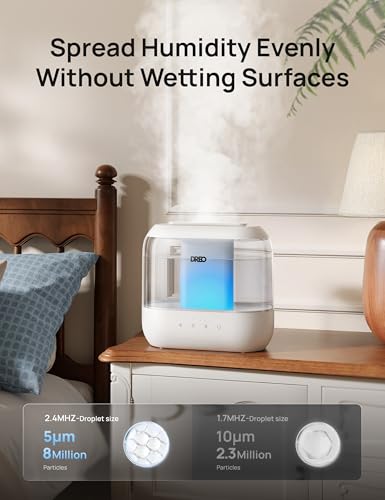
For output, favor adjustable, directional output over maximum mist alone, because self-cleaning humidifiers still need to put moisture into the air without wetting furniture, bedding, electronics, plant leaves, or walls. Match output to room size and refill tolerance, and look for multiple levels, a rotatable or dual-direction nozzle, and enough tank capacity to run through the night without forcing the unit to blast mist at close range. Owner evidence supports the value of strong but controllable output: buyers praised quick humidity increases, fine cool mist, multiple settings, directed mist, long run time from larger tanks, and enough coverage for dry bedrooms, plant areas, larger rooms, and even small apartments during heater season.
1,000,000+ shoppers use Buyer's Guide every week to find the best products and services online.

Helping millions of users make smarter purchases online.


