











We also considered 10 others:


Our Top Choice
Compare Features


The order above is not editorial opinion, and it is not paid placement. It comes from what shoppers across our network actually do - which rock tumblers they compare, and which they ultimately buy. We re-rank as new data comes in, so the long-term favorites have to keep earning their spot against new entrants. The full method, including how we make money.
Rock Tumblers Buyer's Guide
Rock tumblers trade speed for consistency: the best ones run quietly and reliably for weeks while grinding through staged grit, but weak drives or poor barrels can stop a batch before it ever polishes. The sharpest buying concerns are continuous-duty durability, barrel capacity, noise control, and whether a beginner has the right instructions and supplies to complete the first full cycle.
Polishing Results
A rock tumbler is judged by whether it turns rough material into rounded, polished stones after weeks of staged abrasion. Good results depend on consistent rotation, correct grit use, enough time in each stage, and a barrel load that keeps rocks sliding rather than banging. Weak tumbling action can waste grit, time, and stones even if the machine is easy to set up.
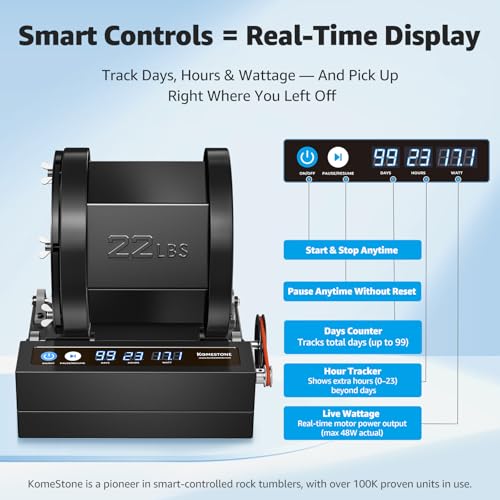
Prioritize a tumbler that can complete the full rotary sequence—coarse grind, medium/fine grind, pre-polish, and polish—without stalling, overheating, or needing constant intervention. Look for stable barrel rotation under load, clear stage timing guidance, and compatibility with standard grit progression; avoid machines that only look like toy polishers if you want consistently rounded, glossy stones. Owner feedback strongly supports this as the core success factor: shoppers repeatedly highlight smooth, shiny finished rocks, reliable polishing, and first-batch results that meet expectations.
Barrel Capacity
Capacity determines how many stones you can process and what size rough material will tumble correctly. Rock tumbling is a long cycle, so undersized barrels can make the hobby feel slow, while oversized setups may be inefficient for small beginner batches. Multiple barrels can add flexibility, especially when different grit stages are running at the same time.
Choose barrel size based on the rocks you actually plan to run, not just the advertised capacity. A rotary barrel usually works best when filled with a proper mix of rock, filler media, grit, and water, so too small a barrel limits batch size while too large a barrel can struggle with tiny starter loads; larger rocks also need enough diameter to tumble freely without jamming. Owner sentiment points to barrel capacity as a real separator: buyers appreciate enough room for starter batches, small parts, bigger batches, and larger rocks, while dual-barrel setups are valued for running more load or different stages at once.
Noise Control
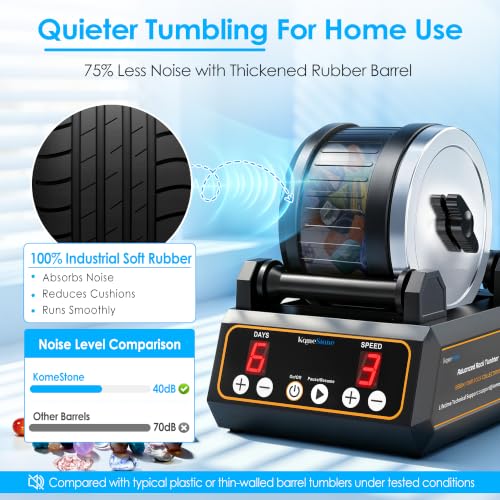
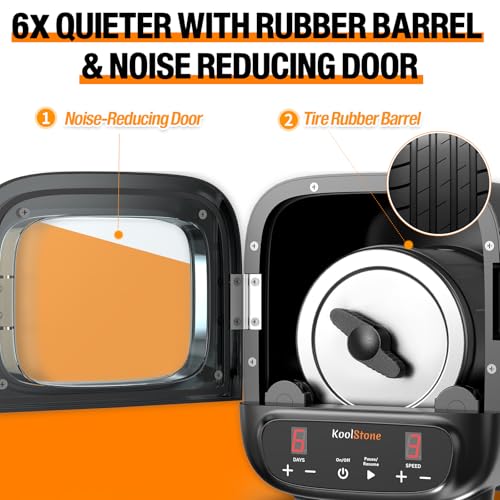
Rock tumblers run continuously for long stretches, so moderate noise can become annoying over time. Rubber barrels and solid housings reduce clatter compared with harder, thinner materials, but tumbling stones will never be silent. Placement matters as much as the machine itself because vibration can transfer through shelves, counters, and floors.
For indoor or family use, look for a rubber barrel, snug lid system, stable base, and any fitted sound cover; for apartments or bedrooms, assume even a “quiet” tumbler may still belong in a garage, basement, laundry room, or closet on a vibration-damping mat. Avoid thin plastic barrels and rattly frames if noise is a concern, because rock-on-barrel impact continues for days or weeks at a time. Owner reports consistently treat noise control as a standout issue: many describe well-designed rubber-barrel machines as quieter than expected or manageable for a rock tumbler, especially with a cover or when placed away from main living areas.
Drive Durability
A rock tumbler is a small machine doing a long mechanical job, so wear parts matter. Belts, rollers, seals, and motors are under repeated load while grit and slurry add mess around the barrel area. Durable construction and serviceable parts can be the difference between finishing a batch and stopping halfway through a multi-week cycle.
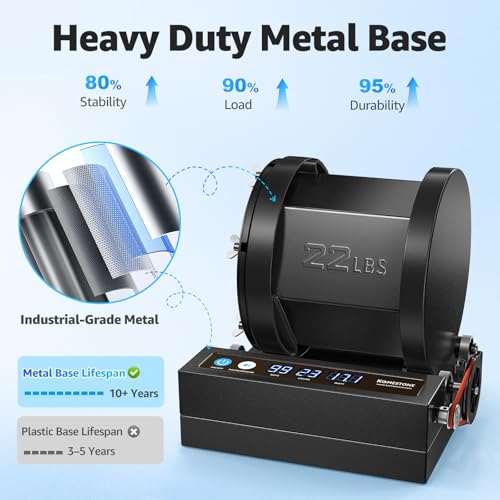
Inspect the drive design before buying: continuous-duty motor, aligned pulleys, replaceable belts, grippy rollers, and easy belt access matter more than cosmetic ruggedness. Tumblers often run nonstop for weeks, so belt stretch, roller wear, pulley misalignment, lid seal fatigue, and motor heat are common failure modes to plan around; a spare belt and simple adjustment path are practical advantages. Owner sentiment is strong on sturdy-feeling machines and long continuous runs, but it also flags durability as the main mixed area, with some belts, rollers, seals, pulleys, or motors wearing out sooner than expected.
Starter Readiness
Many first-time tumbling failures come from missing supplies or unclear process steps rather than from the machine itself. A complete, well-explained kit helps new users understand grit stages, timing, cleaning between stages, and how full the barrel should be. This is especially important for family use, where adult setup and supervision are still needed around moving parts, grit, and slurry.
For beginners, kids, or a first household tumbler, favor a kit with clear stage instructions, labeled controls, starter rough, a full grit sequence, polish, filler or media if included, a strainer, and spare belts. Make sure the instructions explain slurry consistency, barrel fill level, stage rinsing, and safe disposal—used slurry should not be poured down household drains. Owner feedback supports starter readiness as a major advantage: buyers repeatedly praise clear instructions, simple setup, helpful controls, and kits that include starter stones, grit, belts, strainers, and supplies needed to begin quickly.
Kit Completeness
A bare machine can be frustrating if the buyer still needs grit, polish, media, or replacement wear parts before the first batch. Complete kits reduce guesswork and make it easier to learn the process correctly from the start. Long term, the best kit is one that is complete without locking the user into hard-to-find consumables.
Judge value by whether the tumbler includes the parts and consumables that prevent a stalled first run: enough grit for each stage, polish, starter stones, spare belts, and basic cleaning or separating tools. Also consider refill reality—grit, polish, and sometimes belts are consumables, so a kit that starts complete is helpful but should use standard refill supplies rather than proprietary-only items. Owner sentiment backs this practical view of value: shoppers describe well-equipped kits as complete and substantial, with the main follow-up purchase typically being more grit.
1,000,000+ shoppers use Buyer's Guide every week to find the best products and services online.

Helping millions of users make smarter purchases online.


