


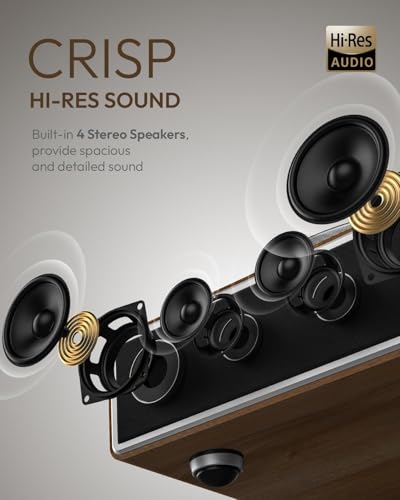





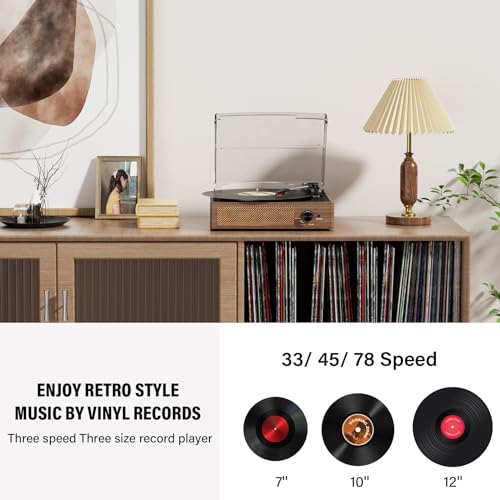


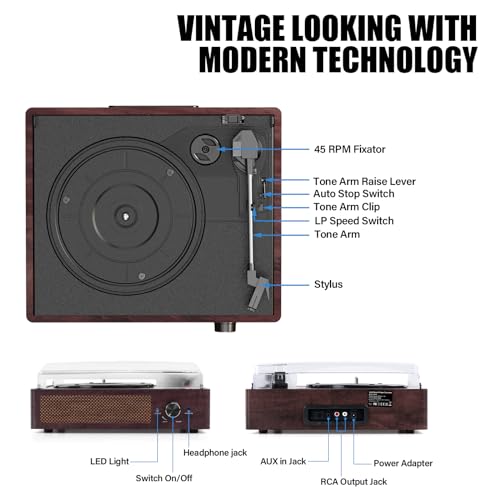


We also considered 10 others:


Our Top Choice
Compare Features


The order above is not editorial opinion, and it is not paid placement. It comes from what shoppers across our network actually do - which record players they compare, and which they ultimately buy. We re-rank as new data comes in, so the long-term favorites have to keep earning their spot against new entrants. The full method, including how we make money.
Record Players Buyer's Guide
Buying a record player is a tradeoff between convenience and record-safe playback: the easiest all-in-one units are appealing, but the cartridge, tracking force, platter stability, and speaker placement determine whether your records sound good and avoid unnecessary wear. Pay close attention to upgrade paths, automatic features, and whether built-in speakers are a temporary convenience or the system you actually plan to use long term.
Quality
You want a record player that feels solid and stays dependable, because flimsy construction can lead to vibration, speed instability, worn parts, or poor playback over time. Look for stable materials, a well-fitted tonearm and platter, smooth controls, and a dust cover or hinges that don’t feel fragile; be cautious of lightweight builds, loose components, or reports of reliability issues.
Look first for a record player with a proper magnetic cartridge, adjustable or correctly set tracking force, a stable platter, and a tonearm that cues smoothly without dropping hard onto the groove. Avoid ultra-light toy-like mechanisms, fixed ceramic cartridges with heavy tracking force, wobbly platters, and flimsy hinges or lids, because those are the failures most likely to cause skipping, groove wear, or uneven playback. Owner feedback supports this priority: the better-liked models are described as sturdier, clearer, warmer, and more dependable than basic record players, with buyers often feeling they get a real step up in build and day-to-day quality.
Sound
Sound quality determines whether your records feel warm and detailed or thin, harsh, and noisy. If you want a self-contained setup, check whether the built-in speakers are clear and loud enough for your room; if you plan to use external speakers, look for clean output with minimal hum, hiss, or motor noise. Watch for players that get distorted at higher volume or pick up too much unwanted vibration during listening.
For sound quality, decide whether you want a true turntable setup or a self-contained player: built-in speakers can be fine for casual bedroom or dorm listening, but external speaker outputs, Bluetooth output, or a phono/line switch matter if you want fuller bass, stereo separation, and lower vibration feedback. Look for a magnetic cartridge, clean speed control at 33⅓ and 45 RPM, and the ability to connect powered speakers or a receiver; avoid judging sound only by volume, since harsh treble, rumble, and inner-groove distortion become tiring fast. Owners most often praise models that sound rich, warm, clear, and noticeably better than cheap all-in-one players, while built-in-speaker units are liked most when expectations stay entry-level or compact-system realistic.
Ease
A record player that’s easy to set up and use helps you spend more time listening and less time fussing with adjustments. Look for clear controls, straightforward speed switching, simple tonearm operation, and setup steps you’re comfortable handling, such as balancing the tonearm or connecting speakers. Watch out for designs that require frequent manual tweaks if you want a more relaxed day-to-day experience.
Beginners should look for setup features that prevent record damage: pre-mounted cartridges, clear counterweight and anti-skate instructions, a cueing lever, automatic stop or return, and labeled outputs for powered speakers or receivers. Fully automatic operation is helpful if you do not want to manually place and lift the tonearm, but make sure it still uses a record-safe cartridge and tracks properly; convenience should not come at the cost of excessive stylus pressure. Owner sentiment backs the value of simplicity, with many buyers praising plug-in-and-play setup, clear instructions, automatic operation, and easy connection as reasons first-time vinyl listening felt approachable.
Design
A record player often sits in a visible spot, so its appearance matters as much as its footprint and sound setup. Look for a design and finish that fit your room and feel durable up close, but watch out for purely decorative styling that makes controls awkward, hides ports, or uses flimsy materials.
Treat design as more than décor: suitcase and compact all-in-one styles save space, but check whether the record lies fully supported on the platter, whether speakers are isolated from the tonearm, and whether the lid can stay open without touching the record or cables. Wood-look bases, retro fabric, and decorative finishes can look great in a room, but the buying test should be stability, vibration control, dust protection, and enough clearance for 12-inch records. Owners do strongly value appearance, frequently praising vintage styling, solid-looking builds, and room-friendly designs that feel attractive enough to leave out rather than hide away.
Playback
Playback matters because it determines whether your records spin consistently, track cleanly, and let the music come through without skips, speed issues, or unnecessary fiddling. Look for smooth start/stop behavior, stable speed, a tonearm that can be properly adjusted for tracking force and anti-skate, and controls that fit how you’ll use it; be cautious with players that emphasize extras like remote control or versatility but lack solid core turntable functions.
For playback, match the feature set to how you actually listen: automatic start/stop is useful for casual sessions, 3-speed playback is needed for 78 RPM records, Bluetooth output helps with wireless speakers, and wired RCA or line output is still the safer choice for latency-free, more reliable sound. If you have older records, check whether the player supports the correct speed and whether you can replace the stylus; if you want CDs, cassettes, radio, USB, or wireless modes, confirm these extras do not replace the fundamentals of stable vinyl playback. Owners consistently appreciate convenient playback features such as Bluetooth pairing, all-in-one media options, remote controls, repeat functions, and automatic operation, especially when the unit remains easy to get running right away.
Value
You want a record player that fits your budget while still delivering the basics well: stable speed, low noise, a decent tonearm, and a cartridge that will not be a weak link right away. Watch out for very cheap players that save money with flimsy parts or poor tracking, because they can sound worse, wear records faster, or leave you needing upgrades sooner than expected. Good value for money means the player feels solid, is easy to live with, and gives you room to enjoy your records without paying for features you will not use.
The best value is not simply the cheapest record player; it is the lowest-cost setup that protects records, sounds acceptable, and can grow with you through a replaceable stylus, standard cartridge, and external speaker connections. If you only need casual listening, a compact all-in-one may be enough, but if you are collecting records seriously, paying for a better tonearm, cartridge, and outputs can save you from replacing the whole unit later. Owner feedback aligns with this: shoppers often feel satisfied when an entry-level player delivers solid sound, useful features, simple setup, and dependable quality without requiring a separate high-end system immediately.
1,000,000+ shoppers use Buyer's Guide every week to find the best products and services online.

Helping millions of users make smarter purchases online.


