















We also considered 10 others:


Our Top Choice
The order above is not editorial opinion, and it is not paid placement. It comes from what shoppers across our network actually do - which rechargeable batteries they compare, and which they ultimately buy. We re-rank as new data comes in, so the long-term favorites have to keep earning their spot against new entrants. The full method, including how we make money.
Rechargeable Batteries Buyer's Guide
Rechargeable batteries are a tradeoff between drop-in convenience and the electrical details that make a device actually run well: size, chemistry, voltage behavior, charger compatibility, and drain level all matter. The sharpest buying concerns are avoiding cells that sag in high-drain gear or fail in solar fixtures, and building a charging rotation that saves disposables without leaving devices waiting for power.
Device Fit
Rechargeable batteries are not automatically drop-in replacements for every device, even when the physical size is the same. Voltage behavior, charger requirements, and device cutoff thresholds can decide whether a battery feels strong, weak, or unusable in real use.
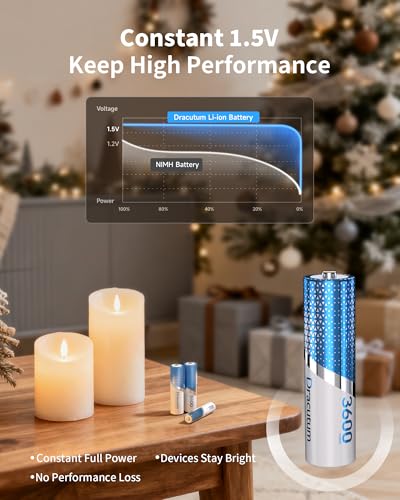
Match the cell to the device before comparing runtimes: most common AA/AAA rechargeables are NiMH cells that behave differently from alkalines, while some newer AA rechargeables provide regulated 1.5V output for devices that are picky about voltage. For solar garden lights, check the fixture’s required size, chemistry, and capacity range; using the wrong chemistry or a cell the solar panel cannot recharge properly can mean dim lights, short overnight run time, or charging failure. Owners repeatedly report good results when rechargeables fit the intended use, including household electronics, controllers, flashlights, wireless mice, LED lights, and outdoor solar lights; sentiment also highlights that full-size 1.5V rechargeables can solve fit and voltage-drop concerns in standard AA devices.
Runtime Power
The best rechargeable battery for a remote may not be the best one for a camera flash or motorized toy. Capacity, voltage sag, and discharge behavior determine whether a device runs strongly until near empty or fades early under load.
For cameras, flash units, bright flashlights, toys with motors, and game controllers, prioritize high-drain-capable cells with honest capacity ratings and stable output under load, not just the biggest number printed on the wrapper. For remotes, clocks, sensors, and low-drain gear, low self-discharge and charge retention matter more than peak output. Owner feedback strongly supports this distinction: buyers praise rechargeables with long runtimes in everyday devices, steady output in flashlights, camera flashes, and small motors, and useful performance in candles, solar lights, toys, ornaments, and other common AA/AAA gear.
Cycle Life
Rechargeable batteries earn their keep only if they survive many charge and discharge cycles. Consistent cells reduce the frustration of random device shutdowns, uneven pack performance, and batteries that seem fine but no longer hold a useful charge.
Look for cells known for repeatable charging, low self-discharge, and consistent behavior across many cycles; avoid packs with exaggerated capacity claims or reports of early drop-off, mismatched cells, or failures to take a charge. A good rechargeable should age gradually, not become unreliable after only a few uses, because weak cells in a set can drag down multi-battery devices. Owner sentiment repeatedly points to reliability as a major separator, with many buyers describing years of use before meaningful decline, repeated recharging without obvious performance loss, and consistent operation across household gadgets and outdoor lighting setups.
Charging Setup
Charging is half of the rechargeable-battery experience, and a poor charger can make good cells seem unreliable. Safe termination, slot independence, and practical storage help prevent overcharging, uneven charging, and dead-battery bottlenecks.
If buying a charger kit or adding to an existing charger, confirm the charger supports the cell size and chemistry, charges each slot independently, detects full charge, and offers overheat or fault protection. The ability to mix AA and AAA cells, charge only one or two at a time, and keep spare sets organized matters in homes rotating batteries through controllers, toys, lights, and remotes. Owners specifically appreciate simple chargers, AA/AAA flexibility, batteries that recharge well in common chargers, pre-charged cells that can be tested right away, and storage-friendly charger cases that hold multiple batteries.
Pack Value
Rechargeables are most useful when the pack size matches the household’s battery turnover. A well-sized set lowers waste and emergency disposable purchases, while giving frequently used devices less downtime.
Plan pack size around rotation: buy enough cells to keep one set in devices, one set charged, and possibly another set charging, especially for children’s toys, controllers, flashlights, solar lights, and seasonal decorations. Compare value by expected uses and replacement reduction, not just the upfront cost per cell; too small a pack can force constant waiting, while a large pack only helps if the cells stay organized and get used. Owner feedback strongly emphasizes this value pattern, with buyers praising 8-, 12-, and 16-count packs for reducing disposable purchases, leaving spares to rotate through chargers, and saving money in homes that burn through AA or AAA batteries quickly.
1,000,000+ shoppers use Buyer's Guide every week to find the best products and services online.

Helping millions of users make smarter purchases online.