














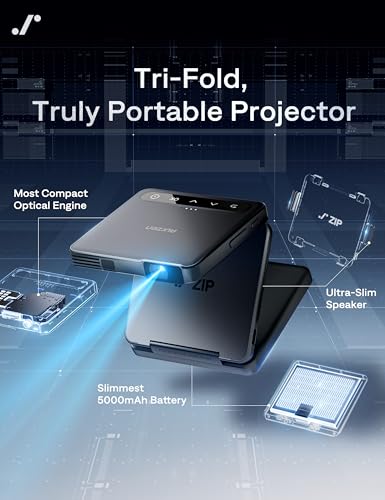



We also considered 10 others:


Our Top Choice
Compare Features


The order above is not editorial opinion, and it is not paid placement. It comes from what shoppers across our network actually do - which projectors they compare, and which they ultimately buy. We re-rank as new data comes in, so the long-term favorites have to keep earning their spot against new entrants. The full method, including how we make money.
Projectors Buyer's Guide
Projectors promise a huge image without a huge TV, but the real tradeoff is that screen size depends heavily on room darkness, throw distance, placement, and source compatibility. The sharpest buying checks are real brightness versus your ambient light, whether the projector physically fits your room without excessive keystone correction, and whether your streaming and audio setup will work without lag or blocked apps.
Picture
Picture quality determines how clear, bright, and natural your projected image looks, especially as screen size increases or room lighting changes. Look for enough brightness for your space, sharp resolution for the content you watch, and accurate color that doesn’t look washed out or overly artificial. Be careful not to judge by “4K” alone, since contrast, lens quality, and light output can matter just as much to how good the image actually looks.
For picture, check projector-specific specs before trusting “big screen” claims: look for native resolution, ANSI or ISO lumens rather than vague peak-lumen numbers, contrast performance in dim rooms, and whether the image stays sharp at the screen size you actually want. If you plan to watch sports, games, or subtitles, also check motion handling, input lag, focus uniformity from center to corners, and avoid relying heavily on digital keystone because it can soften the image and reduce usable resolution. Owner feedback supports prioritizing image quality: buyers repeatedly praise clear, bright, sharp, colorful, vivid pictures that feel convincing for movies, sports, games, and videos, especially in dimmer rooms or for compact units where expectations are lower.
Quality
A projector’s quality affects how well it holds focus, handles heat, and delivers a consistent image over repeated use. Look for sturdy construction, dependable controls and inputs, stable brightness and color, and signs of good thermal design; be cautious of flimsy housings, noisy fans, loose ports, or user feedback pointing to early failures or inconsistent performance.
For overall quality, do not judge only by how good the first movie looks; projectors fail or disappoint through heat, fan noise, uneven focus, dust blobs, weak mounts, short LED/lamp life, or unstable software. A careful shopper should look for a sealed or dust-resistant optical path, adequate cooling, reasonable fan noise for the viewing distance, stable focus after warm-up, firmware/app support, and a real warranty or return window in case brightness, alignment, or dead pixels are not acceptable. Owner sentiment is broadly positive on perceived quality, with buyers describing strong picture performance, smooth wireless features, easy external-speaker pairing, useful included extras, and performance that feels better than expected for everyday movie and show use.
Setup
A projector that’s easy to set up saves you from fighting with placement, focus, and image alignment every time you want to watch something. Look for helpful features like autofocus, keystone correction, lens shift, zoom, clear menus, and flexible mounting or tabletop placement options. Be cautious if a projector requires a very exact position or relies heavily on digital correction, since that can make setup fussier or slightly reduce image quality.
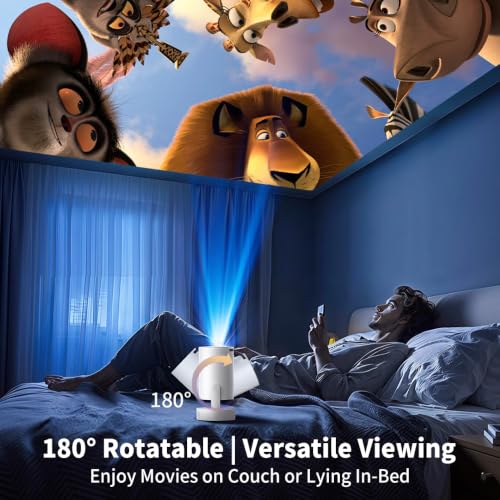
For setup, measure the room first: confirm throw ratio, minimum and maximum image size, projection distance, vertical offset, tripod or ceiling-mount compatibility, and whether the projector can sit centered rather than at an awkward side angle. Auto-focus and auto-keystone are useful, but they should be convenience features, not a substitute for proper placement, because extreme keystone correction can crop pixels and make edges softer; also check whether the power cord, HDMI cable path, and ventilation clearance work where you plan to place it. Owner reports align with this: setup is often described as quick and low-effort, with auto-focus, auto-keystone, 6D keystone, built-in smart TV interfaces, and simple device hookup helping users get a sharp, usable image in minutes.
Value
A projector’s value for money comes down to whether its image quality, brightness, features, and reliability justify what you pay. Look for a balance of performance and practical extras you’ll actually use, such as easy setup, useful ports, or low-maintenance operation, and be wary of paying more for specs or features that won’t improve your viewing experience.
For value, compare the total system you need, not just the projector: screen, mount or tripod, streaming device, external speaker, long HDMI cable, carrying case, and possibly blackout curtains can change the real cost. The best value in this category is usually the model that matches your room brightness, throw distance, and source devices without forcing workarounds; avoid paying for smart features you will bypass, but also avoid ultra-basic units if you will need to add everything separately. Owner sentiment strongly supports the value angle, with buyers often saying the image feels impressive for the money, performance competes with more expensive expectations, included accessories help, and everyday uses like movie nights, sports, slideshows, and gaming feel well covered.
Sound
You’ll want to consider sound quality because built-in speakers can determine whether a projector is convenient on its own or needs an external speaker system to feel complete. Look for audio that is loud enough for your room, clear at higher volumes, and not overly thin or distorted; compact projectors often have limited bass and separation, so plan for external audio if you want a more immersive movie or gaming experience.
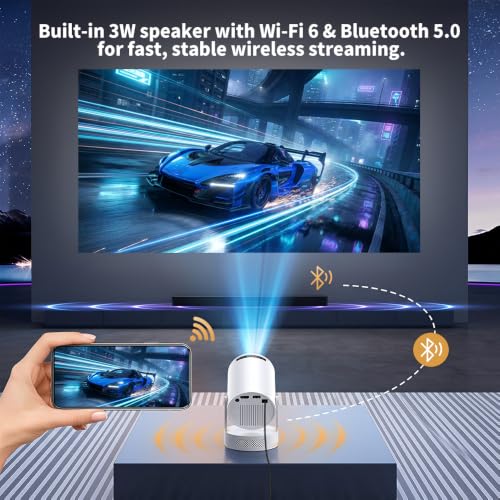
For sound, assume built-in speakers are for small-room convenience unless the projector specifically offers stronger audio, stereo separation, or easy external output. Check for Bluetooth audio latency, HDMI ARC/eARC if you want a soundbar, a 3.5 mm output for simple speakers, and enough fan-noise control so quiet scenes are not masked; for outdoor viewing, plan on external speakers because open air absorbs sound quickly. Owner feedback is encouraging for casual use: many buyers find built-in speakers surprisingly loud, clear, full, or even powerful for compact projectors, with some saying external speakers are optional indoors, while others still prefer added speakers for a fuller outdoor setup.
Connectivity
You’ll want a projector that connects easily to the devices and services you actually use, whether that means HDMI sources, wireless screen mirroring, Bluetooth audio, or built-in streaming apps. Check that its smart features support your preferred apps and that wireless casting works with your phone, tablet, or laptop ecosystem. Watch out for projectors with limited app stores, outdated software, or “wireless” features that still require extra adapters for common setups.
For connectivity, verify the exact sources you use: HDMI for streaming sticks, game consoles, and laptops; HDCP compatibility for protected video; USB only if it truly plays your file types; dual-band Wi-Fi for casting; and Bluetooth that supports audio output, not just remote or input functions. Be cautious with phone mirroring claims because many subscription apps restrict casting or screen mirroring; built-in smart platforms can be convenient, but app availability, updates, login speed, and remote usability matter as much as having Wi-Fi. Owner sentiment backs the importance of easy connections, with buyers praising built-in streaming interfaces, Wi-Fi setup, phone and laptop connection, AirPlay or casting, Bluetooth speaker pairing, HDMI support, stable device connections, and quick everyday navigation.
1,000,000+ shoppers use Buyer's Guide every week to find the best products and services online.

Helping millions of users make smarter purchases online.


