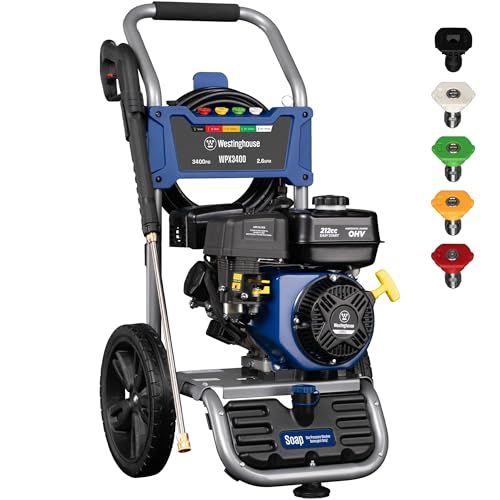
- Power Source: Gas
- Pressure: 3400 PSI & 2.6 GPM
- Nozzles: 0º, 15º, 25º, 40º, soap
- Hose Length: 25'
- Soap Tank: 54 oz built-in
Westinghouse WPX3400 Gas Pressure Washer
Performance and real-world cleaning results

The Westinghouse WPX3400 Gas Pressure Washer is aimed at homeowners who want a noticeably stronger alternative to an electric unit without stepping all the way up into heavy commercial territory. With a rated 3400 PSI and 2.6 GPM, it delivers the kind of output that makes outdoor cleaning feel less like a weekend-long project and more like a set of manageable tasks. In practical use, that combination of pressure and flow is what helps lift embedded grime off concrete, rinse algae from siding, and strip mud and road film from vehicles and equipment efficiently. The extra flow compared with many electric models is especially helpful because it improves rinsing speed; pressure helps break dirt loose, but water volume is what carries it away.
For driveways, sidewalks, and patios, the WPX3400 has the muscle to cut through ground-in dirt and organic staining, especially when paired with the right nozzle. A narrower spray pattern concentrates impact for stubborn patches, while wider patterns are better for general cleaning and avoiding etched lines. On vertical surfaces like fencing or house siding, the unit is strong enough to be effective but also powerful enough to cause damage if you linger too long in one spot or use too aggressive a tip. The learning curve is not steep, but it rewards a little patience: start with a wider nozzle, keep the wand moving, and increase intensity only as needed. For vehicle washing, this is a case where restraint matters; using a wide fan tip at a greater distance and letting soap do the work can help prevent marring paint or forcing water past seals.
The WPX3400’s gas engine gives it the advantage of portability and consistent output without being tied to an electrical circuit. That also means it feels more capable for bigger properties where you’d otherwise be fighting extension cords or voltage drop. The tradeoff is that gas pressure washers require a bit more attention before and after use, including fuel, oil checks, and proper storage, but many users will find the performance gain worth that extra routine.
Build quality, usability, and day-to-day ownership

What separates a satisfying pressure washer from a frustrating one often comes down to the small ownership details: how easily it starts, how it rolls around the property, how convenient the hose and accessories are, and whether it feels stable when you’re pulling it over uneven terrain. The WPX3400 is built in the typical upright, wheeled format that most homeowners will recognize, and that format generally works well for getting around driveways, decks, and yard paths. A pressure washer at this output level is not featherweight, so the practical feel of the handle, wheel size, and overall balance matters. A stable stance reduces the chances of the unit tipping if the hose snags or you pivot quickly.
The hose and wand experience is a major part of usability. A longer hose gives you the ability to leave the machine in one place and work a wider area, which is useful when you’re cleaning a driveway or washing an SUV without repositioning constantly. At the same time, higher PSI washers put more demand on fittings and couplers, and a hose that kinks easily can interrupt flow and make the job feel more tiring than it should. If you plan to do frequent jobs, it’s worth paying attention to how the included hose behaves and whether replacement hoses and quick-connect accessories are easy to source. Many users also end up adding a surface cleaner attachment for flatwork; with a machine in this power range, a surface cleaner can significantly improve speed and consistency while reducing striping.
Noise and exhaust are part of gas ownership, and the WPX3400 is no exception. It’s best used outdoors in open air, and you’ll want to be mindful of neighbors if you’re running it early or for long sessions. Maintenance is straightforward but non-negotiable if you want reliability: checking oil, using clean fuel, and winterizing or draining water from the pump and hoses before freezing conditions. If you’re the kind of user who prefers tools that can sit for months and still run without any fuss, an electric unit might match your habits better, even if it cleans more slowly.
Purchase factors that matter most

Before buying the Westinghouse WPX3400, the first factor to consider is whether you actually need gas-level performance. The most important purchasing question is not “How much PSI is it?” but “What am I cleaning, how often, and how fast do I want it done?” If your main chores are occasional patio rinsing, small decks, and light vehicle washing, a quality electric washer can be more convenient and still effective. If you routinely tackle large concrete areas, seasonal algae on siding, muddy equipment, or you simply want to cut your cleaning time dramatically, the WPX3400’s output becomes a real advantage.
The second most important factor is the balance of PSI and GPM, not PSI alone. PSI describes impact, while GPM determines how quickly you can flush debris and soap away. Many shoppers get pulled toward the biggest PSI number, but for overall productivity, a strong flow rate matters at least as much. In this respect, the WPX3400’s 2.6 GPM is a meaningful benefit over many entry-level electric models and even some lighter gas options. If your cleaning style involves lots of rinsing and covering large surface areas, prioritize flow.
Another critical consideration is what you plan to clean safely. High pressure can damage wood, strip paint unintentionally, etch softer concrete, and force water behind siding or into electrical fixtures if used carelessly. If you’re buying this washer for deck restoration or older surfaces, it’s important to be comfortable using wider nozzles, maintaining distance, and sometimes letting detergent or a dedicated cleaner do more of the heavy lifting. In some cases, a slightly lower pressure with good flow can be more forgiving while still being effective.
Practical ownership factors also matter, even if they feel less exciting than performance specs. Storage space is important because gas units are larger and should be stored with attention to fuel and freezing temperatures. Starting and maintenance routines should match your tolerance for upkeep. If you know you will use it only once or twice a year, consider whether you’re willing to do proper storage steps so it’s ready next season. Finally, think about accessories and upgrade paths. If you expect to clean a lot of concrete, budgeting for a surface cleaner can be one of the best quality-of-life improvements. If you wash vehicles often, a foam cannon and the discipline to use gentle tips at safe distances can help you get better results with less risk.
Common Questions
Is 3400 PSI too much for washing a car? It can be if you use an aggressive nozzle or get too close. For cars, use a wide fan tip, keep distance, and rely on soap and rinsing rather than concentrated pressure.
Will it clean a driveway effectively without chemicals? For basic dirt, yes, especially with the right nozzle and technique. For oil stains or deep organic staining, a degreaser or concrete cleaner often makes a noticeable difference.
Do I really need to care about GPM if PSI is high? Yes. GPM strongly affects how fast you rinse and how efficiently you remove loosened grime. A washer with decent flow typically feels faster and more satisfying to use.
Is a surface cleaner worth buying with this unit? If you have sizable concrete areas, it’s usually worth it. A surface cleaner can reduce streaking and speed up large flat jobs compared with using a spray tip alone.
Conclusion
The Westinghouse WPX3400 Gas Pressure Washer is a strong choice for homeowners who want serious cleaning power and faster job completion than most electric models can offer. The most important buying considerations are whether you need gas-level productivity, how much you value higher flow alongside pressure, and whether you’re comfortable with the upkeep and care that come with a gas engine. If those needs align, the WPX3400 can be a capable and satisfying tool for keeping outdoor surfaces looking sharp.