




We also considered 10 others:


Our Top Choice
Compare Features


The order above is not editorial opinion, and it is not paid placement. It comes from what shoppers across our network actually do - which posture braces they compare, and which they ultimately buy. We re-rank as new data comes in, so the long-term favorites have to keep earning their spot against new entrants. The full method, including how we make money.
Posture Braces Buyer's Guide
Posture braces work best when they cue better alignment without forcing your shoulders, neck, or lower back into a painful position. The key tradeoff is getting enough pull and support to interrupt slouching while avoiding armpit pressure, neck ride-up, numbness, or over-reliance during long wear.
Correction
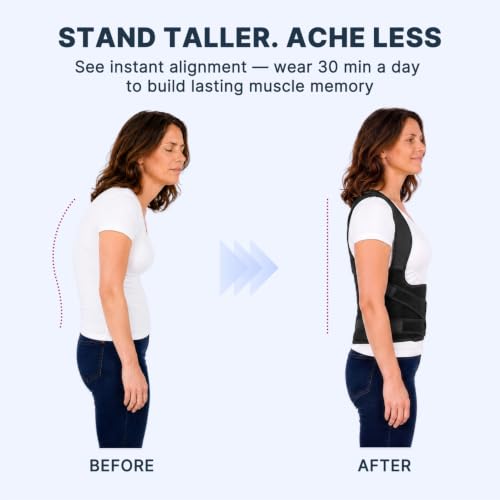
Correction matters because a posture brace should help you build better alignment habits, not just pull your shoulders back while you’re wearing it. Look for support that gently cues your upper back and shoulders into position without forcing an unnatural posture, and be wary of braces that feel painful, overly rigid, or rely on vibration alerts without providing enough physical guidance.
Look for a brace that matches the correction you actually need: a shoulder-retraction design for laptop hunching and rounded shoulders, a lumbar-support style for lower-back flareups, or a full-back design if you need both. Avoid models that promise permanent “fixes” by force; the safer goal is a noticeable posture cue that you can wear for short sessions without pain, tingling, or restricted breathing. Owner reports support this: wearers often notice shoulders being pulled back, a straighter upper-back position, and quick relief in upper-back, neck, shoulder, trap, collarbone, or even lower-back discomfort when the brace is worn correctly and consistently.
Support
The level and type of support determine whether a posture brace gently cues you to hold your shoulders and upper back in better alignment or feels overly rigid and uncomfortable. Look for support that matches your needs—light shoulder reminders for everyday posture habits, or broader upper-back support if you need more structure—and watch out for braces that restrict movement, dig in, or promise to “fix” posture on their own.
Prioritize the support structure around your pain pattern: figure-8 or shoulder-strap braces mainly remind the shoulders to retract, while braces with lumbar panels, stays, or wider back coverage are better for lower-back or full-back support. For desk posture, choose steady tension rather than a hard yank; for strained backs, look for a secure hold that still lets you sit, stand, and move normally. Owner feedback backs this distinction, with many praising shoulder-pulling support for straighter sitting and standing, while wider back-brace styles are credited with stronger lumbar support, full-back support, and tension relief without badly limiting movement.
Fit
A posture brace needs to match your body size and shape closely enough to guide your shoulders without pinching, digging in, or sliding around. Look for clear sizing guidance, adjustable straps, and a secure fit that stays in place as you sit, stand, and move; if it shifts, rides up, or feels restrictive, you’re less likely to wear it consistently.
Fit is the make-or-break issue in posture braces: check chest, waist, and torso sizing, not just a generic size label, and make sure the straps route under the arms without digging into the armpits. If you sit at a desk, watch for braces that ride up toward the neck; if you have a larger chest, broad shoulders, or a longer torso, look for longer straps, extenders, and enough adjustability to set shoulder tension independently from waist compression. Owners often like adjustable straps, Velcro, and easy self-adjustment once dialed in, but the most common caution is exactly this niche failure mode: straps that dig, shift, or ride up during sitting.
Usability
A posture brace only helps if you can put it on, adjust it, and take it off without frustration, especially if you plan to wear it during work, errands, or workouts. Look for intuitive straps, easy-to-reach adjustments, and a compact design that fits under or over your usual clothing without bulky hardware. Watch out for braces that require help to secure, loosen while you move, or take too long to fine-tune for daily use.
Choose a brace you can put on, tighten, loosen, and remove by yourself, because posture braces usually need small adjustments throughout short daily sessions. Good usability means accessible Velcro tabs, clear strap routing, enough adjustment range for layering over a thin shirt, and a design that fits into desk work without needing another person to reset it. Owner sentiment supports this: many find strap and Velcro adjustment straightforward after setup, appreciate extenders for larger sizing, and say the brace becomes easy to use alone once the fit is figured out.
Comfort
A posture brace only helps if you can comfortably wear it long enough to build better habits, so pay attention to how it feels across your shoulders, back, and underarms. Look for lightweight materials, adjustable straps, and smooth edges that do not dig in, pinch, or cause chafing, especially if you plan to wear it under clothing or for extended periods.
For comfort, favor breathable, low-bulk materials, padded underarm areas, smooth edges, and enough flexibility that the brace cues posture rather than pinning you in place. Plan to wear most posture braces over a thin shirt at first, and avoid any model that creates armpit chafing, neck pressure, skin irritation, numbness, or heat buildup during the wear time you intend. Owners commonly describe lightweight, soft, stretchy, breathable braces as comfortable for regular or longer use once adjusted, but they also flag the main comfort risk: straps digging into the armpits or riding up while sitting.
Quality
You’ll want a posture brace made with sturdy materials, clean stitching, and straps that hold tension without stretching out or digging in. Pay close attention to Velcro durability, because weak closures can lose grip over time and make the brace harder to adjust or keep in place. A higher-quality brace should feel supportive through repeated wear without fraying, twisting, or breaking down quickly.
Inspect quality around the parts that fail first in posture braces: Velcro grip, elastic recovery, stitching at strap anchors, edge binding, removable stays, and whether the material curls, stretches out, or loses tension after repeated use. A well-made brace should stay supportive through daily movement without becoming rigid, bulky, or abrasive, and the fasteners should hold after repeated tightening and loosening. Owner feedback generally favors sturdy materials, strong Velcro, supportive straps, and soft-brace construction that feels durable enough for regular wear while still giving a posture cue.
1,000,000+ shoppers use Buyer's Guide every week to find the best products and services online.

Helping millions of users make smarter purchases online.