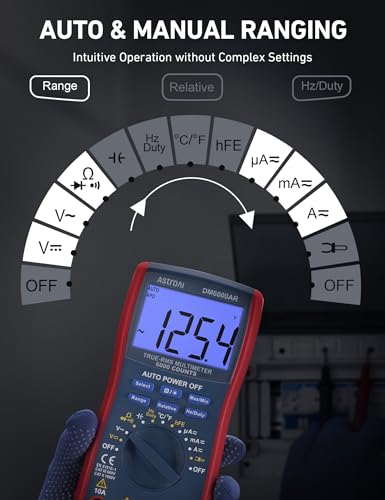




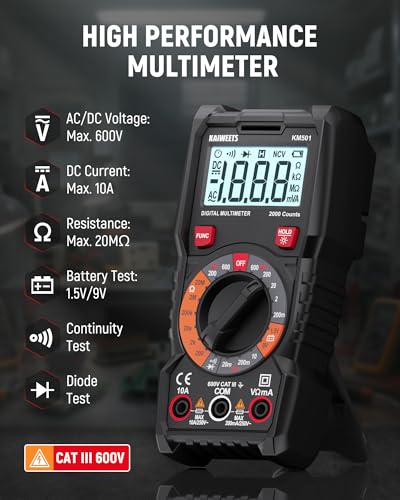
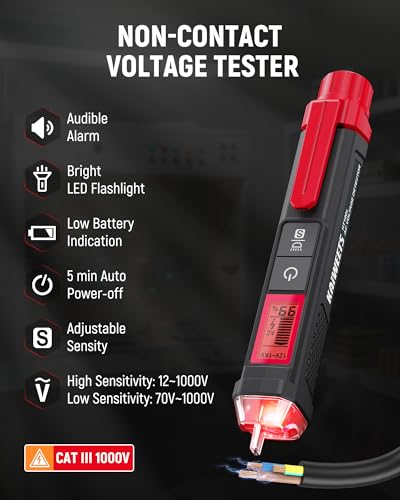


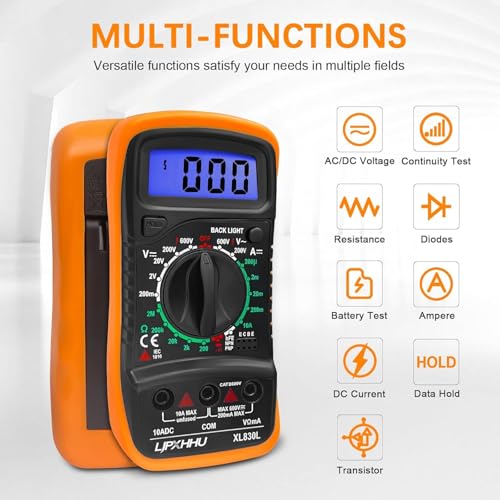







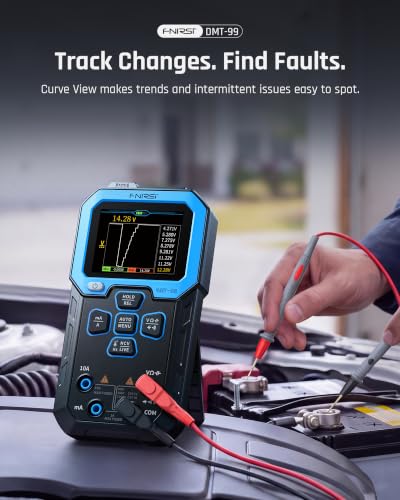


We also considered 10 others:


Our Top Choice
The order above is not editorial opinion, and it is not paid placement. It comes from what shoppers across our network actually do - which multimeters they compare, and which they ultimately buy. We re-rank as new data comes in, so the long-term favorites have to keep earning their spot against new entrants. The full method, including how we make money.
Multimeters Buyer's Guide
A multimeter has to balance convenience with trust: it should be easy enough to use on a dead outlet, car battery, or circuit board, but protected enough that one wrong range or live panel does not become dangerous. The sharpest buying concerns are electrical safety category, reading confidence, and whether the meter’s functions actually match the home, automotive, or bench work you plan to do.
Electrical Safety
A multimeter is often connected directly to energized circuits, so protection design matters as much as the reading on the screen. The right safety category, fusing, jack layout, and probes reduce the chance that a user error or voltage spike turns into a damaged tool or personal hazard.
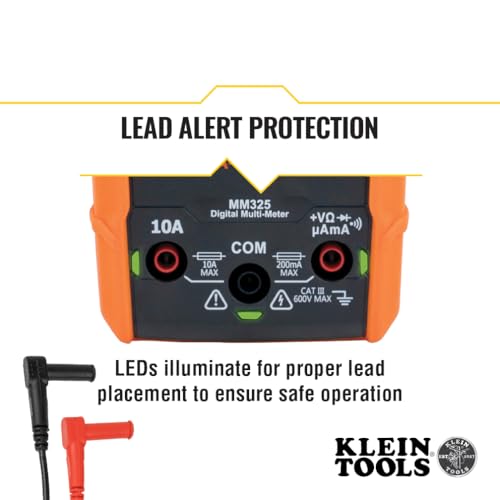
For any live mains work, look first for an appropriate CAT safety rating, clearly marked voltage limits, shrouded banana jacks, fused current inputs, overload protection, and properly insulated probes. Avoid meters with vague safety markings, unfused high-current ranges, thin probe insulation, or input jacks that make it easy to plug the lead into the wrong port unnoticed; these are bigger risks than a missing convenience feature. For automotive and low-voltage electronics, safety still matters because accidental shorts, current-range mistakes, and poor leads can damage the circuit or the meter. Owner feedback supports paying attention to construction: buyers repeatedly connect confidence with reliability, solid build quality, protected bodies, and good probes, while mixed reports of switch defects or early malfunctions show why “works today” is not the same as safely built for repeated use.
Reading Confidence
A multimeter is a diagnostic tool, so a wrong or unstable reading can send troubleshooting in the wrong direction. Accuracy, resolution, True-RMS capability, and settling behavior determine whether the number is merely visible or actually useful.
Choose a meter with accuracy specifications that match the job: casual battery and outlet checks can tolerate broader specs, but electronics repair, HVAC capacitors, sensor diagnostics, and comparative troubleshooting need steadier readings, adequate resolution, and documented accuracy by range. True-RMS is important when measuring non-sine AC from inverters, variable-speed equipment, dimmers, or modern power supplies; without it, AC readings can look plausible but be wrong. Fast, stable autoranging is useful, but the meter should not wander, flash random numbers, or take so long to settle that you cannot trust intermittent faults. Owners strongly reward meters that read accurately in common repair and bench work, including close comparisons with more professional units, while the more mixed comments about drifting or random numbers are a reminder to favor stable readings over a long feature list.
Job Fit
Different multimeter users need different ranges and functions, and extra modes only help when they match the fault being diagnosed. A good pick covers the likely measurements with safe input limits and usable ranges rather than simply offering the longest spec list.
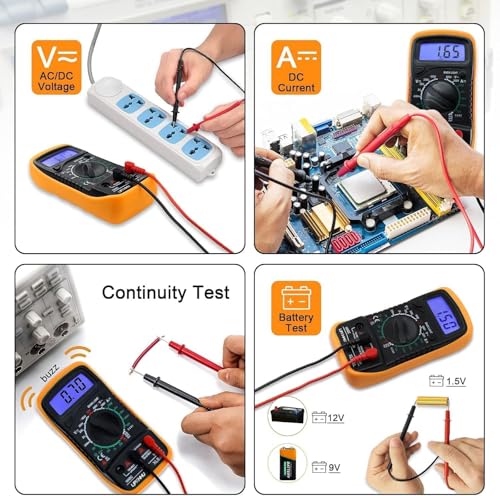
Match the meter to the circuits you actually test. Home troubleshooting usually needs AC/DC voltage, resistance, continuity, and safe outlet or breaker-box use; automotive work benefits from DC voltage, continuity, current capability, min/max capture, and sometimes clamp-style amperage; electronics and bench work often need diode test, capacitance, millivolts, microamps, and fast continuity. Avoid buying only by the number of modes if the ranges are too limited, the current input is poorly protected, or the meter lacks the specific measurement you need, such as capacitance for capacitors or a clamp for higher-current diagnostics. Owner sentiment backs this: highly liked meters are described as capable for voltage, current, resistance, continuity, capacitance, diodes, home checks, automotive diagnostics, and bench troubleshooting, with extra automotive-focused functions and auto modes standing out when they fit the user’s tasks.
Easy Readout
A multimeter is often used one-handed, in dim spaces, or while holding probes on small contact points. Clear controls and an easy readout reduce mistakes, especially for users who do not test circuits every day.
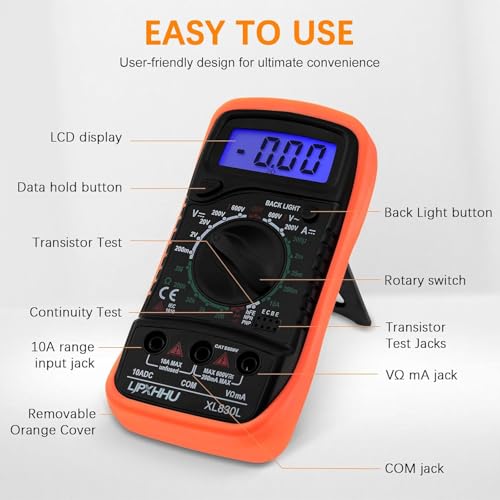
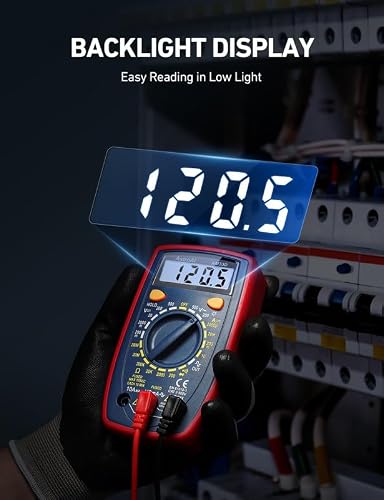
Look for a large high-contrast display, backlight, clear unit indicators, stable hold behavior, and a layout that makes the active jack and mode obvious. Beginners and occasional users often benefit from auto-ranging or automatic mode selection, but manual range or mode control is still valuable when the meter guesses wrong or when you want certainty on a known measurement. For real troubleshooting, small ergonomics matter: a fast continuity beep, a stand or magnetic hanger, probe holders, and controls that can be changed without losing lead placement can make testing safer and less frustrating. Owners consistently praise meters that are simple to operate, easy to see, quick to auto-range, and straightforward for basic home and automotive checks; they also appreciate large screens, bright backlights, stands, magnets, and included cases that make routine testing easier.
Field Durability
A meter that lives in a drawer, truck, or tool bag is exposed to drops, vibration, dead batteries, and tangled leads. Durability and portability decide whether it is ready when needed or becomes another fragile gadget that fails between uses.
For a toolbox or vehicle kit, prioritize a compact body with a protective rubber or silicone holster, a firm range switch, strain-relieved leads, and a case or lead storage that prevents probe tips from bending or poking through other gear. For bench use, a larger meter can be fine if it has a stable kickstand and readable angle, but pocket-sized meters should not sacrifice jack spacing, fuse access, or display legibility. Consider power design too: common replaceable batteries are easy to service, while rechargeable designs are convenient if they hold charge well and do not leave you stranded during infrequent use. Owners like slim meters that fit home kits, truck toolboxes, work cases, and tool bags, and they call out rechargeable convenience and protected compact bodies; at the same time, mixed durability reports around switches and early malfunction make rugged controls and sensible protection worth checking closely.
Kit Value
Multimeters vary widely in capability, so the best value is the tool that meets the job safely and completely without unnecessary compromises. Accessories and advanced features matter only when they improve real testing, accuracy, or convenience.
Judge value by the whole working kit, not just the meter body: usable probes, alligator clips, a protective case, spare fuses, readable documentation, and the right measurement functions can save immediate add-on purchases. A lower-cost meter can be a smart home or hobby choice if it is accurate enough, protected for the work, and easy to use; a higher-spec meter is justified when safety rating, ruggedness, calibration confidence, or professional downtime matters. Be wary of bundles that add accessories but compromise on input protection, lead quality, or reading stability. Owner feedback repeatedly frames strong value around capable everyday performance, useful included accessories, True-RMS or automotive features, and feature sets that feel competitive with more expensive meters, while occasional comments about lead pliability show that accessories should be judged for usability, not just counted.
Don't miss the latest sales on Multimeters and more. Get the best Black Friday deals today!

1,000,000+ shoppers use Buyer's Guide every week to find the best products and services online.

Helping millions of users make smarter purchases online.