







We also considered 10 others:


Our Top Choice
Compare Features


The order above is not editorial opinion, and it is not paid placement. It comes from what shoppers across our network actually do - which mobility electric wheelchairs they compare, and which they ultimately buy. We re-rank as new data comes in, so the long-term favorites have to keep earning their spot against new entrants. The full method, including how we make money.
Mobility Electric Wheelchairs Buyer's Guide
Mobility electric wheelchairs force a tradeoff between independence on real routes and the practical limits of lifting, storing, charging, and controlling a powered chair every day. The sharpest buying risks are choosing a chair that cannot handle the user’s actual terrain and turning spaces, or one that is labeled portable but is still too heavy or awkward for the caregiver to transport safely.
Mobility
How easily a wheelchair turns, steers, and rolls affects how confidently you can move through daily spaces like hallways, doorways, bathrooms, and crowded rooms. Look for a chair with smooth-rolling wheels, responsive steering, and a turning radius that fits your home and routines; watch out for designs that feel stable in open areas but become hard to maneuver in tight spaces or over thresholds.
Prioritize the chair’s real-world fit for the places it must go: measure hallway and bathroom turning space, door widths, elevator clearance, trunk access, curb-cut use, and the steepest ramps or driveway grades it will face. Look for a tight turning radius, predictable joystick response at low speed, adequate ground clearance for thresholds, stated incline capability, anti-tip support, and enough battery range for the longest appointment or outing with reserve left over; avoid models that only look capable on smooth showroom floors if the user needs grass, cracked sidewalks, hills, or crowded indoor maneuvering. Owner feedback supports these priorities: shoppers often praise chairs that steer easily around the house, in tight areas, at appointments, while shopping, at conventions, and even on level grass, and many report that smooth controls, dependable battery life, and push-assist or hill help meaningfully increase independence.
Build
Build quality matters because your wheelchair has to support you reliably through daily transfers, bumps, turns, and repeated folding or transport. Look for a sturdy frame, tight hardware, smooth-moving parts, and materials that feel durable without adding more weight than you can manage. Watch for flexing, rattling, loose joints, or flimsy components, as these can affect safety, comfort, and long-term confidence.
For an electric wheelchair, build quality should be judged less by how “solid” it feels in a listing and more by the safety-critical parts: frame rigidity, weight capacity with margin, secure folding latches, anti-tip wheels, braking behavior on slopes, wheel and caster durability, battery mounting, and whether replacement parts and service are realistically available. Check that the seat width and depth match the user, that armrests and footrests lock securely, and that the chair does not flex or rattle under the user’s actual weight plus bags or medical equipment. Owner sentiment is strongest when chairs feel stable, sturdy, confidence-inspiring, smooth on inclines or uneven ground, and well made for daily outings, which aligns with choosing a frame and drive system that can tolerate more than occasional indoor use.
Portability
If you need to load your wheelchair into a car, store it in a tight space, or take it while traveling, portability can matter as much as comfort. Look for a frame that folds or breaks down easily, a manageable lifting weight, and a folded size that fits your vehicle and storage areas. Watch out for chairs that are technically folding but still bulky, awkward to lift, or difficult to reassemble without help.
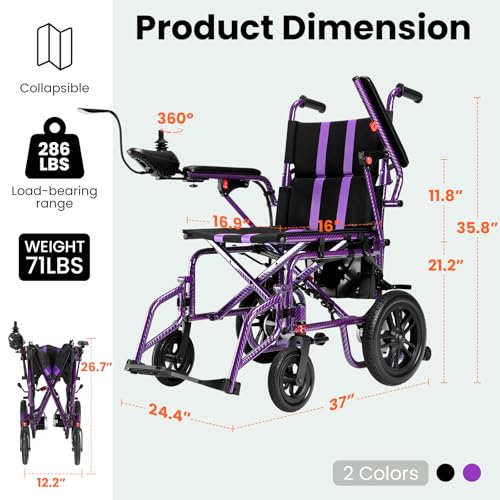
Portability only matters if the caregiver or user can perform the whole transport sequence safely: fold it, secure loose parts, lift or roll it into the vehicle, protect the joystick, and reassemble it without tools or pinched fingers. Verify folded dimensions against the actual trunk, hatch, cruise cabin, or storage closet; check whether the battery must be removed, whether the chair can stand or roll when folded, and whether the lift weight is realistic for the person doing the lifting. Owners frequently value quick folding, easy setup, simple assembly, clear instructions, and car or van fit, with many describing folding chairs as useful for errands, trips, cruises, parks, and doctor visits.
Usability
Usability matters because you’ll interact with the wheelchair constantly—moving, braking, folding, transferring, and making adjustments throughout the day. Look for controls that feel intuitive, brakes you can reach and trust, adjustments that don’t require extra help, and a frame that’s easy to maneuver in your typical spaces. Watch out for designs that seem capable on paper but feel awkward, stiff, or frustrating during everyday use.
Choose controls and daily procedures around the user’s cognition, hand strength, vision, and caregiver routine: joystick sensitivity should be adjustable or at least predictable, the controller should mount on the correct side, brakes should engage automatically when stopping, and freewheel/manual push mode should be easy to find but hard to trigger accidentally. Look for clear battery indicators, simple charging access, intuitive speed settings, tool-free setup, and a folding process that an older user or caregiver can repeat without confusion. Owner reports reinforce this: chairs are most appreciated when they arrive nearly assembled, have easy-to-learn controls, move smoothly indoors and outdoors, lock securely, and reduce physical strain through features such as push assistance.
Value
A wheelchair should feel worth what you pay because it affects your daily comfort, independence, and long-term reliability. Look beyond the upfront cost and consider whether the chair’s durability, fit, maneuverability, adjustability, and support match your needs. Watch out for low-priced options that compromise comfort or build quality, as well as expensive models with features you won’t actually use.
The best value in this category is not the chair with the longest feature list; it is the chair that safely covers the user’s daily route, body size, caregiver capacity, transport needs, and service expectations without forcing an early replacement. Before buying, compare battery type and replacement availability, warranty coverage, motor and controller support, tire style, seat comfort, accessory compatibility, and whether the chair can handle both home use and the most demanding planned outing. Owner sentiment tends to call a chair high-value when it combines sturdy construction, portability, power, smooth everyday use, and restored independence for family members, especially when it helps users get to shopping, parks, sidewalks, and medical visits with less assistance.
Weight
A wheelchair’s weight affects how easy it is for you or a caregiver to lift into a car, push over longer distances, and maneuver through tight spaces. Look for a balance between being lightweight enough to handle comfortably and sturdy enough to feel stable, especially if you’ll use it daily or on uneven surfaces. If you plan to transport it often, also consider how manageable it feels when folded or broken down, not just its total listed weight.
Treat “lightweight” claims cautiously because the listed number may exclude batteries, footrests, or accessories, and even a relatively light powered chair can be unsafe for one caregiver to lift repeatedly. Check total carry weight, heaviest single removable piece, battery weight, folded handling points, and whether the chair can be rolled like luggage or requires a dead lift into a trunk; also confirm that reducing weight has not compromised seat size, frame strength, stability, or battery range. Owners often appreciate lighter folding chairs for travel, trunks, home doorways, and caregiver handling, but weight is also a common tradeoff: some find chairs manageable while others say they are heavier than expected or that battery weight changes the experience.
1,000,000+ shoppers use Buyer's Guide every week to find the best products and services online.

Helping millions of users make smarter purchases online.


