














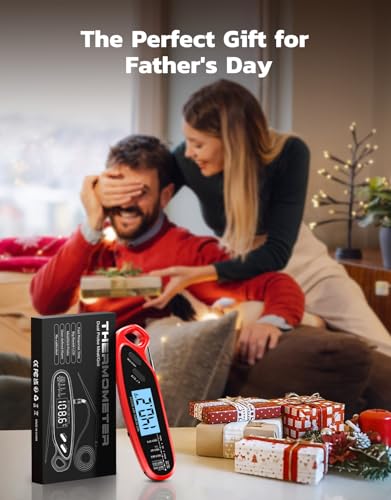


Our Top Choice
Why These Features Matter:
A wireless meat thermometer is, in theory, a simple object: stick probe in protein, wait for number, don’t poison anyone. In practice, they live at the intersection of hot grease, frantic timing, questionable Wi‑Fi, and the very human tendency to walk away “for one second” and come back to a smoke alarm doing interpretive dance.
The best ones aren’t the ones with the most impressive spec sheet. They’re the ones that make dinner feel calmer: you can refill a drink, wrangle kids, or pretend you’re not hovering—while still knowing exactly how close you are to medium-rare. And they have to fit into real kitchens: drawers that don’t glide, countertops already crowded, and that one “junk” cabinet where gadgets go to die.
Range That Works in Real Homes (Not Just on the Box)
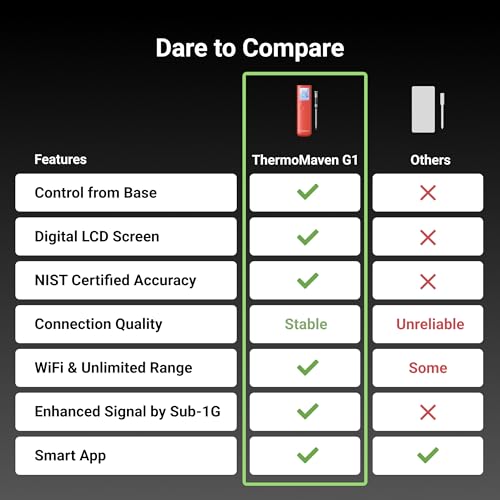
“Wireless” means different things depending on whether you live in a studio with one stubborn wall or a house where the grill is basically in a different zip code. In real life, range is less about maximum distance and more about staying connected through obstacles: patio doors, brick, foil-wrapped everything, and the fact that you will absolutely walk to the far end of the apartment at the worst moment.
- Look for: consistent connection that doesn’t drop every time you step inside to grab a platter.
- Why you’ll care: reconnecting apps with greasy hands is a particular circle of domestic hell.
- Quiet luxury: a system that just stays paired and doesn’t require a mini-ritual every cook.
An App That Doesn’t Feel Like Homework
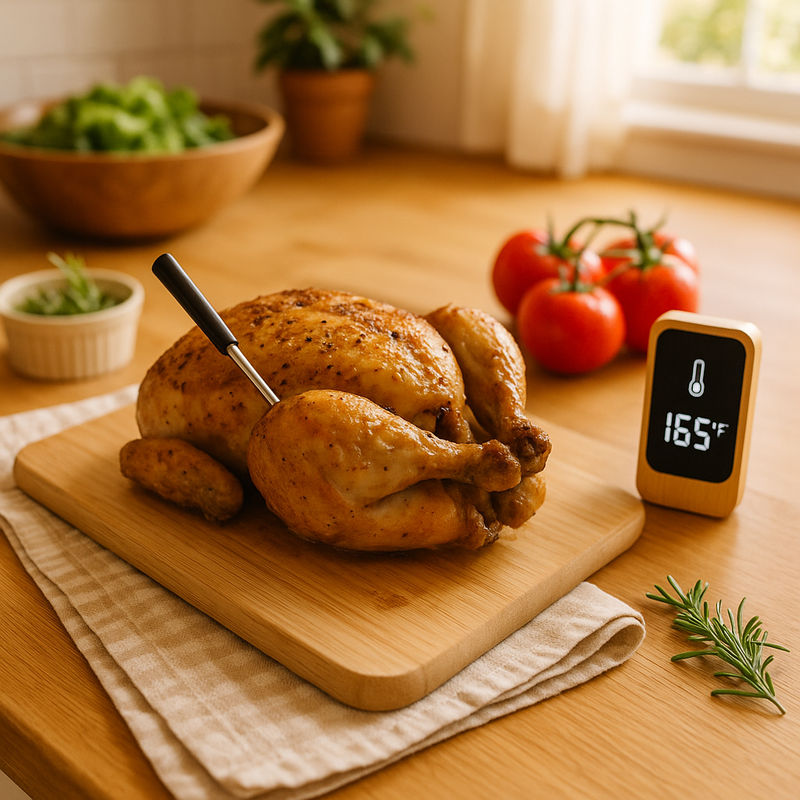
A good wireless thermometer app should feel like a helpful sous-chef, not a finicky smartwatch from 2013. You want big, legible numbers; a clean alert; and minimal “sign up to unlock the temperature you already paid for.” The best apps are boring in the most flattering way.
- Look for: clear temperature readout, reliable notifications, and a setup process you can do while your oven preheats.
- Nice to have: customizable target temps and alerts (e.g., warn me at 10°F out so I can actually find tongs).
- Minor annoyance to avoid: apps that push “doneness guides” like they’re horoscope readings. You know how you like your steak.
Probe Design: The Difference Between “Helpful” and “Fussy”
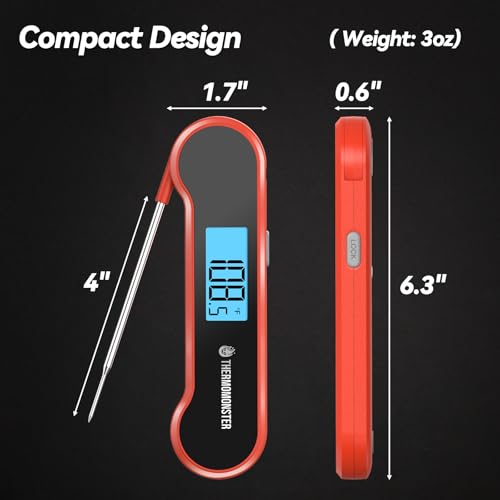
Probes are the part that actually touches your food, which means they’re also the part that gets dropped, splashed, scorched, and left on a plate you didn’t mean to throw in the sink. The best designs are sturdy, easy to insert, and not weirdly difficult to clean.
- Look for: a probe that feels solid (not flimsy), with a tip that inserts smoothly without tearing up delicate fish.
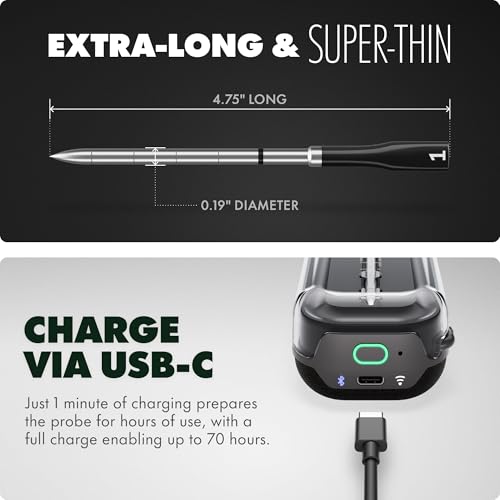
- Storage reality: probes that have a safe, contained place to live (case/dock) so they don’t become drawer shrapnel.
- Kitchen truth: if it’s annoying to clean, you’ll “forget” and then discover it later like an archaeological find.
Heat Tolerance That Matches How People Actually Cook
Most people don’t gently roast everything at an even 325°F in a spotless oven like a cookbook photo. They sear. They grill. They crank the heat because guests are arriving and the salad is still a concept. Heat tolerance matters because a probe that can’t handle high-heat cooking turns “wireless thermometer” into “fragile little anxiety stick.”
- Look for: probes designed to handle high-heat environments (grilling, searing, broiling).
- Real-life benefit: fewer moments of “Is it reading wrong because my chicken is weird or because my gadget is melting?”
Accuracy You Can Trust Without Overthinking It
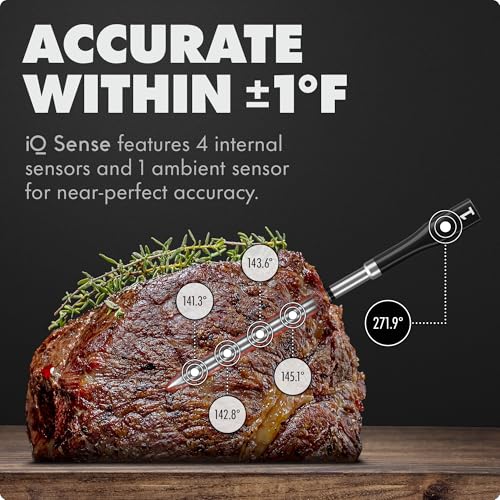
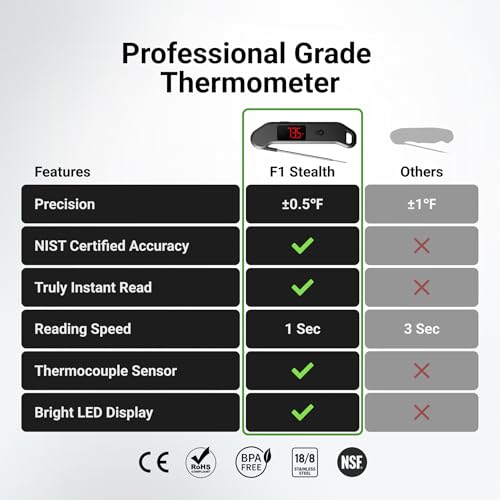
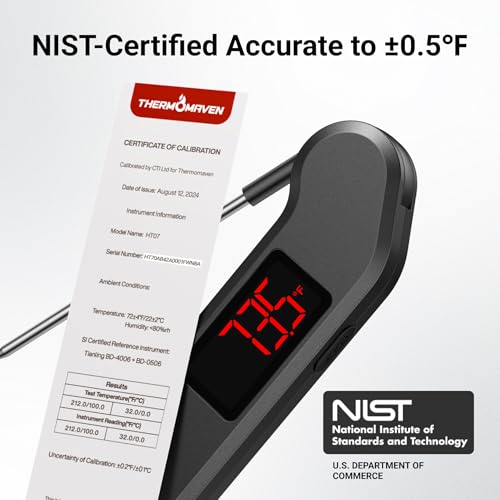
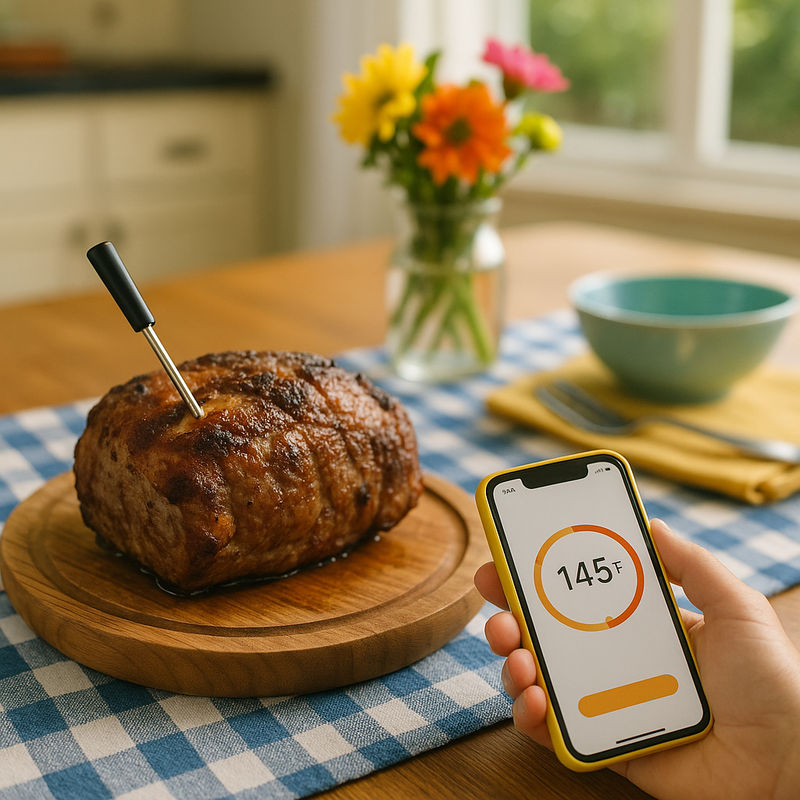
You don’t need to become a lab technician. You just need to know that 145°F is 145°F—especially with poultry and pork, where wishful thinking is not a seasoning. Most reputable thermometers are plenty accurate, but the difference shows up in how stable the readings feel: do they bounce around, lag, or take forever to settle?
- Look for: steady, responsive readings that don’t jitter wildly when you open the oven for a peek.
- Why it matters: jittery numbers make you second-guess everything, including your own competence.
Alerts That Are Actually Noticeable (But Not Insane)
A thermometer alert should be audible over running water and dinner-party chatter, but it shouldn’t sound like a car alarm in your kitchen. Bonus points for vibration alerts (useful when you’re outside with a grill and the wind is doing its thing) and for notifications that arrive promptly instead of five minutes after your roast hit temp.
- Look for: customizable alert volume and a notification system that’s consistent.
- Small-but-huge detail: a clear “approaching target” alert so you can rest meat properly without panic-carving.
Battery Life and Charging: The Make-or-Break
The most annoying thermometers aren’t inaccurate; they’re dead. Battery life matters because these gadgets often get used in bursts—then ignored—then summoned for a holiday meal like an understudy with no rehearsal. A good one either sips power slowly or has a charging setup that’s so easy you’ll actually use it.
- Look for: straightforward charging and an obvious battery indicator.
- Real-world win: a dock/case that charges the probe so you’re not hunting for a cable that has migrated to the “random cords” bin.
- Caveat: proprietary chargers are convenient until you lose them, and then you will feel personally betrayed.
Cleaning and “Where Does This Live?” Practicalities
Wireless meat thermometers come with bits: probes, sometimes multiple probes, a base, maybe a case. They either integrate into your kitchen rhythm or become clutter you resent. The best ones are easy to wipe down, have minimal crevices, and store neatly—because most of us do not have a dedicated “thermometer drawer,” no matter what Instagram says.
- Look for: smooth surfaces and a storage system that doesn’t require origami.
- Apartment-friendly: compact bases that don’t demand permanent counter real estate.
- Kid/pet factor: a case that actually closes so small hands (or curious cats) don’t redecorate your floor with sharp objects.
Multi-Probe vs. Single Probe: Know Your Cooking Personality
If you regularly cook two things at once—steak + chicken thighs, or a roast with a side of “I’ll just grill some sausages too”—multiple probes are genuinely useful. If you mostly cook one main protein at a time, single-probe simplicity can be a relief. More probes also means more to clean, charge, store, and inevitably misplace.
- Go multi-probe if: you host, you meal prep, or you like running a busy grill like it’s a small airport.
- Go single-probe if: weeknight cooking is already a lot and you want fewer moving parts.
- Honest note: extra probes sound great until you realize you’ve created a new category of tiny chores.
Guidance: How to Pick the One You’ll Actually Use
Think less about “the best wireless meat thermometer” and more about the one you won’t dread. The right pick depends on where you cook (indoor oven vs. outdoor grill), how chaotic your household is, and how much you enjoy fiddling with apps.
- If you grill a lot: prioritize connection stability outside and a probe that can handle high heat without drama.
- If you cook in a small space: prioritize compact storage and a setup that doesn’t require extra countertop staging.
- If you hate tech friction: prioritize an app with a clean interface and fast, reliable alerts.
- If you host holidays: prioritize multi-probe support and a charging/storage system that keeps everything together.
Things to Know (A Few Honest Caveats)
- Wireless isn’t magic: thick walls, metal grills, and crowded Wi‑Fi can all mess with signal. A “strong connection” is more valuable than a theoretical range number.
- Apps can change: updates happen; occasionally an app gets worse. If you’re sensitive to that, favor brands with a history of maintaining their software.
- All probes are mortal: they’re going into fire-adjacent situations. Even great ones eventually wear out—plan for that emotionally.
- It won’t fix bad cooking habits: you still have to place the probe correctly and let meat rest. The thermometer can’t stop you from slicing into a chicken breast the moment it hits temp because you’re hungry.
The Bottom Line
The best wireless meat thermometer is the one that fades into the background until it matters—then taps you on the shoulder at exactly the right moment. Look for a stable connection, a non-annoying app, a probe you can clean without swearing, and storage that doesn’t become clutter. If it makes dinner feel slightly more under control, it’s doing its job. If it makes you troubleshoot Bluetooth while your steaks overcook, it’s auditioning for the junk drawer.
1,000,000+ shoppers use Buyer's Guide every week to find the best products and services online.

Helping millions of users make smarter purchases online.

