















We also considered 10 others:


Our Top Choice
Compare Features


The order above is not editorial opinion, and it is not paid placement. It comes from what shoppers across our network actually do - which long range binoculars they compare, and which they ultimately buy. We re-rank as new data comes in, so the long-term favorites have to keep earning their spot against new entrants. The full method, including how we make money.
Long Range Binoculars Buyer's Guide
Long-range binoculars trade reach against steadiness, brightness, and field of view: the more power you buy, the more every hand tremor, focus error, and optical flaw shows up. The sharpest checks are whether the magnification is usable without a tripod, whether the optics stay aligned and bright at distance, and whether the size fits how you will actually carry and hold them.
Magnification
Magnification determines how close distant subjects appear, but more zoom is not always better because higher power can make the image shakier, dimmer, and harder to track. Look for a balance between range and field of view: lower to moderate magnification usually feels steadier and wider for birds, sports, or hiking, while higher magnification can help for distant wildlife or open landscapes if you can keep it stable.
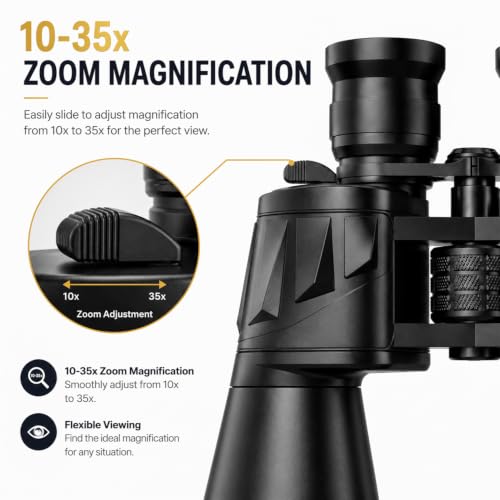
For long-range use, do not buy on the biggest magnification number alone; choose power you can actually stabilize and aim. Around 10x to 12x is easier handheld for scanning birds, boats, terrain, or events, while 15x and above can be excellent for far subjects but benefits from a tripod adapter, image stabilization, or very steady bracing. Be cautious with high “zoom” claims: variable-power binoculars can narrow the field, dim the image, and soften at the top end, so check whether users report clear high-power viewing, acceptable field of view, and no double image. Owner feedback supports this split: many buyers praise clear zoom, strong distant reach, wide views for birds, and surprisingly usable higher magnification, while some say advertised 20x-style power does not always feel as strong as claimed.
Quality
You want binoculars that feel solid, operate smoothly, and hold up to regular handling, because poor build quality can mean loose hinges, misaligned optics, sticky focus wheels, or parts that wear out quickly. Look for a durable, well-finished body with secure eyecups, a steady hinge, clean lens coatings, and controls that move precisely without wobble or grit. Also consider how dependable the binoculars feel in your hands, since good quality should support clear performance without making the device seem fragile or cheaply assembled.
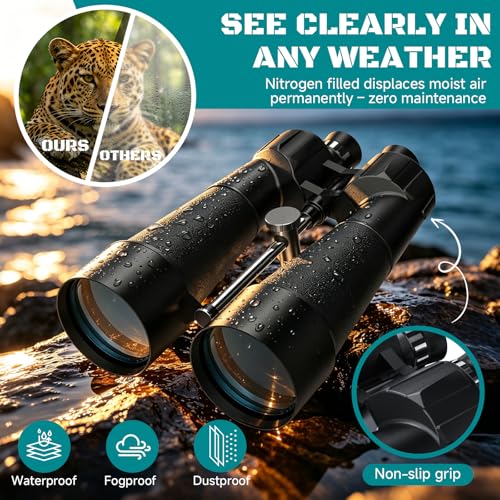
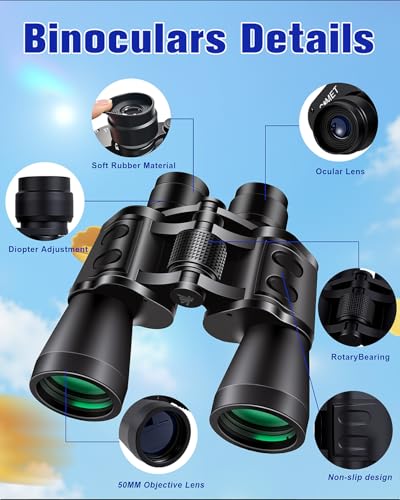
For long-range binoculars, quality means mechanical alignment and ruggedness as much as a nice-looking shell. Check for a solid hinge that holds interpupillary distance, a focus wheel with no slack, smooth diopter adjustment, tripod-mount compatibility for high-power models, and enough weather resistance for field use; poor collimation or loose mechanics can cause eye strain and double vision that gets worse at distance. Also match build to the use case: astronomy and marine viewing need different priorities than casual wildlife watching. Owner sentiment is broadly favorable here, with buyers often describing budget-friendly models as better built than expected, quick to focus, smooth outdoors, and clear enough for wildlife, while astronomy users especially value models that make the moon, planets, stars, and satellites easy to explore.
Optics
Optics determine how sharp, bright, and natural the view looks, especially at distance or in dim conditions. Look for clear edge-to-edge image quality, good brightness and contrast, and magnification you can hold steady; high power can seem appealing but may make the image shakier or darker without enough objective lens size or stabilization.
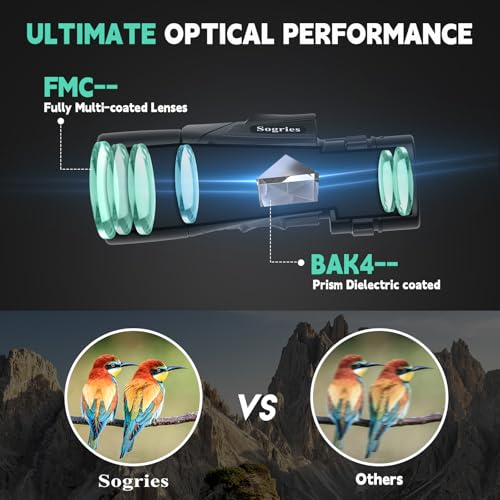
For long-range viewing, prioritize optical design details that preserve brightness and resolution at distance: fully multi-coated lenses, BaK-4 prisms, good baffling against glare, a wide enough objective lens for the magnification, and comfortable eye relief if you wear glasses. A useful check is exit pupil: divide objective size by magnification; very small exit pupils make dusk, marine haze, forests, and astronomy harder, even if daytime views look fine. Also watch edge sharpness, chromatic fringing on bright birds or skylines, and collimation, because small flaws become obvious at high power. Owner reports back up the importance of optics: buyers repeatedly describe satisfying pairs as sharp, clear, bright, crisp, and easy to focus for birding, sightseeing, long-distance viewing, marine use, and night-sky observing.
Ease
Binoculars are much more enjoyable when you can bring your subject into sharp focus quickly and make adjustments without thinking about them. Look for a smooth, precise focus wheel, easy diopter adjustment, comfortable eyecups, and a grip that feels steady in your hands. Watch out for stiff controls, vague focusing, or ergonomics that cause eye strain or hand fatigue during longer use.
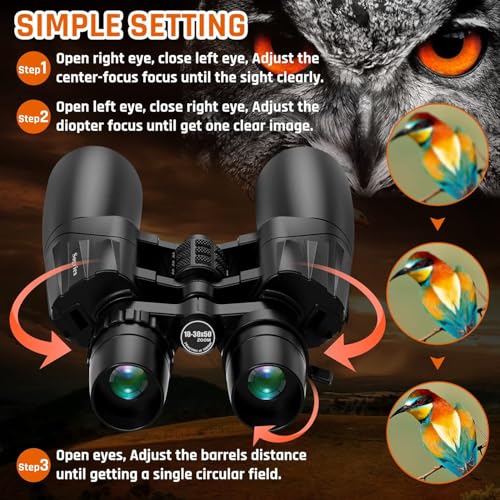
For long-range binoculars, ease of use depends on how quickly you can find, focus, and hold a distant target before it moves. Look for a wide field of view for tracking birds or wildlife, a focus wheel that moves smoothly but not too fast, clear diopter markings, twist-up eyecups that lock in place, and enough eye relief to avoid blackouts. If you plan to share with kids or beginners, avoid overly narrow, heavy, high-power models unless they will be mounted. Owner feedback aligns with this: buyers like binoculars that feel lightweight, quick to focus, simple to operate out of the box, and easy to shift from broad scanning to more detailed high-power viewing.
Value
Value matters because binoculars can vary widely in price, and the best choice is the one that gives you the clarity, comfort, durability, and features you’ll actually use without paying for extras you won’t notice. Look for a balance of optical quality, build, warranty, and intended use, and be cautious of very cheap pairs that sacrifice brightness, alignment, or long-term reliability.
For this category, value is not the lowest cost; it is usable long-range performance without hidden compromises such as shaky high magnification, dim glass, weak coatings, no tripod option, or accessories that do not solve real field problems. Prioritize the core package: clear optics, dependable alignment, durable focusing, usable eye relief, and, for specialized use, features such as waterproofing, compass/range markings, or astronomy-friendly objective size. Extras are only valuable if they support your use case, such as a real tripod adapter for high power or a protective case for travel. Owner sentiment suggests shoppers often feel they get strong value when optics, construction, magnification, and included gear exceed expectations, including in starter and marine-style sets.
Portability
Portability matters because binoculars that feel fine for a minute can become tiring around your neck or in your pack over a long walk, hike, trip, or day of sightseeing. Look for a weight and compact size you’ll actually carry regularly, but watch out for going so small that you sacrifice comfortable grip, steady viewing, or the features you need.
For long-range binoculars, portability must be judged together with steadiness. Compact, light models are easier for hiking, travel, kids, and quick wildlife scans, but very high magnification in a handheld body can become tiring and shaky; larger 15x-class and astronomy-style binoculars may be manageable for short looks but should have tripod compatibility for sustained viewing. Check actual weight, neck-strap comfort, grip shape, and whether you will carry them all day or set them up in one spot. Owner feedback reflects the tradeoff: many buyers appreciate lightweight, compact bodies that pack easily and feel comfortable for extended outdoor use, while the main warning is that heavier high-power binoculars can be tiring and may need a tripod for a steady image.
1,000,000+ shoppers use Buyer's Guide every week to find the best products and services online.

Helping millions of users make smarter purchases online.


