















We also considered 10 others:


Our Top Choice
Compare Features


The order above is not editorial opinion, and it is not paid placement. It comes from what shoppers across our network actually do - which lightweight irons they compare, and which they ultimately buy. We re-rank as new data comes in, so the long-term favorites have to keep earning their spot against new entrants. The full method, including how we make money.
Lightweight Irons Buyer's Guide
Lightweight irons trade pressing power and heat retention against reduced wrist strain, easier storage, and better portability. The key is finding one that is genuinely easy to handle without becoming too flimsy, too weak on steam, or too unstable for safe use on a small board, travel surface, or sewing station.
Build
A well-built iron feels sturdy in your hand, heats consistently, and is less likely to develop leaks, loose controls, or soleplate damage over time. Look for solid construction, a smooth and durable soleplate, secure buttons and dials, and a stable water tank design; watch out for flimsy plastic parts, awkward seams, or reviews that mention early failures or reliability issues.
For a lightweight iron, prioritize a rigid body, tight water-tank cap, stable heel rest, and a soleplate that stays flat and smooth; low weight should not come from flimsy plastic, a wobbly handle, or a thin soleplate that loses heat and creates uneven pressing. If you plan to use it for sewing, quilting, or frequent touch-ups, also check that the cord joint, buttons, steam lever, and temperature dial feel secure because these are common stress points on compact irons. Owner feedback supports this distinction: shoppers often praise better-built lightweight irons when they feel solid, press cleanly, glide well, and seem like a worthwhile upgrade over cheaper or older basic models.
Handling
An iron that feels manageable in your hand is easier to guide around collars, seams, buttons, and large panels without causing wrist fatigue. Look for a size and weight that match how much ironing you do and whether you need portability, and be aware that very lightweight or cordless designs may trade off stability, steam output, or run time.
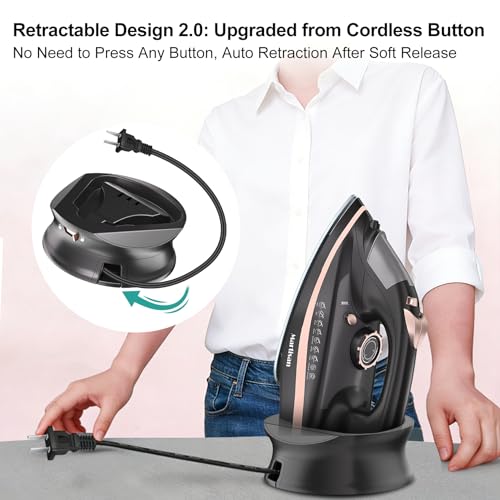
Choose handling based on where the iron will actually live: for travel, classes, dorms, RVs, or a small sewing station, look for a compact footprint, comfortable grip, easy-to-see controls, and a heel or base that will not tip on a narrow board. For garment ironing, make sure “lightweight” does not mean too tiny to cover fabric efficiently; for sewing and appliqué, a smaller nose and maneuverable shape may matter more than full-size coverage. Owner sentiment lines up with this: buyers repeatedly like lightweight models that are easy to store, pack, and control, and they especially value cordless or compact designs when a cord would snag fabric or get in the way of pressing projects.
Steam
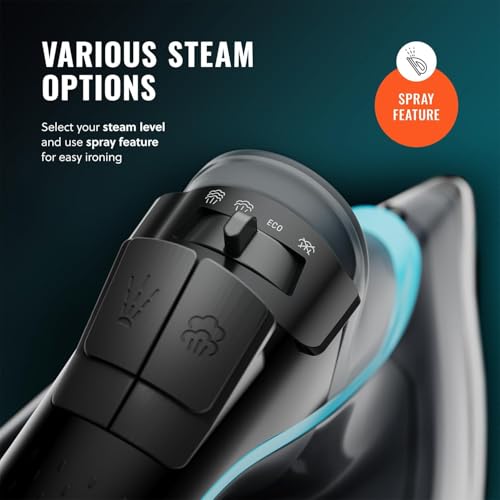
Strong, consistent steam helps you relax stubborn wrinkles faster, especially on thicker fabrics like cotton, linen, and denim. Look for an iron that produces steady steam without frequent spitting, dripping, or needing constant refills, and consider whether a steam burst or vertical steam feature would be useful for touch-ups on hanging garments or curtains.
Do not judge steam by the word “steam” alone: check for steady output, a usable burst function, vertical steaming if you refresh hanging garments, anti-drip behavior at lower settings, and enough tank capacity for your typical session without making the iron heavy. Lightweight irons can fail here by spitting water, running dry too quickly, or producing steam that is strong for a minute but fades as the soleplate cools. Owner feedback is encouraging when these details are done well, with many shoppers praising strong steam that removes wrinkles quickly, works on tougher fabrics, supports vertical steaming, and smooths multiple garments without leaking.
Performance
You want an iron that removes wrinkles efficiently across the fabrics and tasks you handle most, from everyday shirts and linens to sewing or craft projects. Look for consistent heat, useful steam output, smooth glide, and responsive temperature control, and watch out for irons that require repeated passes, leave damp spots, or struggle on heavier fabrics.
Match performance to your fabric mix: if you mostly press shirts, uniforms, and daily wear, look for smooth glide, consistent temperature, and enough soleplate area to avoid endless passes; if you sew, quilt, or press seams, look for a precise tip, flat soleplate edges, and controlled steam that will not distort fabric. Be cautious with ultra-light models that feel convenient but lack the heat retention to press cotton, linen, wool, interfacing, or stacked seams effectively. Owner reports support looking beyond size alone: the best-received lightweight irons are described as dependable, crisp-finishing performers with strong heat, smooth nonstick or ceramic-style glide, useful fabric settings, and enough power to smooth tough creases without repeated passes.
Heat
Heat matters because an iron that warms up quickly and maintains strong, even temperature helps you remove wrinkles efficiently without repeatedly going over the same spot. Look for consistent heat output across the soleplate and enough temperature control for different fabrics, and watch out for irons that cool down too easily during use or run hotter than expected on delicate materials.
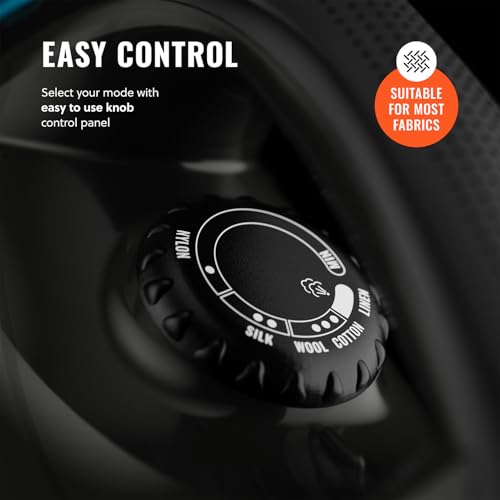
Heat control is critical in a lightweight iron because lower mass can mean faster heat-up but also faster heat drop when you hit seams, damp fabric, or larger garments. Look for quick readiness, clear fabric-temperature settings, reliable thermostat cycling, and a soleplate that recovers heat quickly; avoid vague low/medium/high controls if you regularly switch between synthetics, silk, cotton, wool, and fusibles. Owner sentiment reinforces this: buyers often call out fast heat-up, strong heat for crisp results, and quick touch-up readiness as major advantages, especially for travel, sewing, crafting, and last-minute garment fixes.
Ease
An iron that is easy to use saves you time and makes routine touch-ups less frustrating, especially if you iron often or in a hurry. Look for intuitive controls, quick heat-up, a comfortable grip, smooth gliding, easy water filling, and clear steam settings; watch out for awkward cord placement, heavy weight, leaking, or controls that are hard to see or adjust.
For ease of use, favor controls you can operate one-handed, a fill opening that will not spill, clear max-fill markings, an accessible steam shutoff, auto-shutoff for safety, and a cord or charging base that fits your ironing setup. Lightweight irons are often bought for convenience, but they become frustrating if the tank is hard to fill, the settings are hard to read, the cord is too short, or the iron needs constant refilling during a normal load. Owner feedback backs up these practical features: shoppers appreciate simple controls, quick heat-up, digital or fabric-specific settings, smooth glide, compact storage, travel-friendly size, and cordless convenience for sewing and craft work.
1,000,000+ shoppers use Buyer's Guide every week to find the best products and services online.

Helping millions of users make smarter purchases online.