


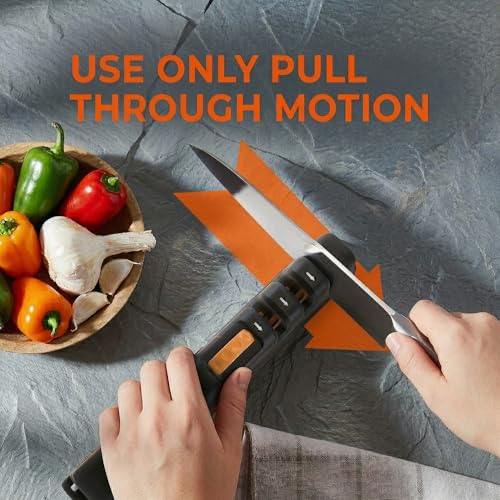
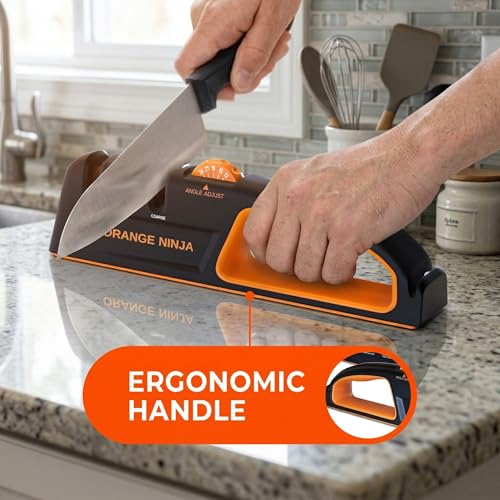



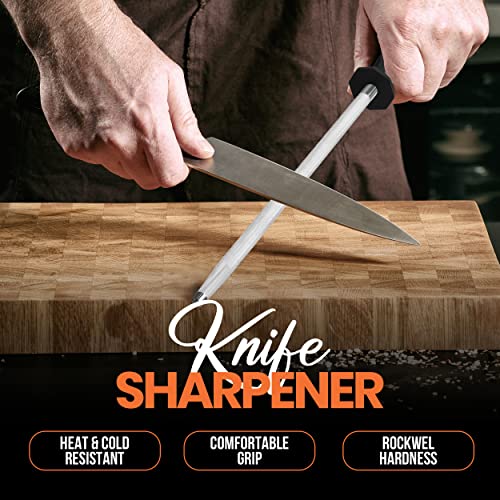


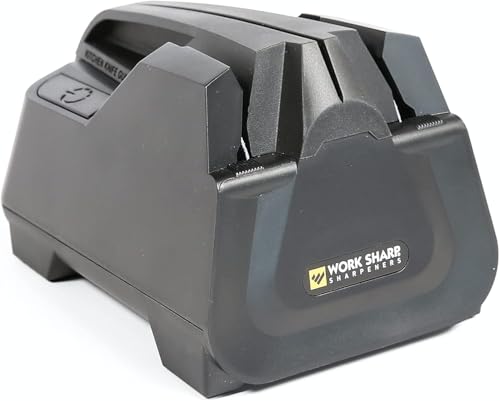


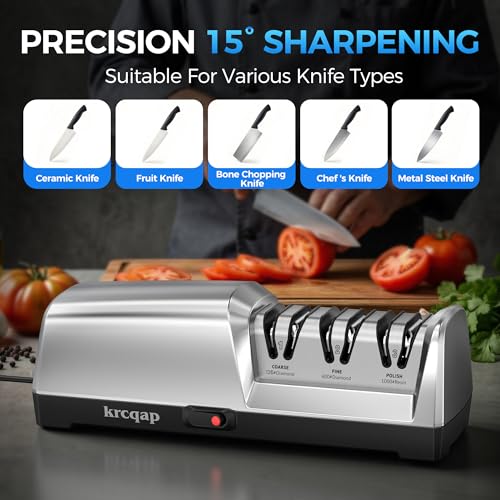


We also considered 10 others:


Our Top Choice
The order above is not editorial opinion, and it is not paid placement. It comes from what shoppers across our network actually do - which knife sharpeners they compare, and which they ultimately buy. We re-rank as new data comes in, so the long-term favorites have to keep earning their spot against new entrants. The full method, including how we make money.
Knife Sharpeners Buyer's Guide
A knife sharpener has to remove enough steel to reset a dull bevel without grinding away the knife’s shape or changing its intended angle. The biggest tradeoff is speed versus control: the easiest tool can still damage a thin blade, leave a burr, or feel unsafe if its guides, abrasives, and base are wrong for your knives.
Edge Results
Sharpness is not just about feeling keen for one cut; it depends on whether the bevel is reset evenly and then refined enough for the foods or tasks you use most. Poor sharpeners can create a temporary toothy edge while leaving a burr, uneven bevel, or weak apex that dulls quickly.
Look for a system that has a true sharpening abrasive for dull edges plus a finer finishing or honing step to remove the burr and refine the bite. A good sharpener should make a chef’s knife slice cleanly instead of sawing, but it should not leave a ragged, over-ground bevel or rely only on a honing slot when the edge is actually damaged. Owner reports strongly support this as the core separator: many describe dull kitchen knives becoming noticeably sharper, clean-cutting, and even extremely sharp, with older or worn edges restored to useful shape.
Angle Fit
A knife’s edge angle determines how sharp, durable, and easy to maintain it will be. If the sharpener forces the wrong angle, it may remove too much steel, thicken the cutting geometry, or fail to reach the apex at all.
Match the sharpener’s angle system to the knives you own: fixed 15° or 20° guides are simple, adjustable guides are better for mixed drawers, and freehand stones need either skill or an angle aid. Be cautious with single-bevel Japanese knives, very thin blades, serrated edges, ceramic knives, and scissors unless the sharpener explicitly supports them; the wrong angle or slot can reshape the edge badly. Owner sentiment repeatedly favors guided and adjustable designs because they reduce guesswork, help maintain a consistent clean edge, and handle different knife styles more confidently.
Safe Control
Sharpening is one of the few kitchen maintenance tasks where a slip can put your hand directly in the path of a sharp blade. Stability also affects edge quality because wobble changes the angle from stroke to stroke.
Prioritize a sharpener that stays planted: a wide non-slip base, suction base, clamp, or stable stone holder matters because sharpening pressure can pull a small tool across the counter. Guides should keep fingers away from the edge, allow a smooth heel-to-tip stroke, and work with light pressure rather than forcing you to bear down. Owners repeatedly praise sharpeners that feel stable, have clear instructions, and make sharpening approachable for beginners, especially when suction or a non-slip base prevents sliding.
Speed & Effort
A sharpener that takes too much effort tends to be ignored until knives become very dull, which makes restoration harder. At the same time, speed without control can sacrifice steel, symmetry, and edge longevity.
Choose the speed level based on your use: electric and motorized guided sharpeners suit several dull knives or low-effort sharpening, manual pull-through tools are convenient for quick touch-ups, and stones trade speed for control and finish. Fast sharpeners should still require only light pressure and short passes; grinding too long can remove excess steel and, with powered systems, may overwork the edge. Owners often describe successful sharpeners as working in minutes, with some needing only a few passes and others feeling less tiring than manual options.
Abrasive System
The abrasive system determines how much metal is removed and how polished or toothy the final edge becomes. It also affects maintenance: stones may need soaking and flattening, belts or wheels may need replacement, and slots need cleaning so swarf does not scratch or clog the tool.
Check what actually does the cutting: diamond, ceramic, carbide, water stone, or abrasive belts behave very differently. Coarse stages repair dull or nicked edges, medium stages establish the bevel, and fine ceramic, high-grit stone, stropping, or honing stages refine the apex; avoid using an aggressive coarse slot for routine maintenance on good knives. Owner feedback supports multi-step and quality-abrasive systems, including praise for 3-stage setups, solid stones, and grit combinations that restore a working edge before polishing it sharper.
Use Scope
A sharpener is more useful when its limitations match your knife collection. Versatility is valuable only when the tool preserves the correct edge geometry for each blade type rather than forcing every blade through the same slot.
Buy for the blades you will actually sharpen, not just for a generic chef’s knife. If you need to maintain pocket knives, scissors, hunting or utility blades, or serrated bread knives, confirm compatibility before purchase; many kitchen sharpeners are designed only for straight-edged steel knives. Owner sentiment shows stronger satisfaction when a sharpener handles more of the household drawer, with reports of useful results on kitchen knives, pocket blades, and scissors, and of buyers seeing strong value when the tool delivers reliable results without a professional setup.
1,000,000+ shoppers use Buyer's Guide every week to find the best products and services online.

Helping millions of users make smarter purchases online.


