












We also considered 10 others:


Our Top Choice
The order above is not editorial opinion, and it is not paid placement. It comes from what shoppers across our network actually do - which jacks they compare, and which they ultimately buy. We re-rank as new data comes in, so the long-term favorites have to keep earning their spot against new entrants. The full method, including how we make money.
Jacks Buyer's Guide
Buying a jack is a tradeoff between garage capability and roadside practicality: the safest, easiest tool for routine maintenance is often too heavy for a trunk, while a compact emergency jack is not meant to support extended work. The sharpest concerns are vehicle fit, stability under load, and whether the included tools can actually finish a tire change when lug nuts are tight.
Vehicle Fit
A jack that does not physically fit the vehicle’s lift points is unsafe or useless, even if its capacity rating looks adequate. Buyers need to compare clearance, lift height, saddle shape, and rated load against the vehicles they actually plan to service.
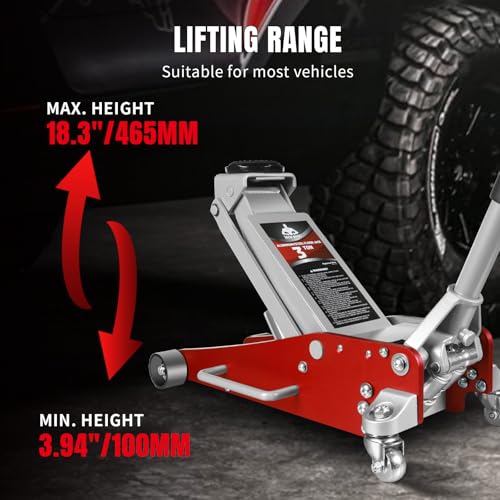
Start by matching the jack to the exact vehicle, not just the advertised ton rating. Check curb weight and axle weight, then confirm the jack’s minimum height clears your pinch welds, subframe, or differential point, and that its maximum lift height gets the tire fully off the ground with suspension droop. Low-profile floor designs matter for sports cars and lowered sedans, while taller SUVs and trucks need enough lift range and a stable saddle reach. Owner feedback supports this fit-first approach: low-profile designs are praised for sliding easily under cars while still working on larger vehicles, and lifting performance is generally viewed as strong when the jack is used in the right application. Emergency scissor-style units also earn trust when they are used for their intended roadside tire-change role rather than as a full garage lifting system.
Lift Safety
Jacks concentrate a vehicle’s weight into a small contact area, so stability and controlled movement are critical. The safest choice is one that matches the vehicle and use case while making it easy to lift vertically without slipping, tipping, or sudden drop.
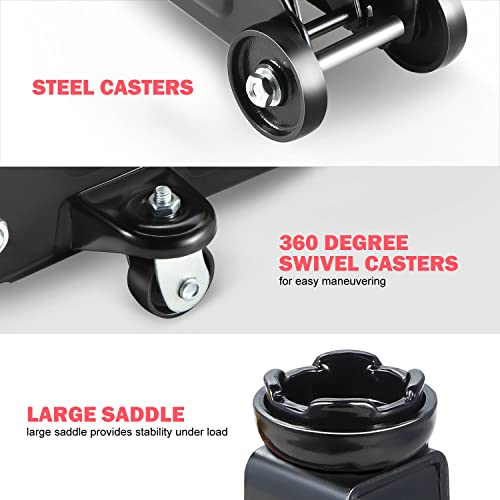
Look for a wide, stable base; a saddle that positively locates on the lift point; smooth lowering control; and construction that does not flex under load. Never treat any jack as a support stand: lift on level, solid ground, chock wheels, and transfer the vehicle to properly rated stands before working underneath. Avoid relying on a compact emergency jack for maintenance jobs, soft pavement, angled driveways, or any situation where side load could develop. The strongest owner praise centers on confidence and reliability during tire changes, which is exactly where a well-matched jack should feel controlled. Build-quality comments are also favorable for heavier garage-style units, but that does not remove the need for stands and safe setup because a jack’s job is lifting, not long-term support.
Lift Control
A jack that is technically strong enough can still be frustrating or risky if it takes excessive effort or lowers unpredictably. Smooth lift and release control help prevent vehicle movement and make emergency tire changes less stressful.
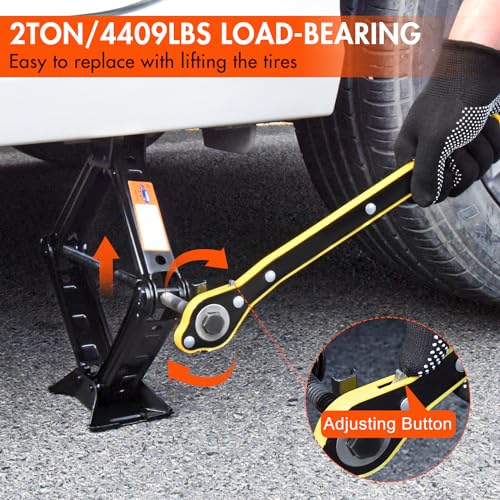
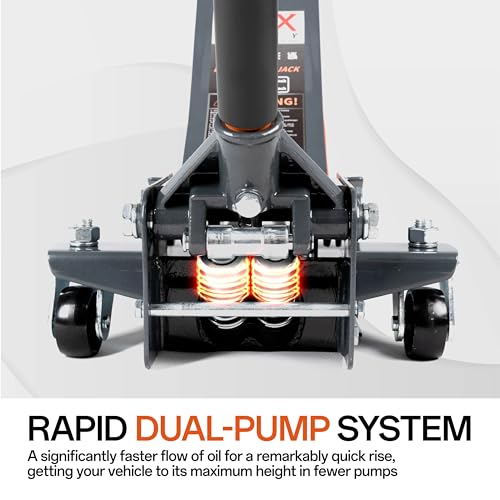
Choose the lifting mechanism around where you will use it: a hydraulic floor jack is usually faster and easier in a garage, while a scissor jack is compact but requires more cranking and careful alignment. Check handle length, release-valve control, crank smoothness, and whether the mechanism can lift under real load without binding. For roadside kits, also verify that the included drive tool gives enough leverage for the jack screw and that operation is simple in poor light or bad weather. Owners repeatedly value straightforward setup, easy raising and lowering, and confident emergency use. Lifting speed and strength are mostly praised, though feedback is not perfectly unanimous, so shoppers should not assume every mechanism feels equally smooth under load.
Build Quality
Jacks are load-bearing tools, so small weaknesses in the frame, pivots, screw, or hydraulics can become major problems. Better construction also improves alignment, repeatability, and confidence over repeated lifts.
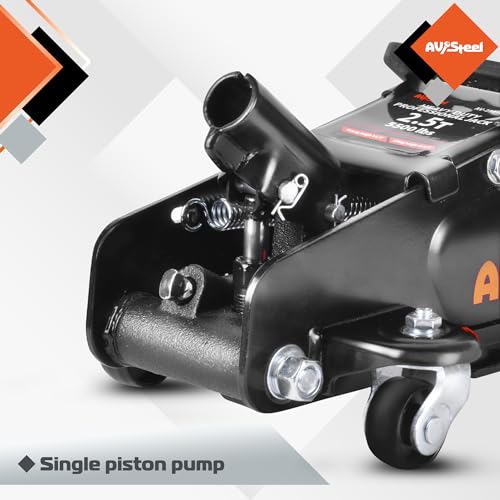
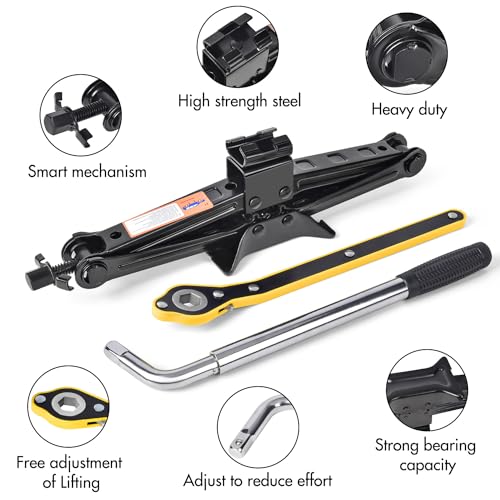
Inspect the parts that actually carry load: steel thickness, welds, pivots, screw threads, hydraulic seals, casters, handle socket, and saddle. A durable jack should not twist, leak down, bind, or feel loose at the joints, and garage models should roll and position without sloppy hardware. For scissor mechanisms, thread quality and crank engagement matter; for hydraulic models, seal quality and frame rigidity are the common long-term failure points. Owner sentiment strongly favors sturdy, durable, well-made garage-style jacks, and overall build impressions are favorable across the category. The caution is that not every included part is equally rugged, with lug tools, ratchet hardware, and storage-bag hardware called out as weaker points.
Portability
The best jack for a trunk is often not the best jack for a garage. Weight, folded size, handle design, and storage hardware determine whether the tool is available and practical when it is actually needed.
Decide whether the jack will live in a trunk or a garage before buying. For roadside use, prioritize compact storage, a secure carry case, gloves, usable sockets, and a jack that can be positioned without crawling far under the vehicle. For home use, extra mass can be a benefit because it adds stability and frame strength, but wheels, handle reach, and storage footprint become important if you need to move it often. Owner feedback captures this tradeoff clearly: compact emergency kits are valued for tire changes and simple roadside use, while heavier floor-style units feel reassuringly substantial to some buyers. That same weight can be a drawback when the jack has to be carried, repositioned, or stored frequently.
Kit Value
A jack kit is only as dependable as the parts needed to complete the job. Useful accessories can make an emergency tire change faster, but weak sockets, ratchets, or storage hardware create failure points when conditions are already stressful.
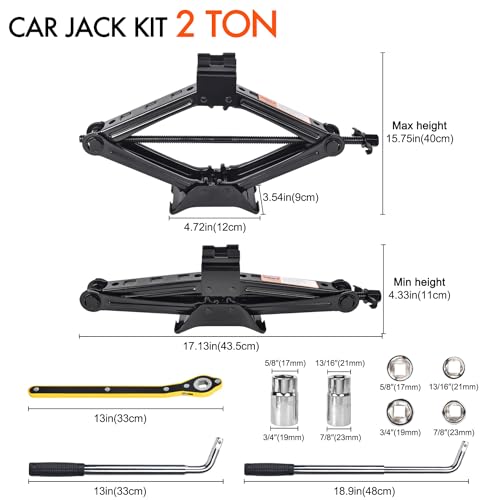
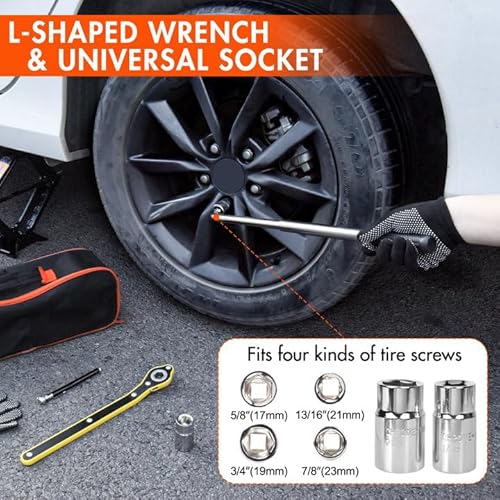
Treat accessories as useful only if they match your vehicle and are strong enough for real roadside work. Confirm socket sizes, lug-wrench leverage, ratchet quality, pressure-gauge usefulness, gloves, wheel chocks if included, and whether the bag keeps heavy metal parts from damaging the vehicle interior. Do not let a large kit compensate for a weak jack or flimsy lug tool, especially if your lug nuts are commonly over-torqued by tire shops. Owners like kits that include practical extras such as sockets, gloves, a tire-pressure gauge, and a carrying bag, and many see strong overall value when the jack and accessories cover the whole tire-change task. The main warning from feedback is accessory durability: lug wrenches, ratchet hardware, and storage-bag components may not always hold up to tight lug nuts or repeated use.
Don't miss the latest sales on Floor Jacks and more. Get the best Black Friday deals today!

1,000,000+ shoppers use Buyer's Guide every week to find the best products and services online.

Helping millions of users make smarter purchases online.