

- Average Treatment Time: All-day plan: 4-6 months / Nighttime plan: 6-9 months
- Treatment Type: All-day or night-only
- Teeth Whitening: Yes
- Retainers: Yes
- FSA/HSA Accepted: Yes
- Insurance Accepted: Yes
- Financing: Yes, Shop Pay

- Average Treatment Time: All-day plan: 4-6 months / Nighttime plan: 6-9 months
- Treatment Type: All-day or night-only
- Teeth Whitening: Yes
- Retainers: Yes
- FSA/HSA Accepted: Yes
- Insurance Accepted: Yes
- Financing: Yes, Shop Pay

- Average Treatment Time: Daytime Plan: 4 - 6 months / Night-Time Plan: 6-12 months
- Treatment Type: All-day or night-only
- Teeth Whitening: Yes
- Retainers: Yes
- FSA/HSA Accepted: Yes
- Insurance Accepted: Yes
- Financing: Monthly payments, Affirm

- Average Treatment Time: Daytime Plan: 4 - 6 months / Night-Time Plan: 6-12 months
- Treatment Type: All-day or night-only
- Teeth Whitening: Yes
- Retainers: Yes
- FSA/HSA Accepted: Yes
- Insurance Accepted: Yes
- Financing: Monthly payments, Affirm

- Average Treatment Time: 4-6 months
- Treatment Type: All-day or night-only
- Teeth Whitening: Yes
- Retainers: Yes
- FSA/HSA Accepted: Yes
- Insurance Accepted: Yes
- Financing: Monthly payments, Affirm, Partial.ly

- Average Treatment Time: 4-6 months
- Treatment Type: All-day or night-only
- Teeth Whitening: Yes
- Retainers: Yes
- FSA/HSA Accepted: Yes
- Insurance Accepted: Yes
- Financing: Monthly payments, Affirm, Partial.ly

- Average Treatment Time: 4 - 6 months
- Treatment Type: All-day or night-only
- Teeth Whitening: Yes
- Retainers: Yes
- FSA/HSA Accepted: Yes
- Insurance Accepted: Yes
- Financing: Monthly payments, Affirm

- Average Treatment Time: 4 - 6 months
- Treatment Type: All-day or night-only
- Teeth Whitening: Yes
- Retainers: Yes
- FSA/HSA Accepted: Yes
- Insurance Accepted: Yes
- Financing: Monthly payments, Affirm

- Average Treatment Time: As little as 4-6 months
- Treatment Type: All-day or night-only
- Teeth Whitening: Yes
- Retainers: Yes
- FSA/HSA Accepted: Yes
- Insurance Accepted: Yes
- Financing: Monthly payments, partially

- Average Treatment Time: As little as 4-6 months
- Treatment Type: All-day or night-only
- Teeth Whitening: Yes
- Retainers: Yes
- FSA/HSA Accepted: Yes
- Insurance Accepted: Yes
- Financing: Monthly payments, partially


- Average Treatment Time: 4-6 months
- Treatment Type: All-day or night-only
- Teeth Whitening: Yes
- Retainers: Yes
- FSA/HSA Accepted: Yes
- Insurance Accepted: Yes
- Financing: Everyone approved for $69/month

- Average Treatment Time: 4-6 months
- Treatment Type: All-day or night-only
- Teeth Whitening: Yes
- Retainers: Yes
- FSA/HSA Accepted: Yes
- Insurance Accepted: Yes
- Financing: Everyone approved for $69/month
Our Top Choice
- Average Treatment Time: All-day plan: 4-6 months / Nighttime plan: 6-9 months
- Treatment Type: All-day or night-only
- Teeth Whitening: Yes
- Retainers: Yes
- FSA/HSA Accepted: Yes
- Insurance Accepted: Yes
- Financing: Yes, Shop Pay
- Average Treatment Time: All-day plan: 4-6 months / Nighttime plan: 6-9 months
- Treatment Type: All-day or night-only
- Teeth Whitening: Yes
- Retainers: Yes
- FSA/HSA Accepted: Yes
- Insurance Accepted: Yes
- Financing: Yes, Shop Pay
Compare Features


Why These Features Matter:
Invisible braces are sold like a sleek little life upgrade: clear trays, discreet smile, no “metal mouth,” the end. In reality, they’re more like having a very tidy, very bossy houseguest living in your mouth. They demand routines. They punish laziness. They are weirdly easy to misplace at a restaurant. And they will, at some point, make you whisper-swear in a bathroom while trying to unstick a tray from your molars without looking feral.
So the “best” invisible braces aren’t just about how fast they move teeth or how polished the branding is. They’re about the daily friction: how annoying it is to take them out at work, whether you’ll actually keep them clean, and if the company’s support feels like healthcare or like trying to reach a human at an airline.
1) The Single Most Important Thing: Real, Ongoing Clinical Oversight
If you only remember one line from this guide, let it be this: teeth can move in ways you didn’t bargain for. A good invisible-braces experience feels monitored, boring, and slightly overcautious — which is exactly what you want.
- Notable strengths: You get someone qualified watching your progress, adjusting the plan if your teeth decide to freeload in the wrong direction.
- What to look for: Regular check-ins (remote or in-person), easy access to a clinician when something feels off, and clear escalation paths if you have pain, bite changes, or trays that suddenly don’t fit.
- Honest caveat: More oversight often means more appointments and less “set it and forget it” convenience. Yes, it’s mildly inconvenient. Also, that’s the point.

2) Fit and Comfort: The Difference Between “Fine” and “I Cannot Think”
All aligners feel tight at first — they’re literally moving bone-adjacent objects around your head. But some are “tight like a supportive hug,” and some are “tight like a shoe that makes you reconsider your life choices.”
- Notable strengths: Well-trimmed edges that don’t shred your tongue; a snug fit that doesn’t click when you talk; trays that don’t feel bulky behind the lips.
- Things to know: The first 48 hours of a new tray can be tender. People who love their aligners tend to describe discomfort as pressure, not pain.
- Honest caveat: Even “comfortable” aligners can give you little hot spots. You’ll likely become the kind of person who keeps dental wax in three different bags.
3) The Attachments Question (A.K.A. “Are These Still Invisible?”)
Aligners themselves are clear. The tiny tooth-colored attachments some plans require — little bumps bonded to teeth to help the trays grip and rotate — are the part nobody includes in the dreamy marketing photos. They matter because they affect both how discreet the treatment feels and what eating is like.
- Notable strengths: Attachments can make more complex movements possible and help trays stay seated (less surprise “my aligner popped off mid-laugh”).
- Things to know: If you have attachments, your teeth may feel slightly textured when trays are out — like a subtle braille situation.
- Honest caveat: Attachments can pick up staining from coffee, red wine, turmeric, and certain sauces that know exactly how to cause trouble.
4) Eating and Drinking Reality: Your Social Life vs. Your Treatment Plan
Invisible braces are at their easiest if you’re a person who already eats at regular times, drinks mostly water, and doesn’t snack. If you’re a grazer, a coffee sipper, or someone who enjoys a long dinner that turns into “one more drink,” you’ll feel the lifestyle compression.
- Notable strengths: Plans that make it easy to stay compliant: clear wear-time guidance, reminders, and a routine that doesn’t require a spreadsheet.
- Things to know: You’ll take trays out to eat. That means you’ll need a clean place to put them and a way to brush before putting them back in (or at least rinse well and brush ASAP).
- Honest caveat: The “I’ll just drink iced coffee with them in” temptation is real. So is the slow-burn regret when trays start looking like faintly tinted plastic Tupperware.

5) Cleaning and Smell: The Part That Separates Adults From Chaos
Aligners live in a warm, damp environment for most of the day. If you don’t clean them, they will eventually develop a vibe. Not always a dramatic one — sometimes it’s just a faint morning funk that makes you suddenly generous with mouthwash.
- Notable strengths: Trays that don’t cloud easily, and a care routine that’s simple enough you’ll actually do it while tired.
- Things to know: Most people settle into a rhythm: rinse every time they come out, brush gently at least daily, and do a deeper clean regularly.
- Honest caveat: If you’re expecting “invisible braces” to be zero-maintenance, you will have a brief but intense relationship with regret — probably in a hotel bathroom sink.
6) The Case: Tiny Object, Big Impact
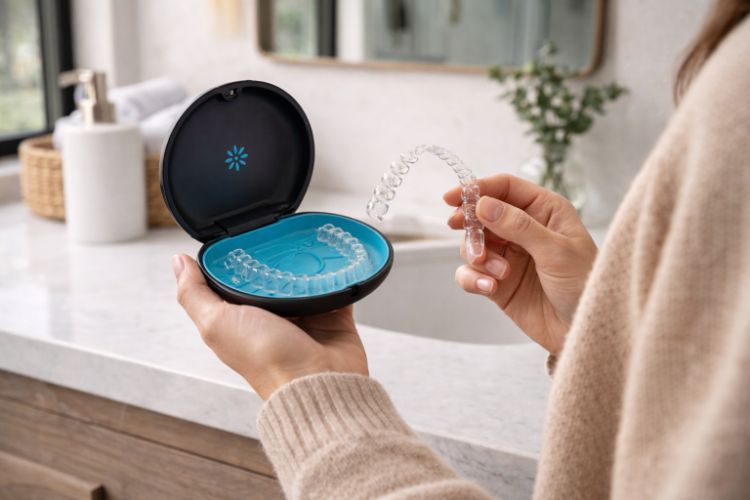
The aligner case is an unglamorous hero. The best ones are slim enough to carry everywhere and sturdy enough to survive getting crushed in a tote bag under a paperback, keys, and whatever lip balm you’ve panic-purchased.
- Notable strengths: A case you don’t hate using. Easy to open one-handed. Doesn’t pop open in your bag. Doesn’t look like medical equipment from 2007.
- Things to know: People lose aligners most often when they wrap them in a napkin “just for a second.” That second becomes a server clearing the table.
- Honest caveat: If the case is bulky or annoying, you won’t use it. Your aligners will touch surfaces they shouldn’t. You will then think about it forever.
7) Speaking Clearly: Meetings, Dating, and the Soft “S” Era
Some people breeze through with minimal speech changes. Others get a temporary lisp — usually most noticeable to the wearer, less so to everyone else. Still, if you talk for a living, it’s worth treating this as a real factor, not a footnote.
- Notable strengths: Thinner-feeling trays and a fit that doesn’t shift while you talk.
- Things to know: Your mouth adapts. Reading out loud at home helps, even if it makes you feel like you’re auditioning for a radio play you didn’t want.
- Honest caveat: There may be a week where you pronounce “strategy” like you’re being haunted by an extra consonant.
8) Reliability of the Plan: Predictable Progress Beats Promises
A good aligner experience feels steady. Trays fit when they’re supposed to. Progress photos show incremental changes. You’re not constantly wondering if you’re “doing it wrong” because the instructions are vague or the support is vague-er.
- Notable strengths: Clear timelines, transparent expectations about refinements, and a plan that accounts for the fact that teeth are not perfectly obedient.
- Things to know: Refinements (extra trays at the end) are common. It’s not failure; it’s the orthodontic version of tailoring.
- Honest caveat: If your plan is aggressively “fast,” be extra sure there’s a strong monitoring setup. Speed is only cute if your bite stays functional.
9) Customer Support That Feels Like Healthcare (Not a Subscription App)
You’re putting pressure on your teeth for months. If something hurts in a concerning way, or a tray stops fitting, you need real help — not a chatbot that tells you to “try again later.”
- Notable strengths: Responsive support, clear protocols for issues (lost aligner, cracked tray, pain, gum irritation), and easy access to a clinician for clinical questions.
- Things to know: The best systems make it easy to send photos and get a meaningful answer quickly.
- Honest caveat: Even great support can feel slow when your mouth is the thing that’s uncomfortable. Build a little buffer into your expectations.
10) Retainers: The Sequel Nobody Wants, Everyone Needs
Aligners end. Retainers don’t, at least not if you’d like your teeth to stay where you paid and suffered to put them. The “after” plan should feel realistic, not like a guilt trap.
- Notable strengths: Clear retainer options, fair replacement policies, and honest guidance about wear schedules.
- Things to know: Teeth love returning to their old habits. Retainers are the boundary-setting friend your smile needs.
- Honest caveat: Retainers can get gross too. If you hated cleaning aligners, you will not magically love cleaning retainers.
Quick Guidance: How to Choose Without Losing Your Mind
- If you want the least stressful experience: Prioritize strong clinical oversight and easy access to a real professional. Convenience is nice; reassurance is nicer.
- If discretion is your whole reason: Ask specifically about attachments and how visible they tend to be. “Clear trays” isn’t the full story.
- If you travel a lot or live out of a tote bag: Think about logistics: replacement timelines, support responsiveness, and whether you’ll actually keep up with cleaning on the road.
- If you’re a coffee person: Be honest about your habits. You’ll either change them, or your trays will slowly tell on you.
- If your bite already feels a little weird: Put monitoring and follow-up at the top of your list. Small bite issues can become big annoyances fast.
The Tiny Annoyances That Are Normal (So You Don’t Panic)
- Extra saliva the first few days (your mouth is suspicious of new plastic).
- A little tenderness on tray-change day.
- Momentary “Where do I put these?” anxiety at restaurants.
- Becoming weirdly protective of your aligner case, like it’s a passport.
The Red Flags That Deserve Attention
- Sharp pain that doesn’t ease, especially if it feels localized to one tooth.
- Your bite feeling meaningfully “off” — like your teeth don’t meet the way they used to.
- Trays consistently not fitting or popping off without a clear reason.
- Support that can’t connect you to a clinician when you have a clinical question.
Bottom Line
The “best invisible braces” are the ones you’ll actually wear, clean, and stick with — with enough professional oversight that you’re not crowdsourcing dental advice from strangers at midnight. Look for a plan that respects your real life: your coffee habit, your calendar, your tendency to snack, your tolerance for inconvenience, and your desire to not think about your teeth all day. Invisible braces work best when they fade into the background — not because the brand is loud about being discreet, but because the system is quietly competent.
How Invisible Braces Work and Who They Suit
Invisible Braces: Are You a Good Candidate?
Benefits of Invisible Braces vs Traditional Braces


Helping millions of users make smarter purchases online.


