


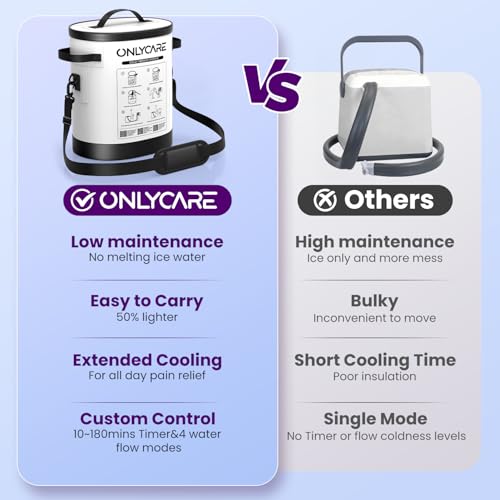






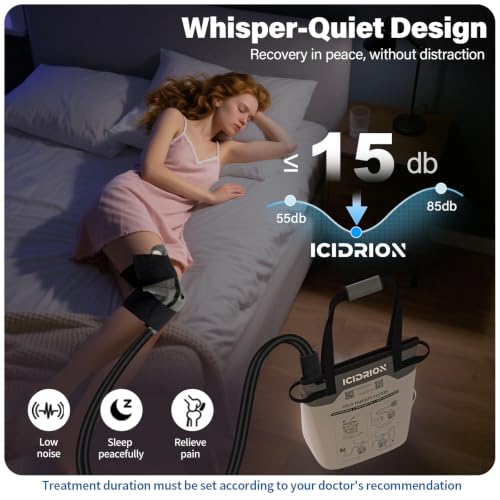








We also considered 10 others:


Our Top Choice
Compare Features


The order above is not editorial opinion, and it is not paid placement. It comes from what shoppers across our network actually do - which ice coolers for knee surgery they compare, and which they ultimately buy. We re-rank as new data comes in, so the long-term favorites have to keep earning their spot against new entrants. The full method, including how we make money.
Ice Coolers for Knee Surgery Buyer's Guide
Knee-surgery icing has to balance strong swelling control with skin and circulation safety around a painful, often numb, heavily dressed joint. The biggest buying concerns are whether the pad or pack actually wraps the knee without pressure points, and whether the system can run repeated, timed sessions without constant refilling or unsafe overcooling.
Relief
You want a medical ice machine that delivers steady, targeted cold therapy to help reduce knee pain, swelling, and discomfort during recovery from surgery or injury. Look for consistent cooling, good coverage around the knee, adjustable compression or flow settings, and a secure wrap that stays comfortable during longer sessions. Watch out for machines that cool unevenly, require frequent refilling, or feel too bulky to use as often as your recovery plan requires.
For knee-surgery relief, prioritize a system that cools the entire front and sides of the knee evenly without creating pressure points over the incision, kneecap, or tender bruised areas. A wrap or pack should stay pliable enough to contour around a swollen joint, secure without strangling circulation, and support the icing schedule your clinician gives you; machines are often better when swelling control requires repeated sessions, while large flexible packs can work for shorter, simpler icing. Owner feedback supports this: buyers repeatedly describe cold-therapy machines as especially helpful after knee replacement or knee procedures for pain and swelling, and flexible large packs are praised for covering knees well and feeling squishy rather than hard against the body.
Build
A knee ice machine should feel sturdy enough to handle repeated fill-ups, draining, hose connections, and transport without leaking or cracking. Look for durable materials, secure fittings, a stable base, and simple controls, and be wary of flimsy lids, loose connectors, thin hoses, or parts that seem hard to clean or replace.
For post-op knee use, build quality is not just durability—it affects leaks, hose reliability, strap hold, and whether the pad keeps consistent contact while you are moving carefully with limited mobility. Look for reinforced seams, secure quick-connect fittings, a stable reservoir that is hard to tip, kink-resistant tubing, and Velcro that can hold over dressings or swelling changes; avoid flimsy wraps that bunch behind the knee or reservoirs that feel easy to spill near bedding and electronics. Owner sentiment backs the importance of sturdy construction, with buyers noting confidence in well-stitched packs, reliable circulation, easy-to-apply straps, and machines that feel well built enough for repeated post-surgery use.
Use
You’ll be using a knee ice machine when movement may be limited, so ease of setup, filling, draining, and repositioning can matter as much as cooling power. Look for clear controls, a wide reservoir opening, secure hose connections, and a size you can lift or carry safely; watch out for units that are bulky, awkward to refill, or require too many steps to use consistently.
For knee surgery recovery, choose a cooler you can operate while groggy, sore, or unable to bend—refilling, draining, fastening the wrap, and reaching controls should all be manageable from a bed or recliner. Long hoses, lightweight wraps, quick-release connectors, clear fill lines, and straps that can be adjusted one-handed matter more here than they would for casual sports icing; avoid designs that require frequent trips to the freezer or awkward repositioning behind the knee. Owners commonly praise straightforward setup, long hoses, adjustable wraps, easy refilling, remotes, and timers, with many saying these features make daily recovery easier than rotating ordinary ice packs.
Cooling
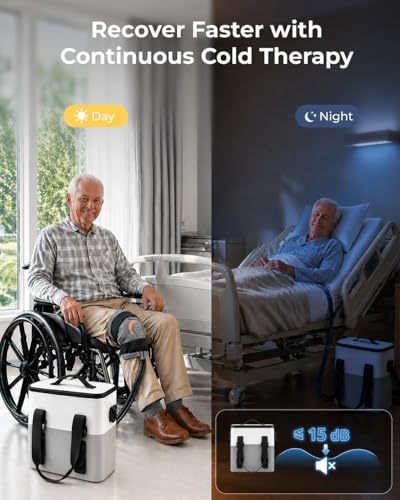
Cooling matters because you need the machine to stay cold enough for effective knee therapy without warming up halfway through a session. Look for strong temperature retention, steady cooling performance, and enough ice and water capacity to match how long and how often you plan to use it. Watch out for small reservoirs or designs that rely on frequent ice pack swaps, since they can interrupt treatment and make recovery routines harder to stick with.
For knee surgery, the goal is steady therapeutic cold—not the coldest possible surface against numb or medicated skin. Look for cooling that lasts through the prescribed session and repeated daily use, but use a cloth barrier and follow clinician timing to avoid frostbite or overcooling, especially if sensation is reduced after a nerve block. Flexible frozen packs should remain bendable around the knee, while circulating systems should keep water cold for hours without forcing constant ice changes. Owner reports align with this: packs are praised for getting very cold while staying flexible, and machines are often credited with hours of cold retention, especially when loaded with ice or frozen water bottles.
Value
You want a knee ice machine that justifies its cost over the full recovery period, especially compared with short-term rental fees, basic ice packs, or lower-cost cold therapy options. Look for durable construction, reusable components, and enough comfort and convenience that you’ll actually use it as prescribed. Watch out for machines that seem inexpensive up front but require frequent replacement parts, extra accessories, or more hassle than they’re worth.
For value, buy around your actual recovery plan: a simple flexible pack may be enough for occasional icing, but a circulating cooler can be worth it if you need weeks of frequent knee icing, have limited help at home, or want to avoid rental logistics. Check whether the included knee pad fits your leg size and can work over post-op dressings, whether replacement pads are available, and whether the unit can be reused for other joints; avoid paying for complexity you will not use, but also avoid undersized packs that leave you swapping ice constantly. Owner feedback supports this tradeoff, with many buyers calling machines worthwhile for surgery recovery, comparing them favorably with rental or office options, and valuing systems that replace repeated ice-pack rotation.
Controls
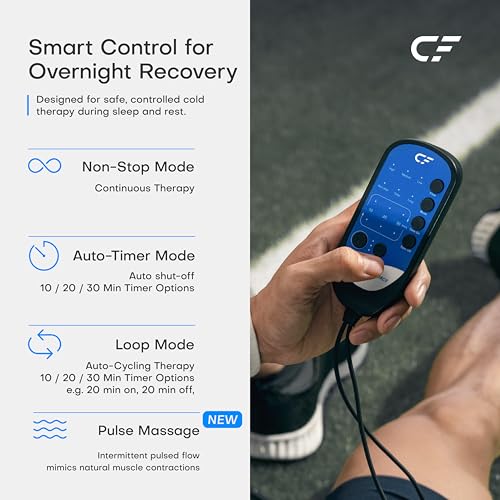
Clear, easy-to-reach controls matter because you may be using the machine while resting, elevated, or less mobile after knee pain or surgery. Look for an adjustable timer, simple temperature or flow settings, and a remote control if you want to change sessions without getting up; watch out for confusing menus, tiny buttons, or limited timer options that make it harder to manage safe, consistent therapy.
For knee-surgery cooling, controls should prevent both under-icing and accidental overuse when you fall asleep or cannot easily reach the unit. Prioritize programmable on/off cycles, automatic shutoff, adjustable flow or pump speed, and a remote or wired controller that is reachable from bed; continuous-run-only units require more vigilance, and very basic controls may be inconvenient during early limited mobility. Owners specifically appreciate interval settings, cold-level or pump-speed adjustment, repeatable timers, automatic shutoff, and remote controls because they reduce the need to constantly manage treatments during recovery.
1,000,000+ shoppers use Buyer's Guide every week to find the best products and services online.

Helping millions of users make smarter purchases online.


