

















We also considered 10 others:


Our Top Choice
Compare Features


The order above is not editorial opinion, and it is not paid placement. It comes from what shoppers across our network actually do - which iphone portable chargers they compare, and which they ultimately buy. We re-rank as new data comes in, so the long-term favorites have to keep earning their spot against new entrants. The full method, including how we make money.
iPhone Portable Chargers Buyer's Guide
For iPhone portable chargers, the core tradeoff is pocketable size versus enough real capacity to survive maps, camera use, travel delays, and long days away from outlets. The sharpest checks are iPhone compatibility—MagSafe/Qi2 alignment, case thickness, and USB-C versus Lightning—and whether the pack can deliver fast power without overheating or becoming too bulky to keep attached.
Portability
Portability matters because a charger that is too bulky or heavy can become something you leave behind, defeating its purpose when you need power on the go. Look for a compact size, manageable weight, and a slim profile that fits your bag, pocket, or travel setup, while remembering that smaller chargers may trade off some battery capacity or charging options.
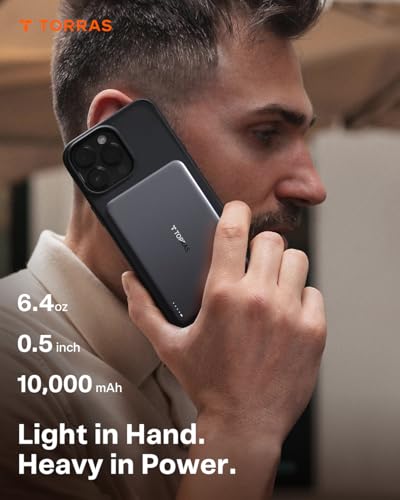
For portability, choose the format around how you actually use your iPhone: a slim magnetic pack is best for cable-free top-ups while walking, a tiny plug-in style works as an emergency pocket backup, and a larger high-capacity bank belongs in a bag rather than on the phone. Check thickness and weight with your case installed, because a pack that blocks the camera area, makes one-handed use awkward, or pulls off in a pocket defeats the point. Built-in cables reduce clutter, but make sure they match your iPhone’s port—USB-C for newer models, Lightning for older ones—or the “portable” charger still requires an adapter. Owner feedback strongly favors small, lightweight chargers that fit in pockets, purses, backpacks, and travel bags, with slim magnetic and compact cable-included designs repeatedly praised for daily carry and travel without much bulk.
Quality
A portable charger gets tossed in bags, pockets, and travel kits, so solid build quality helps it hold up to daily bumps, cable strain, and repeated use. Look for a clean, well-fitted casing, sturdy ports, responsive buttons, and a finish that resists scuffs or slippery handling; avoid chargers that feel flimsy, have loose connectors, or show gaps and rough seams.
For quality, prioritize durable connector design, strong magnets or a secure plug fit, heat management, and a casing that can survive being carried with keys, bags, and repeated drops. For iPhones, weak magnetic alignment can waste power or stop charging, while flimsy built-in Lightning/USB-C tips are a common failure risk because they take bending force when the phone is used while charging. Look for clear safety certifications, stable output ratings, and a build that does not flex, rattle, or expose ports. Owners tend to support this focus: the best-liked chargers are described as solid, polished, dependable, and secure, with attached cables and well-made bodies making them feel trustworthy for everyday use, travel, and emergencies.
Speed
Charging speed determines how quickly your portable charger can refill your devices and whether it can handle power-hungry gear like tablets, laptops, or fast-charging phones. Look for output ratings and supported fast-charging standards that match your devices, and watch out for chargers that advertise high capacity but deliver low power, since they may charge slowly even if they hold a lot of energy.
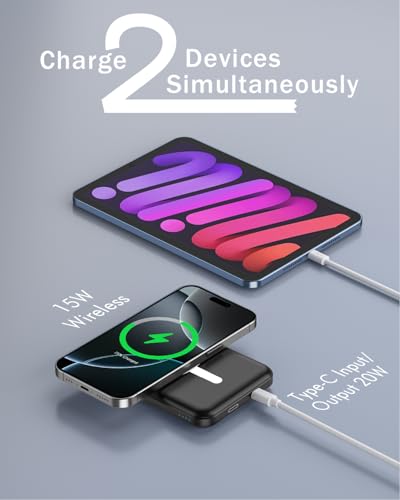
For speed, check the actual wired and wireless output—not just the advertised capacity. iPhones usually charge fastest by USB-C Power Delivery, while magnetic wireless charging is often slower unless the pack supports stronger MagSafe/Qi2-style output and aligns well through your case. If you need quick recovery before boarding, commuting, or filming, look for enough wattage to fast-charge the iPhone by cable and enough input wattage to recharge the power bank itself overnight or faster. Owner sentiment backs the value of fast output: shoppers praise compact chargers that deliver quick phone top-ups, steady magnetic charging, and noticeably faster performance than older blocks, especially during travel and heavy phone use.
Reliability
You need a portable charger you can trust to deliver power consistently when an outlet is not available, especially during travel, emergencies, or long days away from home. Look for dependable functionality across repeated use, stable charging without random shutoffs, and good cooling performance so it does not overheat or throttle under load. Be wary of units with inconsistent output, unreliable ports, or a tendency to run hot, since those can leave your devices undercharged when you need them most.
For reliability, buy for repeatable performance under real iPhone conditions: charging should start every time when attached, stay connected while the phone is in use, and avoid shutting down from heat during navigation, video, hotspot use, or outdoor summer travel. Magnetic models should not slide off with normal pocket movement, and wired models should not depend on a fragile connector angle. Also consider whether the pack can sit unused for weeks and still hold enough charge for emergencies. Owners consistently value chargers that simply work during travel, events, errands, long days, and times without an outlet, with dependable models trusted across phones and other USB-C gear.
Battery
Battery capacity determines how long a portable charger can keep your devices running before the charger itself needs to be refilled. Look beyond the advertised mAh rating, since usable capacity is lower after power conversion losses, and match the size to your needs: enough for a phone top-up, multiple full charges, or larger devices like tablets. Watch out for very high-capacity packs if portability matters, because more battery usually means more weight and longer recharge times.
For battery, match capacity to the job: a very small pack is usually an emergency revive, a mid-size pack is better for a full day of iPhone top-ups, and a high-capacity bank is for travel, family devices, or multiple recharges but will be heavier and slower to refill. Remember that rated mAh is not the same as usable iPhone charge after voltage conversion and wireless losses; magnetic charging is especially convenient but less efficient than cable. If you plan to charge overnight at the hotel or in a backpack, check recharge time for the bank itself, not only how many times it can charge the phone. Owner feedback mirrors this tradeoff: many shoppers praise generous capacity for travel, school, work, commutes, camping, and multiple devices, while also noting that some high-capacity banks take hours to refill and tiny models are best treated as emergency backup rather than multi-charge power sources.
Convenience
Convenience matters because a portable charger is only helpful if you can use it quickly wherever you are, without digging for the right cord or juggling extra accessories. Look for practical features like built-in cables, wireless charging, or a magnetic connection if they match your devices, but make sure they do not add bulk or lock you into a connector type you may not use later.
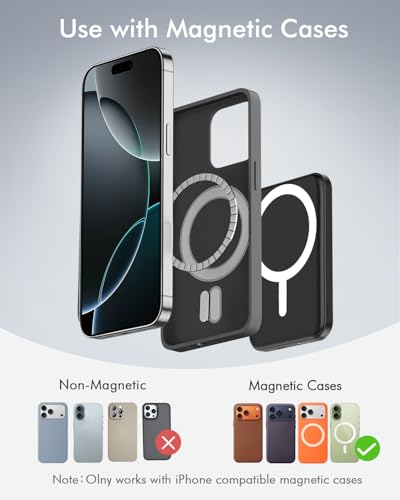
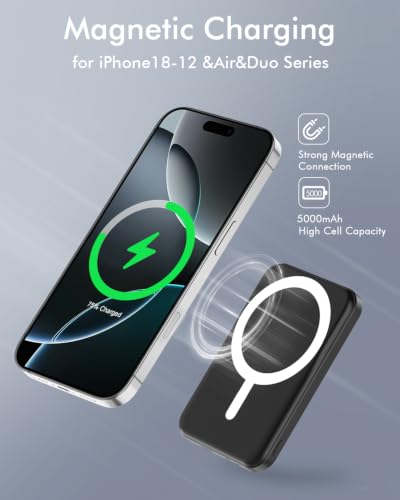
For convenience, decide whether you want magnetic snap-on charging, built-in cables, a built-in wall plug, or maximum port flexibility—but verify each feature fits your iPhone. MagSafe-style packs need a compatible iPhone and a thin magnetic case for a secure hold; built-in cables must match USB-C or Lightning; and wall-plug designs are handy for travel but can be bulkier in a pocket. Also look for battery indicators, pass-through charging behavior, and whether the charger can be used comfortably while texting, taking photos, or navigating. Owners especially appreciate cable-free magnetic attachment, built-in cords, and integrated plugs because they reduce cord clutter and make quick top-ups easier during travel, long days out, and walking around.
1,000,000+ shoppers use Buyer's Guide every week to find the best products and services online.

Helping millions of users make smarter purchases online.


