







We also considered 10 others:


Our Top Choice
Compare Features


The order above is not editorial opinion, and it is not paid placement. It comes from what shoppers across our network actually do - which humidifiers they compare, and which they ultimately buy. We re-rank as new data comes in, so the long-term favorites have to keep earning their spot against new entrants. The full method, including how we make money.
Humidifiers Buyer's Guide
Humidifiers are a balance between adding enough moisture to relieve dry-air symptoms and avoiding damp surfaces, mineral dust, or mold growth. In this category, the sharpest buying concerns are room-size fit, easy sanitation, and whether the unit can hold a safe target humidity overnight without constant refilling or over-misting.
Performance
You want a humidifier that can raise the humidity in your room to a comfortable level and keep it there without constant adjustment. Look for performance that matches your room size, maintains steady output, and includes reliable humidity control so the air doesn’t stay too dry or become damp enough to encourage condensation, musty smells, or mold.
For this niche, judge performance by whether the humidifier can hold a room near 40% to 50% relative humidity, not just whether it produces visible mist. Match the rated coverage and tank size to the actual room, look for an accurate humidistat or auto mode for overnight use, and avoid relying on a small aroma diffuser as your main humidifier for a bedroom or large living area. If it is for a nursery or sleeping space, prioritize steady cool-mist operation, low-water shutoff, and enough runtime to avoid dry air by morning. Owner feedback supports this: buyers frequently report better bedroom comfort, relief from dry throat, nose, skin, allergy-like dryness, stuffy noses, chapped lips, and improved sleep when the unit genuinely raises humidity; scent-focused units are praised more for room fragrance than whole-room humidification.
Ease
A humidifier should be simple enough that you’ll actually use and maintain it: easy to fill, straightforward to set up, and intuitive to adjust as room conditions change. Look for clear controls, a visible water level, practical humidity settings or auto mode, and convenient features like remote control if placement makes access awkward. Watch out for designs that are hard to carry, spill during refills, or bury basic functions in confusing buttons or menus.
Choose a humidifier you can refill and adjust half-asleep: top-fill access, a wide opening, visible water level, simple mist controls, low-water alerts, and an easy way to set a target humidity matter more than extra modes. For bedrooms, nurseries, and plant areas, auto mode, scheduling, night-light control, and cleaning reminders are useful only if they reduce daily attention rather than complicate setup. Avoid tanks that must be flipped over, small cap openings, or controls with bright lights and loud beeps if the unit will run at night. Owners back this up by praising straightforward filling, basic knob controls, adjustable mist, through-the-night operation, remote/app scheduling, water notifications, and manageable setup.
Build
A well-built humidifier is more likely to handle daily filling, cleaning, and seasonal use without cracking, leaking, or becoming noisy. Look for sturdy tanks, tight seals, stable bases, and controls that feel responsive, and be wary of flimsy plastic, hard-to-seat parts, or reviews that mention early failures. Reliability matters because a unit that is difficult to maintain or prone to leaks can create more hassle than comfort.
Inspect build around the failure points humidifiers are known for: tank seams, cap gaskets, base seals, float sensors, mist outlets, and any removable filter or cartridge. A good unit should sit stable when full, resist leaking if moved, have parts that come apart without forcing, and use materials that tolerate frequent vinegar or descaling cleanings. If you plan to use essential oils, buy a unit explicitly designed for oils; otherwise oils can degrade plastic, clog the mist path, and contaminate a water tank meant for humidity. Owner sentiment supports valuing dependable construction: buyers describe well-made compact units, reliable bedroom performance, large tanks that reduce refills, useful smart components, and humidifiers that keep working for bedrooms, plants, and dry indoor air.
Noise
If you plan to run a humidifier while sleeping, working, or in a nursery, quiet operation can matter as much as mist output. Look for models with clearly stated noise levels, a low or sleep mode, and minimal beeps or bright alerts, and be wary of units that develop gurgling, buzzing, or fan noise at higher settings.
For a humidifier used in a bedroom, nursery, or office, check more than the advertised decibel rating: also look for no-beep controls, a dimmable or off display, quiet fan behavior, and minimal water gurgling when the tank feeds the base. Ultrasonic models are often very quiet, but some still make dripping, bubbling, or high-pitched sounds; evaporative models may add fan noise but can be less prone to visible over-mist. If a child or light sleeper is involved, favor sleep mode and automatic shutoff that does not alarm loudly when the tank empties. Owner reports strongly support this priority, with many bedroom and kids’-room users describing quiet or barely noticeable overnight operation while still getting effective mist.
Output
You want a humidifier with enough humidity output to raise the comfort level in your intended room without leaving surfaces damp or windows wet. Look for adjustable mist output and consistent performance over time, so you can dial it down for smaller spaces or overnight use and increase it when the air is especially dry. Be cautious of units that produce a strong visible mist but lack good controls, since more mist does not always mean better humidity management.
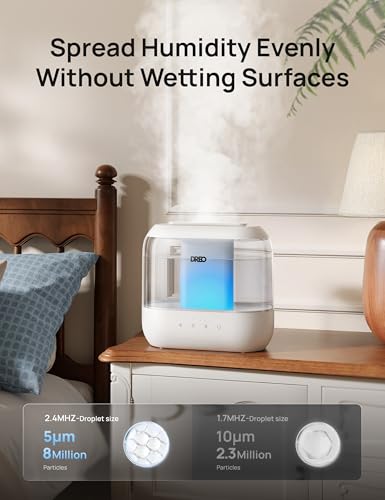
Look for adjustable output with a directional nozzle and enough capacity for the room, because too little mist will not change humidity while too much can wet furniture, floors, bedding, windows, or nearby electronics. A fine cool mist, multiple mist levels, and dual-direction or aimable outlets help place moisture where it is useful without soaking one spot. For larger rooms or very dry seasons, a larger tank and stronger output reduce refills, but pair that with a humidistat or separate hygrometer to prevent condensation and mold risk. Owner feedback aligns with this: buyers praise strong, immediate, adjustable mist, quick humidity gains in larger rooms, fine cool mist, long runtime from large tanks, and noticeable relief for dry air, congestion, plants, and nighttime comfort.
Cleaning
You’ll need to clean a humidifier regularly to prevent mineral buildup, odors, and microbial growth, so choose one with a wide tank opening, smooth surfaces, and parts that are easy to remove and reach. Watch out for narrow-neck tanks, hidden crevices, and bases that can’t be wiped out easily, since these can make routine maintenance frustrating and easier to skip.
Treat cleanability as a safety feature, not a convenience feature: buy a humidifier with a wide top-fill opening, removable tank, accessible base, reachable transducer or wick area, and no hidden channels that trap biofilm. If you use tap water in an ultrasonic unit, plan for mineral scale and possible white dust; distilled water, demineralization cartridges, washable filters, or evaporative/mist-free designs can reduce that issue. Avoid models that look sleek but require awkward scrubbing, because stagnant water and neglected scale can turn a comfort device into a mold or bacteria source. Owner sentiment reinforces this: users consistently praise top-fill tanks, fewer hard-to-reach spots, simple disassembly, low-mess upkeep, washable filters, and cleaning that feels easier than typical humidifiers.
1,000,000+ shoppers use Buyer's Guide every week to find the best products and services online.

Helping millions of users make smarter purchases online.


