


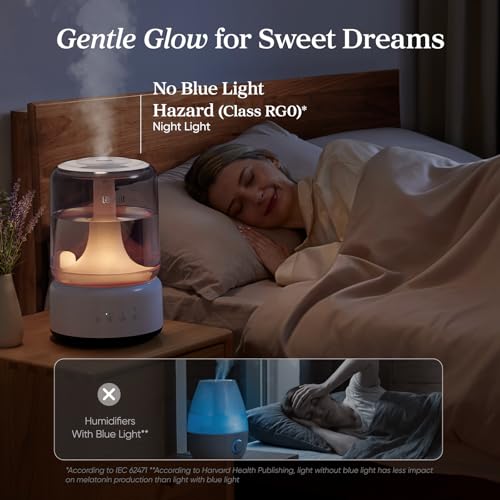




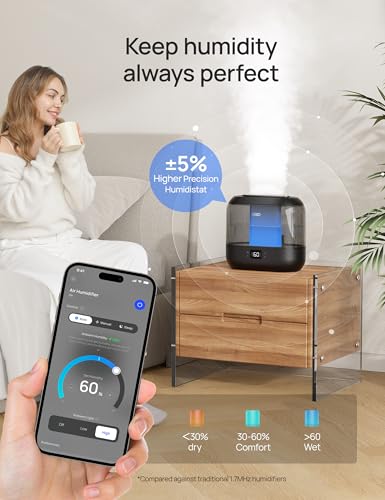


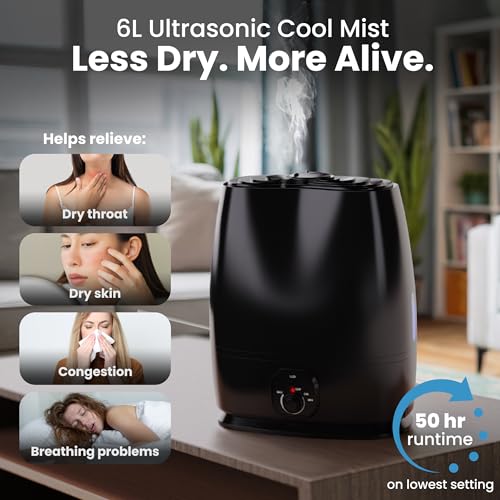
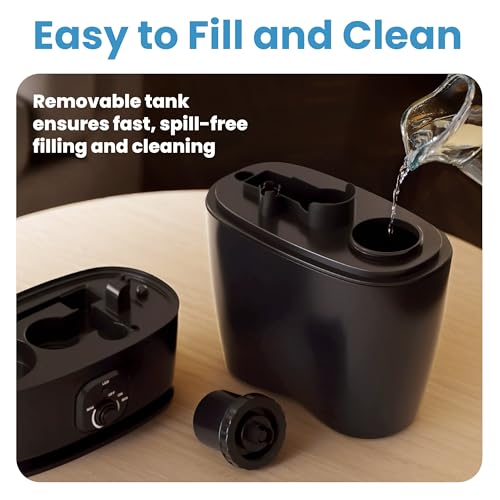




We also considered 10 others:


Our Top Choice
Compare Features


The order above is not editorial opinion, and it is not paid placement. It comes from what shoppers across our network actually do - which humidifiers with hygrometers they compare, and which they ultimately buy. We re-rank as new data comes in, so the long-term favorites have to keep earning their spot against new entrants. The full method, including how we make money.
Humidifiers with Hygrometers Buyer's Guide
Humidifiers with hygrometers trade convenience for accuracy risk: the same unit that measures humidity is also releasing moisture, so sensor placement and auto-mode behavior matter as much as mist strength. The key is to reach a healthy target without creating condensation, mineral dust, mold risk, or a machine that is too annoying to clean and refill regularly.
Performance
You want a humidifier that can raise the humidity in your room to a comfortable level and keep it there without constant adjustment. Look for performance that matches your room size, maintains steady output, and includes reliable humidity control so the air doesn’t stay too dry or become damp enough to encourage condensation, musty smells, or mold.
For a humidifier with a built-in hygrometer, judge performance by whether it can reach and hold a safe target humidity—not just whether it makes visible mist. Look for a set-humidity or auto mode with a reasonable range around 40% to 50%, enough capacity for your room size, and a sensor that is not positioned where the mist immediately fools it into shutting off early; in larger rooms, it also helps to verify readings with a separate room hygrometer across the room. Avoid relying on oversized output in small bedrooms, because over-humidifying can cause window condensation, damp bedding, dust mites, and mold risk. Owner feedback supports that the better units in this category can genuinely raise humidity in bedrooms and larger spaces, maintain chosen levels automatically, and ease dry-air problems such as irritated throats, noses, skin, allergies, and poor sleep.
Ease
A humidifier should be simple enough that you’ll actually use and maintain it: easy to fill, straightforward to set up, and intuitive to adjust as room conditions change. Look for clear controls, a visible water level, practical humidity settings or auto mode, and convenient features like remote control if placement makes access awkward. Watch out for designs that are hard to carry, spill during refills, or bury basic functions in confusing buttons or menus.
Prioritize controls that make humidity targeting simple: a clear current-humidity display, a setpoint control, auto mode, auto shutoff, and alerts for low water or cleaning. App control and scheduling are useful only if they let you set a target humidity and verify status without constantly walking over to the unit; a basic knob can still be fine if you are willing to check an external hygrometer and adjust manually. For nightly use, top-fill access, a visible water level, dimmable lights, and a memory function matter more than flashy modes. Owner reports back this up: shoppers often find daily use straightforward, with easy filling, simple controls, useful app automation, water notifications, light controls, cleaning reminders, and set-and-forget humidity targets.
Build
A well-built humidifier is more likely to handle daily filling, cleaning, and seasonal use without cracking, leaking, or becoming noisy. Look for sturdy tanks, tight seals, stable bases, and controls that feel responsive, and be wary of flimsy plastic, hard-to-seat parts, or reviews that mention early failures. Reliability matters because a unit that is difficult to maintain or prone to leaks can create more hassle than comfort.
Because the hygrometer and control electronics are part of the humidifier, build quality should include more than a sturdy tank: check for leak-resistant seams, a stable base, protected electronics, a reliable float or water-level sensor, and a tank that seats without wobbling after repeated refills. If the unit will run all night near furniture, flooring, books, or nursery gear, avoid designs with vague sealing, splashy outlets, or no clear auto-shutoff behavior. Tank size is also a build decision: a larger reservoir reduces refills, but it must still be easy to lift, carry, and clean when full. Owner sentiment is mostly reassuring here, with buyers describing many models as sturdy, dependable, non-leaking, able to run through the night, and equipped with large tanks or useful smart features that reduce hands-on attention.
Noise
If you plan to run a humidifier while sleeping, working, or in a nursery, quiet operation can matter as much as mist output. Look for models with clearly stated noise levels, a low or sleep mode, and minimal beeps or bright alerts, and be wary of units that develop gurgling, buzzing, or fan noise at higher settings.
For bedrooms, nurseries, and workspaces, listen for the specific sounds humidifiers make: fan hum, ultrasonic whine, water glugging, relay clicks from auto mode, and beeps or alerts when the tank is empty. A built-in hygrometer can cause cycling as the unit turns mist on and off, so check whether display lights and notification sounds can be dimmed or disabled for sleep. Also remember that high output settings may be louder than low or auto settings, even if the unit is advertised as quiet. Owner feedback strongly supports quiet operation as a major strength in this category, with many users saying units run quietly enough for overnight bedroom use, kids’ rooms, sleep, plant areas, and workspaces.
Cleaning
You’ll need to clean a humidifier regularly to prevent mineral buildup, odors, and microbial growth, so choose one with a wide tank opening, smooth surfaces, and parts that are easy to remove and reach. Watch out for narrow-neck tanks, hidden crevices, and bases that can’t be wiped out easily, since these can make routine maintenance frustrating and easier to skip.
Cleaning is a safety-critical buying criterion for humidifiers with hygrometers because auto mode can encourage long unattended run times; stagnant water, scale, and biofilm can build up if the tank and mist path are hard to access. Choose wide-mouth or top-fill tanks, removable lids, simple mist chimneys, accessible corners, and parts you can actually scrub and dry; avoid narrow reservoirs, hidden channels, and designs that trap water around the sensor area. If you have hard water, plan for distilled or demineralized water and regular descaling, since ultrasonic units can spread mineral dust even while the hygrometer reads humidity correctly. Owner sentiment aligns well with this priority: buyers repeatedly praise top-fill designs, fewer hard-to-reach spots, easy disassembly, stainless or accessible tanks, and maintenance that feels simpler than with other humidifiers they have owned.
Output
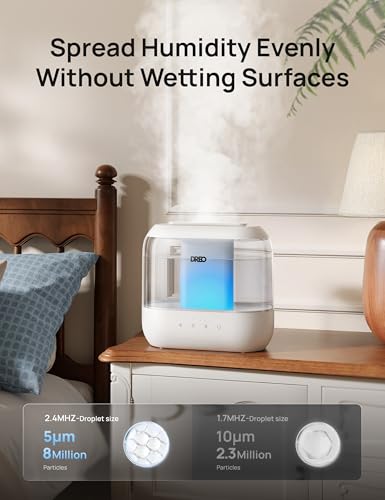
You want a humidifier with enough humidity output to raise the comfort level in your intended room without leaving surfaces damp or windows wet. Look for adjustable mist output and consistent performance over time, so you can dial it down for smaller spaces or overnight use and increase it when the air is especially dry. Be cautious of units that produce a strong visible mist but lack good controls, since more mist does not always mean better humidity management.
Match output to the room and the hygrometer behavior: you want enough mist to raise humidity within a reasonable time, but not so much that the area around the unit gets wet before the room reading catches up. Look for adjustable output levels, directional nozzles, fine mist, and a tank size that supports your desired runtime; for open-plan spaces or heater-season dryness, higher output and larger capacity are helpful, while small bedrooms need more controlled low settings. Be cautious if the mist outlet points directly at walls, bedding, electronics, plants that dislike wet leaves, or the built-in sensor, because local saturation can mislead the hygrometer and cause condensation. Owner feedback supports strong adjustable output as a real benefit, with buyers noting quick humidity increases, fine cool mist, directional nozzles, long runtime from larger tanks, and effective coverage in bedrooms, living areas, plant zones, dry apartments, and even specialized setups.
1,000,000+ shoppers use Buyer's Guide every week to find the best products and services online.

Helping millions of users make smarter purchases online.


