








We also considered 10 others:


Our Top Choice
The order above is not editorial opinion, and it is not paid placement. It comes from what shoppers across our network actually do - which hot plates they compare, and which they ultimately buy. We re-rank as new data comes in, so the long-term favorites have to keep earning their spot against new entrants. The full method, including how we make money.
Hot Plates Buyer's Guide
Hot plates sit between convenience and compromise: they can add a burner, cook in tight spaces, or keep buffet food warm, but the right choice depends on whether you need cooking power, holding heat, or portability. The sharpest buying concerns are heat control, pan or dish fit, and not expecting a compact appliance to behave exactly like a full stove.
Heat Control
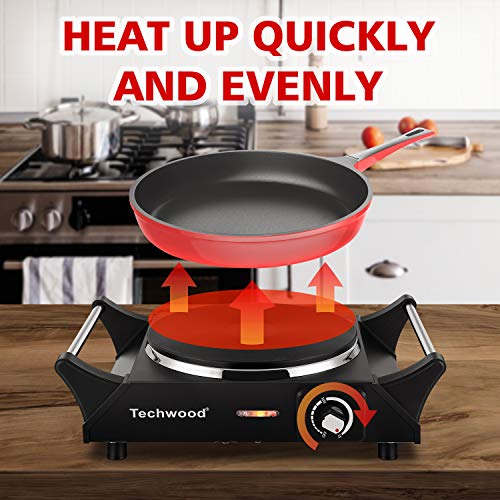
Hot plates are judged less by maximum heat alone than by how controllably they deliver it. A good unit should boil, simmer, fry, or hold food warm without constant knob-tweaking, while a weak one may cycle unevenly or take too long for larger pots.
Choose the heating style for the job first: induction is best when you want fast response, precise simmering, and quick boiling, but it requires magnetic, flat-bottom cookware; cast-iron or coil-style electric plates work with more cookware but usually need more preheating and patience; warming trays are for holding finished food, not cooking raw food. For real cooking, look for clearly stated wattage, multiple heat levels or exact temperature settings, and a burner surface large enough to keep the pan base evenly heated. Owner feedback strongly favors units that heat quickly, hold steady heat for simmering and frying, and cook evenly, while the main complaints cluster around slower warm-up, longer boiling times, and performance that still does not match a full kitchen range in every setup.
Surface Fit
The usable heating area determines whether the appliance feels practical or frustrating. Pan overhang, crowded buffet dishes, or a too-small heat zone can make food heat unevenly even when the hot plate itself is working normally.
Match the surface to what will actually sit on it: a single small burner is fine for eggs, soup, reheating, or a small saucepan, but larger skillets and stockpots need a burner diameter and heat zone that support the pan base instead of leaving cold edges. For buffet use, prioritize a broad warming surface or modular panels that can hold several heat-safe dishes at once; for cooking, avoid assuming a compact plate can replace a full multi-burner stove. Owners consistently praise large or modular warming surfaces for parties and holidays, compact burners for tight kitchens, RV-style setups, and temporary use, and larger coil surfaces for heating bigger pans more evenly.
Cookware Match
A hot plate can only perform as well as the cookware it is paired with. The wrong pan material, warped base, or oversized pot can slow heating, reduce control, and make an otherwise capable unit seem underpowered.
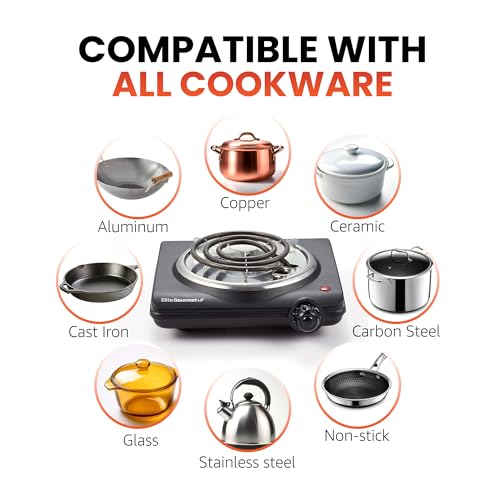
Check compatibility before buying: induction models need cookware that attracts a magnet and has a flat base, while coil and cast-iron electric plates are more forgiving but can be slower and less responsive. For warming trays, use flat, heat-safe serving dishes and avoid materials that can warp, crack, or trap heat against the surface. Owner reports show strong results with practical everyday cookware, including larger pans on appropriately sized burners, but also show that value drops when shoppers expect big-pot or full-range performance from a compact appliance.
Controls & Safety
Portable heat needs controls that are easy to understand before the pan is already hot. Safety features matter because these appliances are often used in temporary spaces, small kitchens, buffets, RV-style setups, or backup cooking situations where counter space and outlet choice may be less ideal.
Look for simple, visible controls you can operate while cooking: clear heat levels, a timer if you plan to hold food, tactile or responsive buttons, and a safety lock or auto-shutoff where available. Because hot plates draw substantial power, place them on a stable, heat-resistant surface with open space around vents, avoid extension cords unless the manufacturer explicitly allows them, and do not run high-draw appliances on the same overloaded circuit. Owners like plug-and-play setup, adjustable heat levels, timers, safety locks, and flameless portability, but long-term feedback also flags control-pad membranes as a wear point on some units.
Build & Cleaning
Hot plates face repeated heating, cooling, spills, and movement, so construction quality affects both safety and lifespan. Easy cleaning also matters because burnt-on residue can create odors, smoke, and uneven contact with pans or serving dishes.
Favor materials that suit your use pattern: stainless housings and sturdy frames are better for frequent cooking, glass warming surfaces wipe clean but need careful handling, and cast-iron plates are durable but may hold heat for a long time after shutoff. Avoid flimsy control panels, unstable feet, hard-to-clean seams, and surfaces that cannot be wiped once cool. Owner sentiment is positive around substantial builds, stainless-steel construction, stable counter feel, easy wipe-down surfaces, and continued frequent-use performance, while the main watch-outs are durability failures over time and worn controls.
Portability
Portability is not just whether the appliance is small; it is whether it can be placed safely, stored cleanly, and used without dominating the counter. Noise, cord routing, heat clearance, and cooldown time all affect how convenient it feels in real temporary cooking spaces.
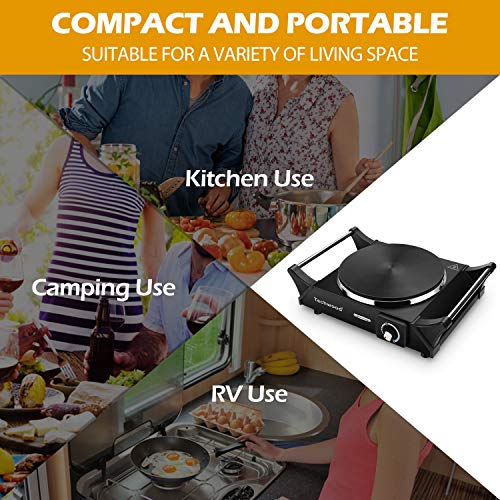
For dorm-like spaces, trailers, camping kitchens, business prep areas, or occasional extra-burner duty, prioritize a compact footprint, manageable weight, stable handles or edges, and a cord layout that reaches safely without crossing a work zone. If choosing induction, expect some fan noise and check that ventilation is not blocked; if choosing a warming tray, consider whether panels stack or store flat after entertaining. Owners appreciate compact models that store neatly, wipe down quickly, and move between setups, and they generally describe fan noise as unobtrusive rather than distracting when the unit is otherwise well designed.
1,000,000+ shoppers use Buyer's Guide every week to find the best products and services online.

Helping millions of users make smarter purchases online.


