Our Top Choice
Why These Features Matter:
A home safe is basically a promise you make to your future self: that the passport won’t “definitely be in that drawer” the night before a flight, that a cranky contractor doesn’t accidentally walk off with an envelope of cash, that sentimental jewelry isn’t living its life one chaotic closet-cleanout away from donation. The good ones disappear into your home in a reassuring way. The bad ones turn into a heavy, beeping resentment machine you avoid using because it’s annoying.
Forget the fantasy of the invulnerable vault. A home safe is about slowing someone down, preventing casual access, and keeping everyday disasters—nosy guests, curious kids, leaky pipes, small fires—from turning into a full-body regret. The right features don’t just protect stuff; they make it easy to actually put stuff away.
Size: Buy for “Annoying Real Life,” Not Just Valuables
Most people picture a tidy stack of passports and heirlooms. Then reality arrives: birth certificates in puffy folders, a watch box that refuses to be compact, a thick insurance packet, a thumb drive on a keychain, and the one spare set of keys that must never be lost. A safe that’s even slightly too small becomes a junk drawer with a lock—things jam, papers bend, and suddenly the door won’t close unless everything is arranged like a bento box.
- Look for: Interior space that fits a file folder without origami; at least one adjustable shelf; a flat floor that doesn’t waste space with weird ridges.
- Good sign: Reviewers mentioning they can fit document pouches, small boxes, and still close it without swearing.
- Small apartment note: A tall, narrow safe often tucks beside a dresser or into a closet better than a wide cube that demands prime real estate.
Fire + Water Resistance: The Details That Actually Matter
“Fireproof” gets thrown around the way “waterproof” does on mascara. In practice, many safes are fire-resistant for a set time at a set temperature, and “water resistance” often means “might survive a firefighter’s hose better than a paper bag.” These ratings matter most for documents, photos, and data—things that don’t handle heat, smoke, or steam with any grace.
- Look for: Clear fire rating (time + temperature) and some mention of water protection (seal, gasket, tested claims).
- Real-life win: A tight door seal that keeps smoke and humidity out—also handy if the safe lives in a basement or a damp closet.
- Things to know: Fire resistance can mean the exterior gets extremely hot; plastic items, USB drives, and delicate electronics may still suffer. Consider a small fire-resistant document pouch inside the safe for extra insurance.
Lock Type: Key, Digital, Biometric—Pick Your Annoyance
Every locking system has its own personality. The goal isn’t perfection; it’s choosing the trade-offs that won’t ruin a Tuesday.
- Digital keypad: Fast, intuitive, and easy to share with a partner—until the low-battery beep starts at 2 a.m. and suddenly it’s a hostage negotiation. Choose models with an external battery option or an obvious low-battery warning that doesn’t arrive too late.
- Key lock: Simple, quiet, no batteries. Also: the key must live somewhere. If it lives near the safe, that’s not much of a plot twist for a thief. If it lives somewhere “smart,” it may become a key you’re certain exists but cannot locate.
- Biometric (fingerprint): Convenient in theory, finicky in practice—dry hands, lotion, tiny cuts, and seasonal skin changes can turn it into a moody bouncer. Better as a convenience feature paired with a keypad backup, not as the only way in.
Guidance: For most homes, a keypad with a manual key override is the sweet spot: quick access, shareable, and not ruined by a dead battery—as long as the override key is stored thoughtfully (not taped to the underside like a sitcom).
Bolting It Down: The Difference Between “Safe” and “Portable”
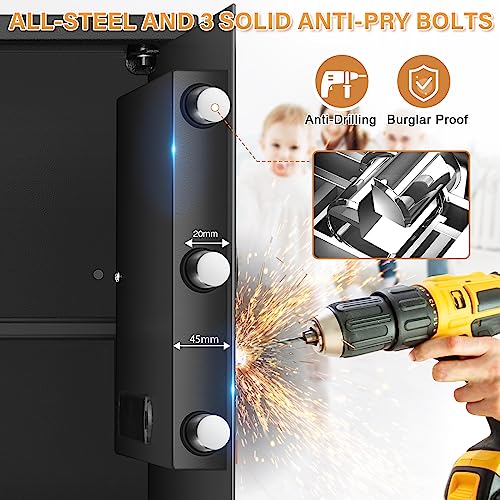
A safe that can be carried out is not a safe; it’s a fancy locked suitcase. The heavy ones are… heavy, yes, but two determined people (or one determined person with a dolly) can still relocate a lot of “secure” objects in under a minute.
- Look for: Pre-drilled mounting holes and included hardware for floor or wall anchoring.
- Apartment reality: Not everyone can drill into studs or floors. In that case, prioritize weight and consider hiding placement (back of a closet, behind a false panel, inside built-ins) over a safe that sits proudly in view like a dare.
- Things to know: Wall safes save space but require installation planning. Floor safes can be great but are a bigger commitment—also, they tend to collect dust in the surrounding area like it’s their job.
Door + Hinges: The Parts You Touch Every Time
The tactile experience matters. A door that closes with a hollow clank feels like a prop. A door that shuts with a dense, confident thud feels like it belongs in the house. This is also where annoying details live: stiff handles, doors that swing too wide and bang into shelving, and interiors that pinch fingers if you’re rushing.
- Look for: Smooth handle action, a door that opens wide enough to actually see inside, and hinges that don’t feel wobbly.
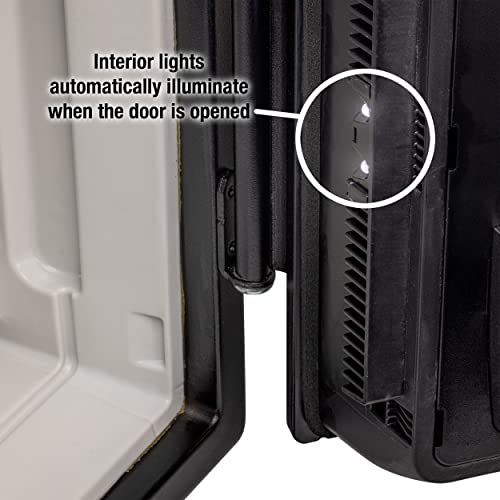
- Small but meaningful: Interior lighting sounds silly until it’s a dark closet and you’re trying to find a tiny key ring without dumping everything on the floor.
Interior Layout: Organization Is Security (Sort Of)
A safe becomes a black hole fast. And black holes lead to people leaving valuables out because “it’s easier.” The best interiors gently force order: shelves that make sense, door pockets that hold small items without spilling, and enough depth for awkward objects that refuse to be flat.
- Look for: Adjustable shelves, a small lockbox or compartment for extra-sensitive items, and a lined interior that won’t scratch jewelry.
- Things to know: Plush linings can snag on sharp edges and shed fibers over time. Not a tragedy, but it’s a little like finding fuzz in a jewelry box.
Noise + Alerts: Your Safe Shouldn’t Sound Like a Toy
Keypads that beep loudly can be a real mood-killer in a quiet home—especially late at night or in a small apartment where every sound becomes communal. Some safes let alerts be muted; others insist on announcing each button press like a microwave with opinions.
- Look for: Mute mode (or at least a low-volume option), clear but not obnoxious error signals, and an alarm that’s useful rather than hysterical.
- Honest caveat: “Tamper alarms” can be overly sensitive. If a safe screams every time it’s bumped while vacuuming, it will eventually be ignored—which defeats the point.
Daily-Use Reliability: The Boring Stuff That Saves You
Safes tend to fail in predictable ways: sticky keypads, cheap battery compartments, confusing reprogramming steps, and lockouts that punish a single wrong press. The best indicator is often not a spec sheet, but patterns in long-term reviews—especially the ones written six months later, after the novelty wears off.
- Look for: Straightforward reset procedures, accessible customer support, and a reputation for consistent lock behavior.
- Things to know: Some models have auto-lock timers that are either too fast (door closes, chaos ensues) or too slow (you walk away, it’s still open). A configurable timer is oddly valuable.
What to Put in a Home Safe (and What Not to)
A home safe is ideal for documents and small valuables that would be painful to replace. It’s less ideal for things that need bank-level protection or climate-controlled conditions.
- Great candidates: Passports, birth certificates, social security cards, property records, insurance documents, spare keys, small jewelry, backup drives (preferably in a protective case).
- Think twice: Cash you’ll forget about (out of sight becomes out of mind), delicate heirlooms that need humidity control, anything you’d be devastated to lose in a serious burglary or house fire (consider a safe deposit box for truly irreplaceable items).
Common Mistakes That Make a Safe Less Useful
- Buying too small: The most common regret, and it shows up fast.
- Hiding it too well: A safe placed behind a mountain of stuff becomes a safe nobody uses. Access matters.
- Not anchoring (when possible): The “grab-and-go” problem is real.
- Relying on one access method: A fingerprint-only safe is one dry winter away from an argument.
- Ignoring batteries: If it takes a special battery you never keep in the house, it’s not a plan; it’s a future inconvenience.
The Practical Shortlist: What to Prioritize
- For most homes: Medium-size fire-resistant safe, keypad + key override, interior shelf, bolt-down option, mute-able keypad.
- For renters: Heavier unit with smart concealment, quieter keypad, compact-but-tall shape that fits closets, and a layout that keeps documents flat.
- For families with kids: Reliable lock (keypad is easiest), fast access that still locks automatically, and an interior that prevents small items from becoming glittery floor hazards.
Honest Caveats: A Home Safe Isn’t a Fortress
Even a great home safe has limitations. A determined thief with time and tools can do a lot. Fire ratings are not guarantees. And “water-resistant” is not “it survived a flood, no notes.” The point is layered protection and everyday discipline: putting important things in one place, making access controlled, and ensuring a bad day doesn’t become a paperwork apocalypse.
If the safe is easy to use, it will actually get used. That’s the feature that quietly beats all the others.