














Our Top Choice
Why These Features Matter:
A treadmill is basically a piece of furniture you also sweat on. If you buy the wrong one, it won’t just “not motivate you” — it’ll loom in the corner like an expensive coat rack with a power cord. The best treadmills disappear into your life in a strangely domestic way: they’re stable when you’re half-asleep, quiet enough that you don’t feel like you’re auditioning for Stomp, and not so annoying to store that you start “just going for walks outside” (a lie you tell yourself in February).
So instead of obsessing over every last spec, here’s what actually changes day-to-day living: the way it sounds, how it feels underfoot, how much room it steals, and how many tiny frictions it adds between you and a quick 20 minutes of movement.
Stability: The “Does This Feel Like a Sidewalk?” Test
The first thing people notice isn’t speed or incline — it’s wobble. A treadmill can be technically sturdy and still feel a little seasick when you pick up the pace. If you’re a walker, minor flex might not bother you. If you’re a runner (or you occasionally panic-sprint because you’re late to your own life), instability becomes the thing you think about instead of your workout.
- Look for: A frame that doesn’t shimmy when you hit a faster clip; handrails that don’t rattle; a belt that tracks straight without constant babysitting.
- Why it matters at home: Wobble amplifies noise, and noise becomes a relationship issue. Or a downstairs-neighbor issue. Or both.
- Small tell: If owners mention “it feels solid” unprompted, that’s usually the green flag. If they say “fine once you get used to it,” that’s editor-speak for “I regret this, but the return window closed.”
Noise Level: Your Downstairs Neighbor Is Part of the Product
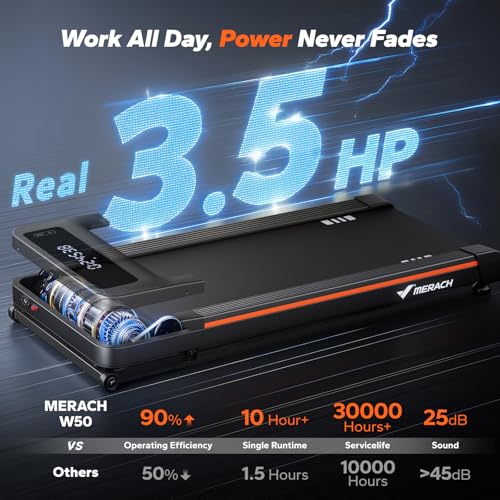
Treadmill noise comes in layers: the motor hum, the belt whoosh, and the percussive thud-thud-thud of feet. The last one is what makes you feel guilty. A quiet treadmill doesn’t just keep the peace; it makes you more likely to use it while the rest of your home is still asleep (or on Zoom, or watching a show you’re pretending to watch too).
- Look for: A smoother, lower-pitched sound rather than a high whine; a belt that doesn’t slap; a deck that absorbs impact instead of broadcasting it.
- Real-life tip: Even a “quiet” treadmill gets dramatically nicer with a thick mat underneath. Not glamorous, but neither is a noise complaint.
- Honest caveat: If you run hard, you will still sound like a person running inside a building. No brand can change physics — they can only make it less rude.
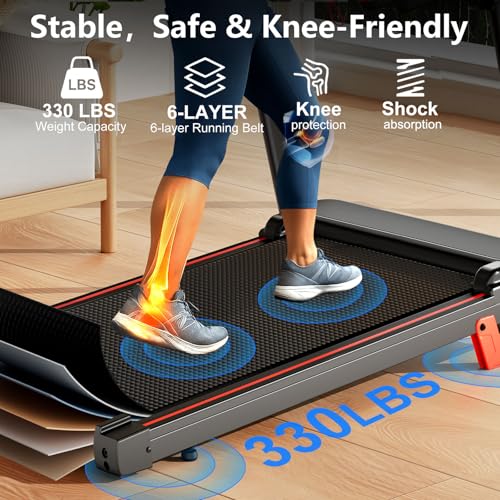
Cushioning & Feel Underfoot: Your Knees Don’t Care About Marketing
Some treadmills feel pleasantly springy, like you’re running on a forgiving track. Others feel like jogging on a moving plank. You don’t need a degree in biomechanics to know which you’ll actually stick with. Cushioning is also personal: too soft can feel unstable; too firm can make your joints start a formal complaint.
- Look for: A deck that feels consistent across the whole belt (not squishy in one spot, firm in another), and a surface that doesn’t feel slick when you’re sweaty.
- Why it matters: If it’s harsh, you’ll shorten runs without realizing it. If it’s comfortable, you’ll accidentally go longer while watching one more episode.
- Minor annoyance to watch: Some belts build static and make you feel like you’ve been rubbing socks on carpet all winter. It’s not dangerous; it is deeply irritating.
Controls & Console: The Difference Between “Easy” and “Fussy”
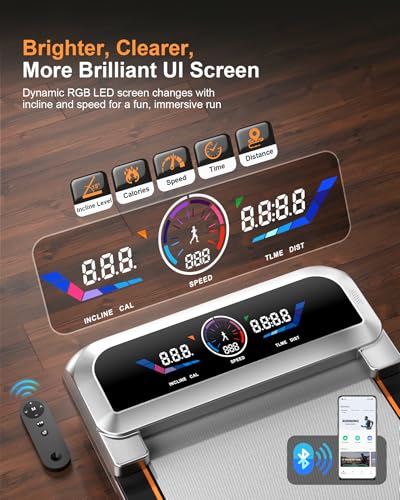
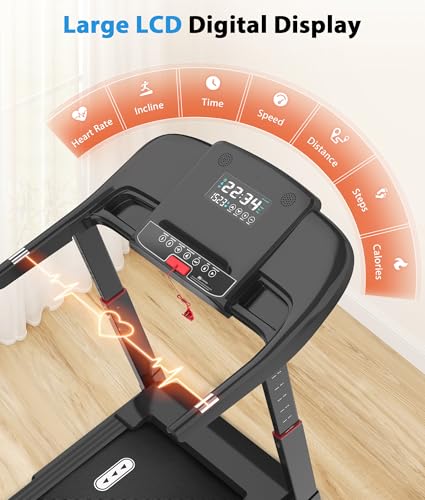
A treadmill console can be elegantly simple or a full tech renaissance fair. People think they want “all the programs,” and then they use the same two buttons forever. What matters is: can you change speed or incline without fumbling, looking down, and briefly negotiating with the machine like it’s a self-checkout kiosk?
- Look for: Quick-access controls you can hit mid-stride; a display you can read without squinting; buttons that don’t require a firm, angry press.
- Real-life detail: If you plan to watch TV while you walk, avoid consoles that reflect glare like a glass office building.
- Honest caveat: Touchscreens are pretty until your sweaty finger becomes the stylus. Physical buttons are often more usable — like a good kitchen drawer pull.
Size, Storage, and the Myth of “Folds Away”
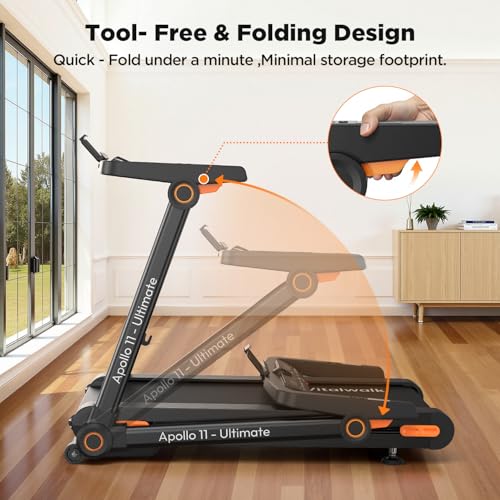
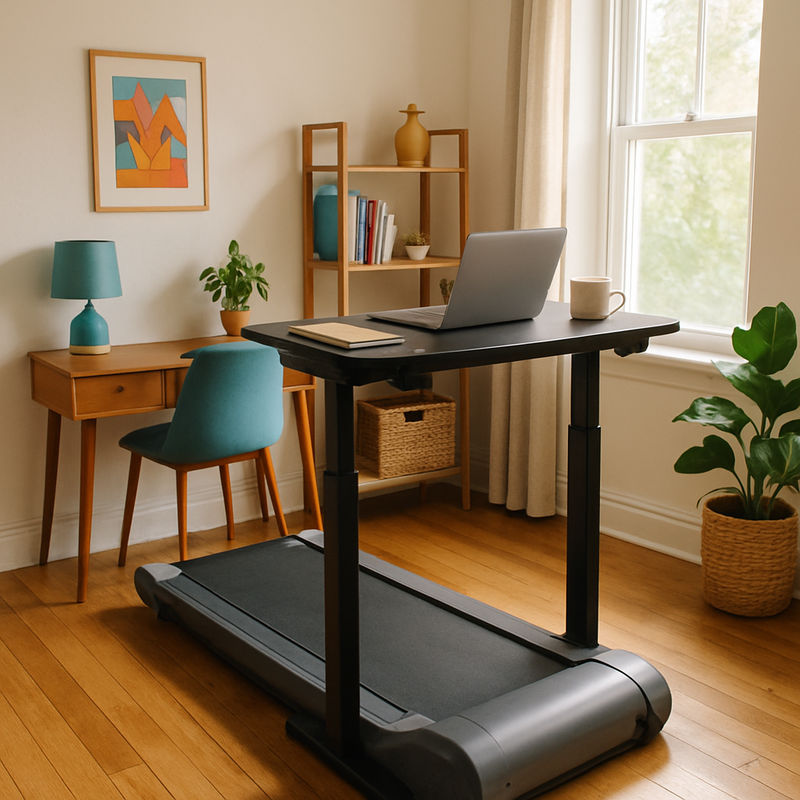
Most treadmills that “fold” still occupy a startling amount of visual and physical space — like a spare mattress you keep pretending is temporary. In a small apartment, it’s not just floor area; it’s the way the thing interrupts your sightlines and turns one corner of the room into a home gym you didn’t ask for.
- Look for: A footprint that makes sense where you’ll actually put it (not where you wish you could); a folding mechanism you’d realistically use more than once; wheels that roll without you having to deadlift the entire machine.
- Apartment reality: If it’s heavy (many are), you’re not moving it daily. You’re moving it once, and then it lives there like a roommate who doesn’t buy groceries.
- Small but maddening issue: Some treadmills fold, but the power cord and safety key dangle in a way that makes it look perpetually unfinished. It’s the treadmill equivalent of exposed phone-charger spaghetti.
Incline: The Feature You’ll Use More Than You Think
Incline is the stealth MVP because it makes walking feel like exercise without requiring you to become a runner. It’s also a way to keep workouts interesting when your brain is bored and your body is not.
- Look for: Incline that changes smoothly (not in dramatic, mechanical lurches); a max incline that feels meaningful if you’re training, but don’t buy extra incline “just because” if you hate hills outside.
- Why it matters in real life: A small incline can make a 25-minute walk feel like you did something — which is often the entire goal on a Tuesday.
- Honest caveat: Incline mechanisms can add noise and another thing to break. If you’re a pure walker and want minimal fuss, simpler can be smarter.
Maintenance: The Boring Stuff That Determines Longevity
Owning a treadmill is mildly like owning a pet: it needs attention, and if you ignore it, it will eventually make a weird sound you can’t un-hear. The best treadmills are the ones that don’t ask for much — or at least make upkeep straightforward.
- Look for: Easy belt alignment; clear guidance on lubrication; parts and service that don’t feel like a secret society.
- Real-life warning sign: If lots of owners mention needing service early, believe them. People don’t write reviews about maintenance unless they’re annoyed.
- Minor annoyance: Some treadmills require a very specific lubricant schedule and will nag you about it. It’s not wrong; it just feels like being scolded by an appliance.
Subscriptions & “Smart” Features: Decide if You Want a Treadmill or a Relationship
Some treadmills are happiest when paired with a subscription. That can be genuinely motivating — the instructor energy, the structured plans, the sense that you’re “in a class” instead of alone in your socks. But it can also feel like buying a car and then paying extra to unlock the steering wheel.
- Look for: A machine that still works well in “dumb mode” (manual control, no logins, no drama); clear info on what’s locked behind a paywall.
- Why it matters: Motivation is great, but resentment is a workout killer.
- Honest caveat: If you love guided workouts, you may genuinely use the subscription and feel fine about it. If you’re allergic to recurring charges, prioritize simplicity and compatibility with your own tablet/phone.
Little Domestic Realities Editors Actually Care About
- Fan placement: Built-in fans are often… symbolic. If you run hot, you will still want a real fan aimed at your face like a wind tunnel of dignity.
- Tablet/phone holder: If it blocks the display, you’ll hate it. If it’s flimsy, you’ll spend the workout adjusting it instead of walking.
- Cup holders: They’re usually sized for a dainty bottle. If you’re a big water person, check if your emotional-support tumbler fits.
- Safety key: You will lose it at least once. Consider where it lives. (A hook nearby is boring and effective, like floss.)
- Kids & pets: The belt is mesmerizing. The gaps are crumb magnets. The console buttons are irresistible. If you live with tiny chaos agents, plan accordingly.
How to Choose the “Best Treadmill” for Your Actual Life
If you want the version of guidance I’d give a friend over coffee, it’s this:
- If you’re mostly walking: Prioritize quiet operation, easy controls, and a deck that feels comfortable for long sessions. You don’t need a machine that looks like it’s training Olympians unless you enjoy owning intimidating objects.
- If you’re running regularly: Buy for stability and a better underfoot feel. A treadmill that feels solid at higher speeds is the difference between “I’ll use this” and “I’ll sell it for half price in six months.”
- If space is tight: Treat “folding” claims skeptically. Measure the spot, picture it there permanently, and then decide if you still want it. A slim, simple treadmill you use is better than a fancy one you can’t stand to look at.
- If you need motivation: Guided classes can help — but choose a setup that won’t punish you if you skip the subscription later. You’re buying a treadmill, not adopting a streaming service.
Things to Know Before You Click “Buy”
- Delivery is the hidden plot twist: Treadmills are heavy, awkward, and not romantic to carry up stairs. White-glove delivery can be worth it if you live in a walk-up or value your lower back.
- Return policies matter: “Try it for 30 days” sounds generous until you realize returning it involves repacking a small car. Read the fine print while you’re still calm.
- Budget realistically for accessories: A mat, a real fan, and maybe a small shelf for towels make the whole experience feel intentional instead of improvised.
The Bottom Line
The best treadmill isn’t the one with the most features; it’s the one you don’t have to negotiate with. It starts easily. It feels stable. It doesn’t wake the household. It doesn’t demand a tech support relationship. And it fits your home in a way that doesn’t make you feel like your living room has been annexed by a gym.
If you find one that’s quietly dependable — the kind you can step onto without bracing yourself for some new annoyance — that’s the one you’ll still be using a year from now. And that, more than any spec, is the whole point.
1,000,000+ shoppers use Buyer's Guide every week to find the best products and services online.

Helping millions of users make smarter purchases online.

