We also considered 10 others:
Our Top Choice
Compare Features
The order above is not editorial opinion, and it is not paid placement. It comes from what shoppers across our network actually do - which hair dryers they compare, and which they ultimately buy. We re-rank as new data comes in, so the long-term favorites have to keep earning their spot against new entrants. The full method, including how we make money.
Hair Dryers Buyer's Guide
A good hair dryer is a balance between moving enough air to shorten wet-hair time and controlling heat well enough to avoid frizz, scalp discomfort, color fade, or heat damage. The sharpest checks are airflow-plus-heat control, attachment fit for your hair texture, and safety/build details such as a lint filter, secure nozzle connection, and bathroom-safe plug.
Results
The right hair dryer should leave your hair looking the way you want it to: smoother and shinier for sleek styles, fuller for volume, or more defined if you wear curls. Look for consistent frizz control, attachments that match your styling needs, and enough heat and airflow control to shape your hair without making it feel rough, puffy, or over-dried.
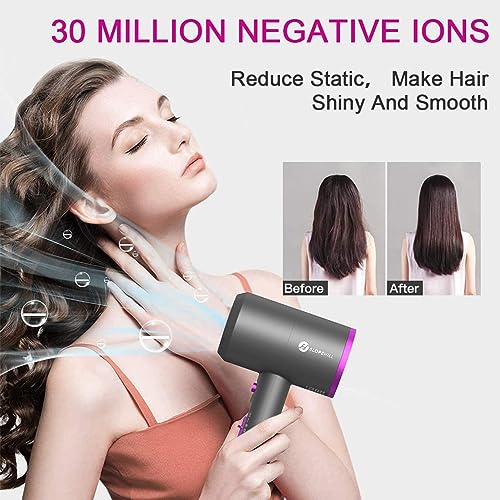
Prioritize dryers that smooth by combining controlled heat, strong airflow, and the right attachment—not just a vague “ionic” claim. Ionic or tourmaline features can help reduce static and puffiness, but very fine hair may look limp if the dryer over-conditions the finish; curly or wavy hair usually also needs a diffuser and a low-airflow setting to preserve pattern. Look for a true cool-shot button to set the cuticle after drying, and avoid models that only promise shine while offering poor heat control. Owner feedback supports this: many buyers report smoother, shinier, less frizzy hair, often crediting ionic drying, though frizz control and longer-term consistency are not uniform for everyone.
Drying
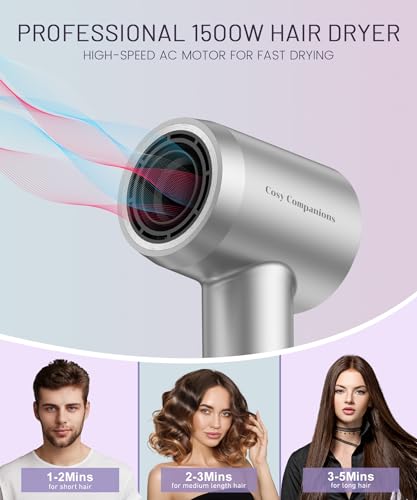
You want a dryer that gets your hair dry quickly and evenly without forcing you to linger on the same sections, since long drying times can add heat exposure and make styling more frustrating. Look for strong, consistent airflow and heat settings that match your hair type, and watch out for dryers that feel powerful but leave roots damp, overheat certain areas, or take too long on thick or dense hair.
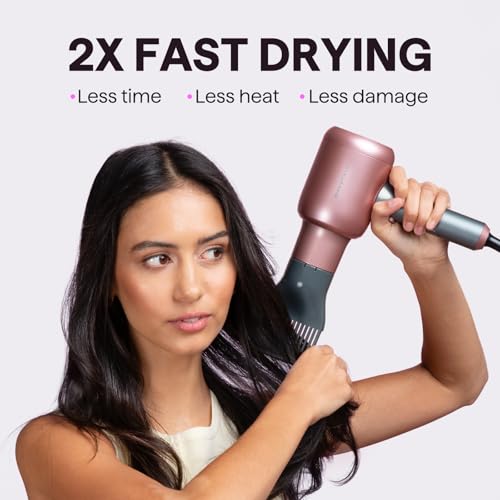
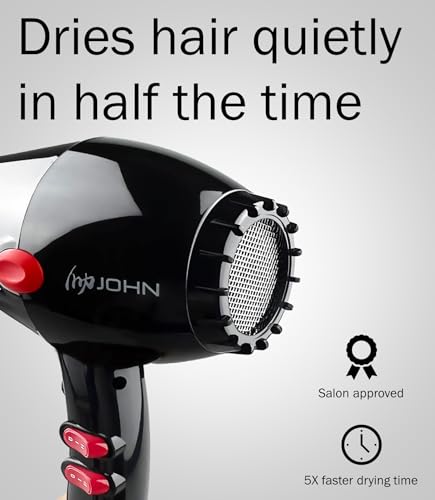
For faster drying without roughening the hair, shop for high airflow that can be paired with lower heat, not simply the hottest setting available. Thick, dense, or long hair benefits from strong air volume and a concentrator nozzle; curls and waves need a diffuser that fits securely and spreads air gently instead of blasting the curl pattern apart. If you often dry from soaking wet, check that the intake filter is easy to clean, because lint buildup is a common cause of weaker airflow and overheating. Owner reports strongly support fast drying as a major advantage, with many saying powerful airflow cuts routine time, including for thick, wavy, or curly hair, while still allowing gentler settings.
Quality
A hair dryer’s quality affects how safely and reliably it performs through repeated heat, handling, and storage. Look for sturdy construction, secure attachments, smooth controls, a stable cord connection, and a finish that feels well made rather than flimsy. Watch out for loose parts, rattling, overheating smells, or awkward design details that could make daily use less safe or less durable.
Judge quality by the parts that fail in daily bathroom use: a removable rear filter, sturdy cord strain relief, switches that do not feel loose, an ALCI safety plug, and attachments that lock on without wobbling or popping off when hot. A dryer can feel powerful at first but still disappoint if the nozzle warps, the diffuser fit is poor, or the motor clogs and loses force. For frequent use, also check that the body does not get uncomfortably hot near the handle and that replacement attachments are available or standard-sized. Owner sentiment is generally favorable on solid everyday performance, useful attachments, and a more premium feel than expected, though durability should still be checked because early performance does not guarantee long-term dependability.
Power
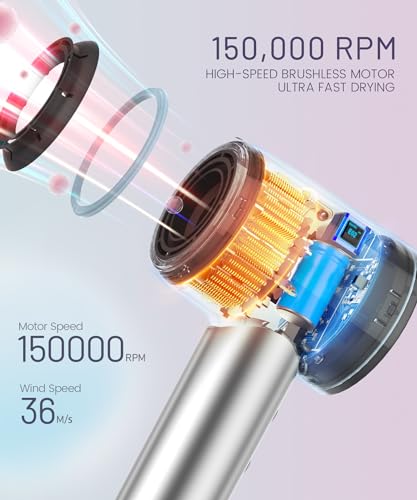
Power affects how quickly and efficiently a hair dryer can move heat through your hair, so stronger airflow can cut drying time and make styling easier—especially if your hair is thick, long, or dense. Look for a dryer that feels forceful without being harsh or hard to control, and don’t rely on wattage alone; a well-designed motor and focused airflow matter as much as raw output.
Power should be evaluated as usable airflow, not just wattage: the best choice dries quickly on medium heat and has enough fan force for your hair density. Very thick or coarse hair usually needs stronger airflow, while fine, fragile, or highly processed hair needs lower heat and speed options so the dryer does not whip strands into tangles or cause breakage. Also check electrical compatibility: high-wattage dryers may be unsuitable for weak circuits, travel converters, or shared bathroom outlets, and travel use requires true dual voltage rather than a plug adapter alone. Owners frequently describe strong airflow, faster blowouts, and noticeably shorter routines, including on wet or thick hair, which supports power as a key strength when matched to hair type.
Portability
Portability matters if you plan to store your hair dryer in a small bathroom, pack it for trips, or hold it for longer styling sessions. Look for a lightweight, compact design, ideally with a foldable handle and manageable cord, and check for dual voltage if you travel internationally. Be wary of ultra-small dryers that sacrifice drying power, heat control, or nozzle compatibility for size.
For portability, focus on weight in the hand, balance, cord storage, and whether the dryer still accepts the attachments you actually need. A compact body is helpful for travel or small bathrooms, but it is less useful if the diffuser is bulky, the handle is awkward, or the model lacks dual voltage for international trips. For thick, curly, or long hair routines, even a few extra ounces can cause arm fatigue during sectioning, so a lighter dryer with a comfortable grip may matter more than a foldable handle. Owner feedback aligns with this: buyers often praise lightweight, compact dryers as easier to hold, less tiring for longer styling sessions, and convenient for packing or small-space storage.
Heat
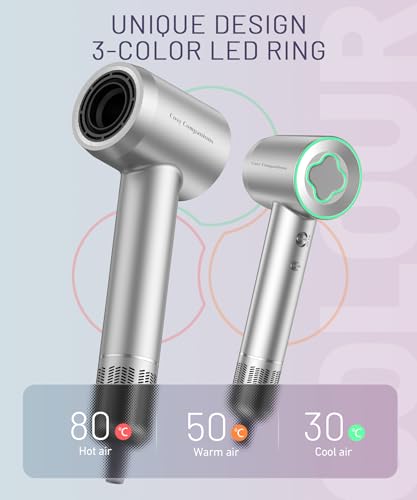
Heat affects how quickly your hair dries and how much stress it experiences, so you want a dryer with enough heat output for your hair type without relying on scorching temperatures. Look for multiple temperature settings or fine heat control, consistent heat distribution, and a cool-shot option; avoid dryers that run unevenly hot, fluctuate noticeably, or make it hard to step down to gentler heat when your hair is nearly dry.
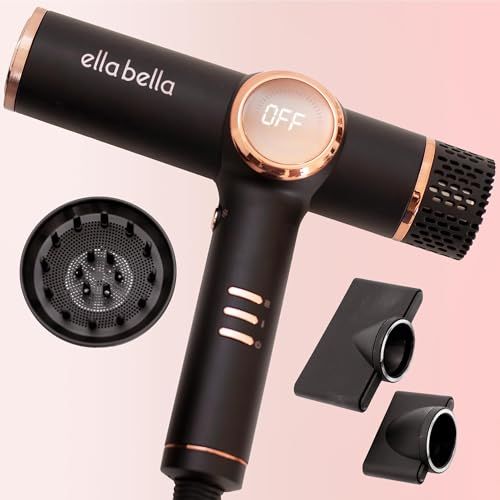
Choose heat controls that are separated from fan speed and give at least low, medium, high, plus a cool shot; this matters more than a single very hot setting. Sensitive scalps, color-treated hair, curls, fine hair, and damaged ends all benefit from drying with stronger airflow and moderate heat, while thick hair may need higher heat only during the wettest stage. Avoid confusing indicators, poorly spaced settings, or dryers that run hot at the nozzle, because uneven heat can create frizz, scalp discomfort, or scorched sections. Owner sentiment backs the importance of control: many appreciate flexible heat and fan settings and gentler heat that still smooths hair, but some find heat levels inconsistent, not hot enough, or confusing depending on expectations and hair type.