







We also considered 10 others:


Our Top Choice
Compare Features


The order above is not editorial opinion, and it is not paid placement. It comes from what shoppers across our network actually do - which grill brushes they compare, and which they ultimately buy. We re-rank as new data comes in, so the long-term favorites have to keep earning their spot against new entrants. The full method, including how we make money.
Grill Brushes Buyer's Guide
A good grill brush has to remove grease, char, and stuck-on food without leaving dangerous debris behind or damaging the grate surface. The sharpest tradeoff is cleaning aggression versus bristle safety and grate compatibility, with powered or steam-assisted designs adding convenience but also battery, motor, and durability concerns.
Bristle Safety
A grill brush contacts the same surface that food touches, so loose parts, shedding wires, and damaged cleaning heads matter more here than on ordinary cleaning tools. Safer designs reduce the chance of debris being left on the grate while still needing enough structure to remove cooked-on residue.
For grill brushes, safety starts with the cleaning head: choose bristle-free coils, pads, steam heads, scrapers, or tightly captured abrasive surfaces if you want to avoid the known failure mode of loose metal wires left on the grate. If you do buy a wire-bristle style, inspect it before every use, replace it at the first sign of bent or missing wires, and wipe the grate afterward; shoppers with children, frequent guests, or older brushes should be especially cautious. Owner sentiment strongly favors bristle-free designs because buyers want to avoid loose metal wires while still getting a sturdy tool, making this a category-defining concern rather than a minor feature.
Cleaning Power
The main job of a grill brush is breaking the bond between hot grate surfaces and cooked-on grease, sauce, carbon, and food debris. A brush that feels impressive on surface grime may still disappoint on thick, baked-on buildup, so the cleaning mechanism matters as much as the advertised toughness.
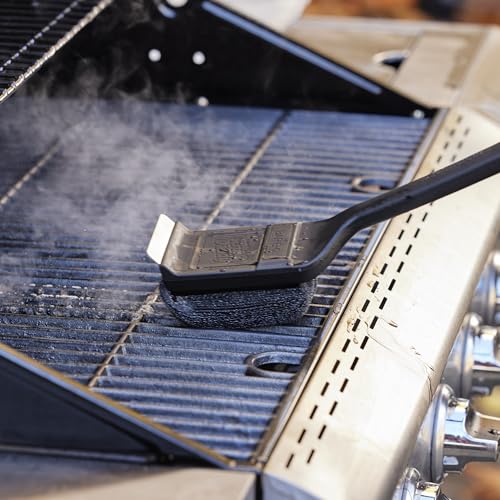
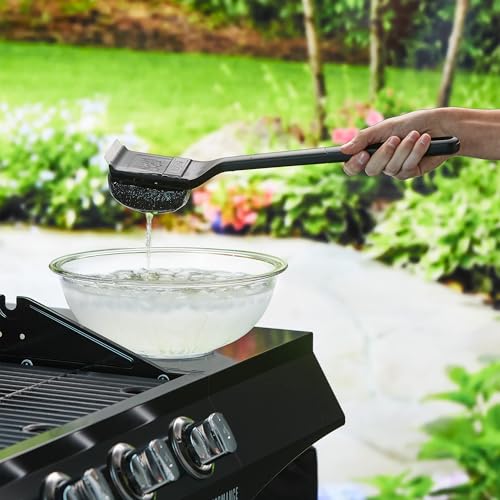
Match cleaning power to the residue you actually face: routine post-cook grease and food bits can be handled by a sturdy pad, coil, scraper, or powered brush, while thick carbonized buildup usually needs a scraper edge, steam assist, heat-softened grates, or a separate deep-cleaning session. Look for a head that maintains firm contact across the grate bars and a scraper that fits your grate style; avoid expecting a light-duty brush or weak motor to restore years of baked-on buildup by itself. Owners often report that strong designs cut through grease and grime quickly and lift burnt-on residue with minimal effort, and steam-style cleaning is praised for loosening crusty buildup with light scrubbing. At the same time, sentiment is mixed for heavy baked-on residue and deep cleaning, so the best pick is one whose cleaning mechanism matches your grill’s buildup level.
Grate Compatibility
Grill grates vary in material, coating, spacing, and bar shape, and the wrong brush can either miss residue or damage the cooking surface. A good brush should reach between bars while applying the right amount of abrasion for the grate it is used on.
Before choosing a brush, identify your grate material and shape: cast iron tolerates firm scraping but needs seasoning preserved, stainless can take more abrasion, and porcelain-coated grates are more vulnerable to chipping from overly aggressive metal edges. For narrow round bars, look for wraparound coils, grooved heads, or adjustable angles; for flat or heavy grates, a broad pad plus a scraper can be more efficient. Owner feedback notes that some brushes work well enough on cast iron grates and remove surface grime, but results are uneven as a complete grill-cleaning solution. That makes compatibility with your specific grate design a practical ranking factor, not just a convenience detail.
Handling & Reach
Grill cleaning often happens while the grill is still warm, in a cramped outdoor setup, and at awkward angles. Handle length, grip comfort, head angle, and balance determine whether cleaning feels controlled or becomes tiring and unsafe.
Choose a handle long enough to keep your hand away from residual heat, with enough stiffness to apply pressure without flexing and a grip that stays secure if greasy or wet. Adjustable-angle heads and cordless movement help around side walls, corners, and awkward grate spacing, while overly bulky heads can skip tight areas; for small grills, a shorter controllable handle may beat a long heavy one. Owners repeatedly value brushes that make cleanup faster and easier than traditional scrubbing, especially when cordless movement or adjustable angles help around the grates. They also praise sturdy, comfortable builds that make regular scrubbing less tiring.
Power Reliability
Powered grill brushes add speed and reduce effort, but they also introduce batteries, motors, charging hardware, and water-resistance concerns. A good powered brush should keep consistent scrubbing force through the whole cleaning session and not create extra frustration before or after use.
For electric or steam-assisted grill brushes, check how the tool is powered, whether the charging cord and indicators are straightforward, whether the head is safe to wet as intended, and whether the motor has enough torque to keep scrubbing under pressure. Battery runtime matters less for a single quick grate pass than for large grills or multiple cleanings, but confusing charge status or a weak motor can make a powered brush worse than a manual one. Owner sentiment is split: some buyers get multiple grill cleanings from one charge, while others report confusing charge indicators, missing cords, very short runtime, or units failing after only a few uses. Power is also described as adequate for routine residue but less convincing for heavy baked-on buildup, so powered models should be judged on reliability as much as convenience.
Value Fit
A grill brush can be a simple maintenance tool or a more specialized cleaning system, and the right choice depends on how often and how hard it will be used. Value is strongest when the brush saves real effort without adding avoidable durability, charging, or replacement-head problems.
Buy for your actual cleaning routine: frequent grillers with large grates may benefit from faster cleaning, steam assistance, or powered scrubbing, while occasional users may be better served by a simpler durable bristle-free brush and scraper. The biggest value trap is paying for a motor, specialty head, or premium build that only removes surface grime when you expected deep restoration; also consider replaceable heads, storage, and how often the tool will be exposed to weather. Owners are divided on value, with many finding sturdy designs worth buying while others feel the performance is not strong enough to justify the cost or complain about durability. That split suggests shoppers should rank value by fit to grill size, buildup level, and cleaning frequency rather than by features alone.
1,000,000+ shoppers use Buyer's Guide every week to find the best products and services online.

Helping millions of users make smarter purchases online.


