











We also considered 10 others:
.png)


Our Top Choice
The order above is not editorial opinion, and it is not paid placement. It comes from what shoppers across our network actually do - which gas powered pole saws they compare, and which they ultimately buy. We re-rank as new data comes in, so the long-term favorites have to keep earning their spot against new entrants. The full method, including how we make money.
Gas Powered Pole Saws Buyer's Guide
Gas powered pole saws are for shoppers who need more reach and cutting force than manual or small battery tools, but who still have to control a vibrating engine and bar at the end of a long shaft. The key tradeoff is power and reach versus weight, setup fuss, starting reliability, and the risk of weak parts failing under vibration.
Reach Control
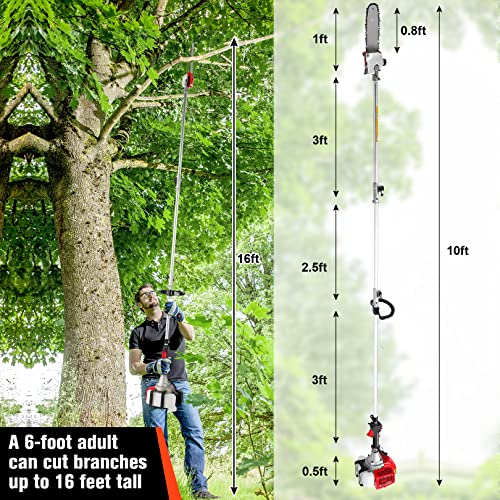
Gas pole saws are bought for reach, but too much pole length without control can make the bar harder to place and more tiring overhead. The right setup lets you cut from the ground while keeping the chain, branch, and falling debris in a predictable line.
Choose a gas pole saw with enough extension to reach your common pruning height from flat ground, but do not chase maximum reach if the pole becomes whippy or nose-heavy. Look for secure locking collars, rigid shaft sections, a shoulder strap or harness point, and controls you can operate without shifting your grip; avoid designs that require frequent ladder use, because gas pole saws are safest when used from a stable standing position. Owner feedback strongly supports reach as a major advantage: extended reach made tall-branch trimming easier and reduced ladder climbing, while routine trimming felt more comfortable from the ground. Handling is generally manageable once everything is tightened and adjusted, but setup and early adjustment can affect how controlled the tool feels.
Cutting Power
A gas pole saw needs enough torque and chain speed to cut without bogging, especially because overhead cuts punish weak power delivery. Smooth cutting also reduces the chance of pinching, bouncing, or leaving the saw stuck in a limb.
Prioritize reliable engine power, steady throttle response, and a bar length appropriate for the limb sizes you actually cut; for medium limbs, the saw should maintain chain speed without repeated stalling or forcing the cut. Check that the chain is easy to tension, the oiler feeds consistently, and the bar is not oversized for the engine, because a long bar on an underpowered pole saw can bog down and make overhead work unsafe. Owners repeatedly praise strong cutting ability, saying these saws can handle most pruning work and medium-to-larger limbs, and many report that they cut limbs and brush very well. The caution is consistency: some owners mention rough running, stalling, or uneven power delivery out of the box, so cutting performance depends on both engine tuning and setup quality.
Build Quality
Gas pole saws have more moving parts than manual or battery models, and vibration, fuel, heat, and shaft joints all stress the tool. A weak coupler, poor fastener fit, or fragile starter can turn a high-reach saw into a repair project quickly.
Inspect the build around the engine housing, pole couplers, gearbox, starter assembly, bar mount, and throttle linkage, because these are the areas most likely to suffer from vibration and overhead leverage. Favor sturdy shaft connections, metal reinforcement where the cutting head meets the pole, accessible replacement parts, and clear maintenance points; avoid tools with sloppy joints, missing hardware, or parts that feel misaligned before first use. Owner sentiment is split but clear on the stakes: some buyers describe sturdy, good-quality tools that feel durable for the money, while multiple complaints call durability the main watch-out, including saws breaking quickly or arriving with serious parts problems. For this category, a complete and solid arrival matters as much as raw power.
Starting Setup
A gas pole saw that is hard to start or poorly tuned wastes time and can create unsafe stop-start cutting in the air. Starting behavior is especially important after storage, during break-in, and when switching between idle and full throttle.
Look for a clear choke/primer procedure, accessible carburetor adjustment, dependable pull-start hardware, and instructions that explain break-in, fuel mix, chain oiling, and idle tuning. Avoid units with vague wiring, unclear assembly steps, or controls that are hard to diagnose, because a gas pole saw that stalls overhead or will not idle smoothly can be frustrating and risky. Owners report that starting and handling can be easy when the saw is running properly, but early break-in or setup issues may affect the experience. Assembly experiences are uneven, ranging from easy setup to frustration with poor instructions and wiring issues, so a careful first setup is part of the purchase decision.
Handling Comfort
Pole saw work is tiring because the cutting head is extended away from your body, multiplying weight and vibration. A manageable tool lets you make cleaner cuts and stop before fatigue turns into poor control.
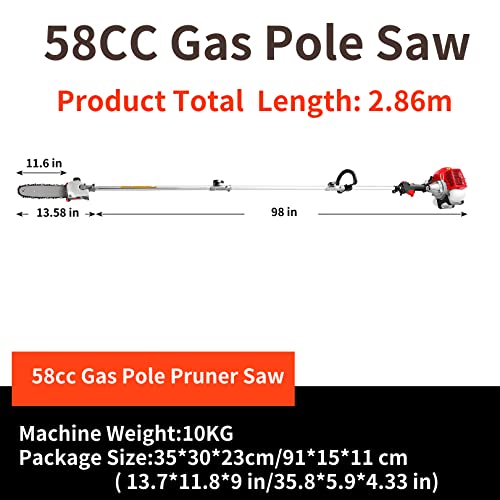
Check total weight, balance with the pole extended, grip spacing, vibration damping, and whether the strap actually supports the tool at your working angle. For homeowner pruning, a saw that feels slightly less powerful but controllable may be better than one that is heavy, front-loaded, or difficult to maneuver around branches; also confirm that assembly and tightening points are simple enough to recheck before each use. Owners often find day-to-day use straightforward and easy to handle after setup, and several say setup and handling become manageable once everything is tightened and adjusted. The mixed feedback on assembly means comfort is not just about weight—it also depends on whether the tool is properly aligned, tightened, and adjusted before cutting.
Real Value
Gas pole saws can be a good value when they deliver enough reach and power for seasonal trimming without constant repairs. The real value test is not the lowest cost, but whether the tool arrives complete, runs correctly, and can survive the amount of cutting you expect.
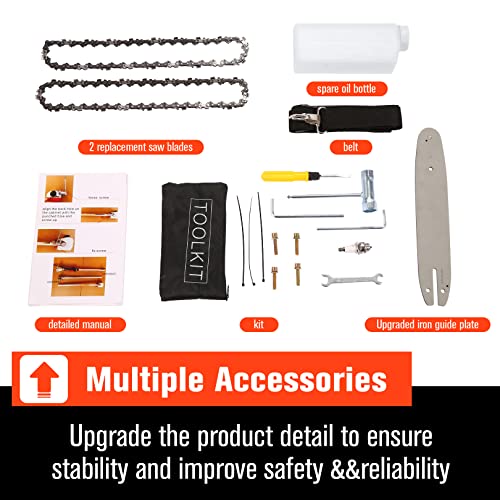
Match the tool to your workload: occasional yard pruning and side-job trimming can justify a different durability expectation than frequent orchard, storm-cleanup, or property-maintenance use. Look for included essentials, available consumables, replaceable chain and bar parts, and a support path if parts arrive damaged; avoid judging value only by engine size or reach on paper. Owners often describe these saws as strong buys for homeowners and side-job trimming, with name-brand-like capability at a satisfying level, and several say they work great for the price. However, the same sentiment notes that value depends on the tool arriving complete and operating as expected, while durability complaints can erase the bargain quickly.
1,000,000+ shoppers use Buyer's Guide every week to find the best products and services online.

Helping millions of users make smarter purchases online.


