


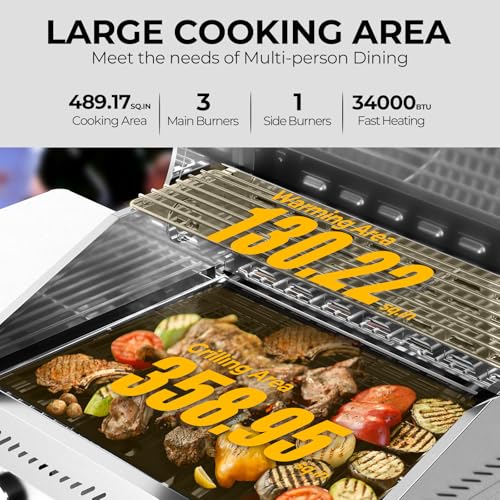




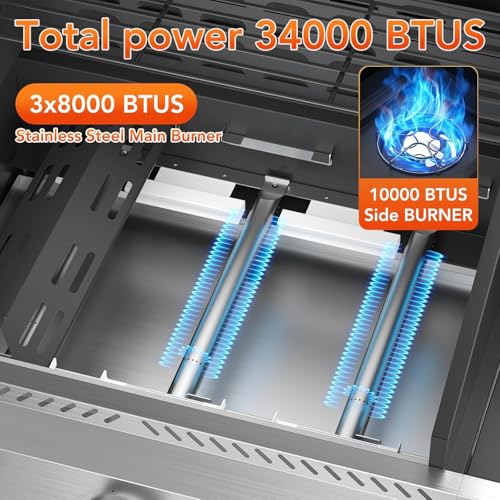


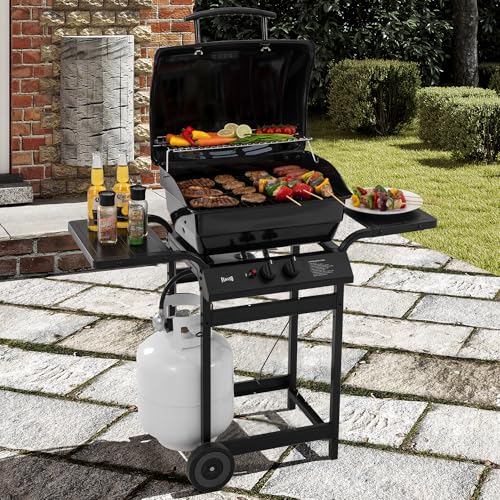


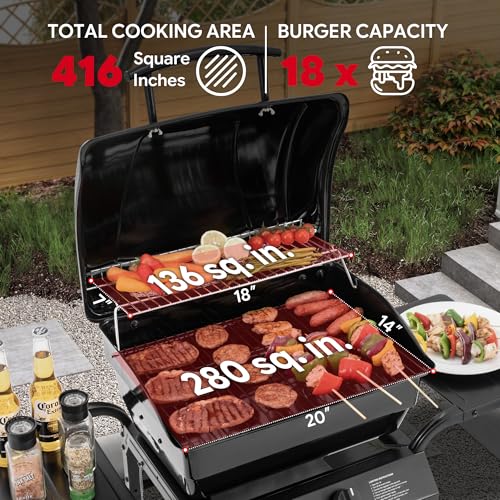


We also considered 10 others:


Our Top Choice
Compare Features


The order above is not editorial opinion, and it is not paid placement. It comes from what shoppers across our network actually do - which gas grills under $200 they compare, and which they ultimately buy. We re-rank as new data comes in, so the long-term favorites have to keep earning their spot against new entrants. The full method, including how we make money.
Gas Grills under $200 Buyer's Guide
In budget gas grills, the core tradeoff is portability and low cost versus thin metal, smaller burners, and less heat retention. Shoppers should check stability, grease control, fuel compatibility, and whether the cooking area matches their real use, because a compact grill that looks convenient can still disappoint if it runs hot in spots, wobbles, or is hard to keep clean.
Build
A grill’s build quality determines how well it holds up to heat, weather, movement, and repeated use outdoors. Look for sturdy construction, stable legs or cart design, durable grates and firebox materials, tight-fitting parts, and a finish that resists rust and peeling. Watch out for thin metal, wobbly frames, flimsy handles, or components that feel loose, since those can signal weaker long-term durability.
Prioritize a grill with a rigid firebox, stable legs or cart, secure lid hinges, a well-supported grate, and burner shields that do not flex easily; thin sheet metal, loose knobs, sharp edges, and wobbly folding legs are common failure points in this category. Stainless or coated steel can be worthwhile, but check that grease trays, burners, grates, and fasteners also feel durable, since rust and burner wear often show up before the outer shell fails. Owner feedback supports this focus: many buyers describe compact budget gas grills as surprisingly sturdy, well-finished, sleek, and more premium-feeling than expected, with several portable and tabletop styles earning praise for feeling well-made rather than flimsy.
Cooking
How well a grill cooks determines whether you can get strong sear marks, even browning, and reliable doneness without constant babysitting. Look for steady heat, enough power for high-temperature searing, good control at lower temperatures, and grates or heat distribution that minimize hot spots and flare-ups. A grill that struggles here may cook slowly, burn the outside before the inside is done, or make it hard to handle common tasks like burgers, vegetables, chicken, and steaks.
Match burner output to grate size rather than chasing raw heat claims: for small gas grills, look for quick ignition, usable low-to-high burner control, a lid that traps heat, and flame tamers that reduce flare-ups while still allowing searing. If you cook steaks, check whether owners report real sear capability; if you mostly cook burgers, brats, chicken, or tenderloins, even heat and predictable control matter more than maximum temperature. Owner sentiment is encouraging here, with buyers often praising fast heat-up, easy lighting, good burner control, even cooking, strong heat, and successful everyday meals, including staples like chicken, steak, burgers, brats, and tenderloins.
Assembly
A grill that is difficult to assemble can delay your first cookout and increase the chance of loose parts, poor alignment, or setup mistakes that affect safety and performance. Look for clear instructions, well-labeled hardware, manageable part sizes, and reviews that mention how long assembly takes or whether a second person is needed. Be cautious of grills with vague manuals, many similar-looking fasteners, or complaints about parts arriving bent or misaligned.
Before buying, confirm that assembly does not require forcing misaligned panels, guessing at hardware, or mounting a burner/regulator assembly with vague instructions, because poor assembly can create leaks, unstable carts, uneven lids, and ignition problems. Look for clearly labeled hardware, diagram-heavy instructions, protected packaging, and preassembled burner components when possible; after setup, always leak-test propane connections before lighting. Owner reports generally back the better options in this class, with many buyers finding assembly straightforward thanks to clear directions, organized parts, diagrams, and components that line up easily, often making setup manageable in about an hour.
Size
Choose a grill that fits both how you cook and where you’ll keep it: the overall footprint affects patio space, storage, and how easily you can move it. Look for enough cooking area for your usual group size, but watch out for oversized grills that are harder to maneuver, store, clean, and use efficiently.
Choose size by where the grill will actually live and how many people you cook for: tabletop and folding models suit patios, RVs, campsites, beaches, and tailgates, while small cart grills work better if you need prep height and a fixed backyard station. Check both total footprint and usable grate space, because warming racks, rounded lids, and edge hot spots can make the practical cooking area smaller than advertised; also confirm balcony, lease, campsite, and local propane rules before planning to use one in tight spaces. Owner sentiment shows this category’s strength: compact models are frequently liked for small yards, decks, RVs, camping, tailgating, beaches, and cooking for couples or small groups while still being easy to store or carry.
Cleaning
A grill that’s easy to clean saves you time after cooking and helps prevent flare-ups, stuck-on residue, and lingering odors from old grease. Look for grates that release food easily, removable grease trays or ash catchers, and accessible interior surfaces; watch out for designs with tight corners, awkward drip paths, or parts that are difficult to remove and scrub.
Look closely at grease management: a removable drip tray or cup should slide out without tilting the grill, sit far enough from flame to reduce grease-fire risk, and be easy to line or wash. Favor grates and griddle surfaces that can be scraped clean, but avoid designs where grease pools near burners or where burner tubes are hard to access, because compact grills can clog and flare if residue builds up. Owner feedback is mostly positive but with an important caution: many buyers find stainless surfaces, low-stick griddles, removable trays, and oil-collection parts easy to wipe or scrape clean, while some note that burner buildup and imperfect interior access can still make deeper cleaning more work over time.
Ease
You want a grill that feels intuitive from startup to cleanup, because easier controls, clear temperature feedback, and straightforward fuel or ash management help you cook more confidently with fewer interruptions. Look for simple ignition, readable gauges or displays, accessible grates and grease trays, and clear cooking information; watch out for cramped layouts, confusing settings, or maintenance steps that make regular use feel like a chore.
For day-to-day use, check the propane connection type, regulator position, ignition style, knob markings, lid handle clearance, and how easy the grill is to move while cool; a simple grill becomes frustrating if tank hookup is awkward or folding legs take too much fiddling. If you want quick weeknight cooking, a basic gas-only setup with reliable ignition and adjustable burners is usually easier than a multi-mode design; if you value smoke flavor, a dual-fuel layout adds flexibility but also more parts to manage and clean. Owner sentiment generally supports easy use in this category, with buyers praising straightforward controls, adjustable burners, easy propane hookup, simple movement, even cooking, and convenient removable grease parts, though some folding-leg systems can feel clunky until practiced.
1,000,000+ shoppers use Buyer's Guide every week to find the best products and services online.

Helping millions of users make smarter purchases online.


