





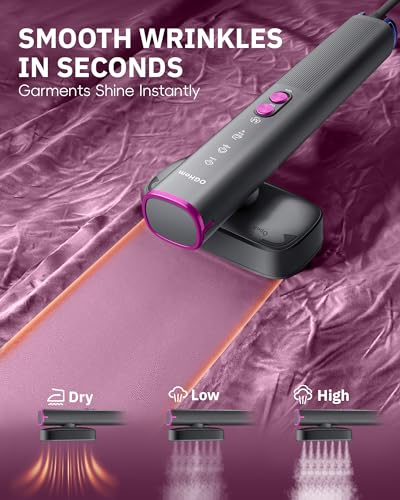
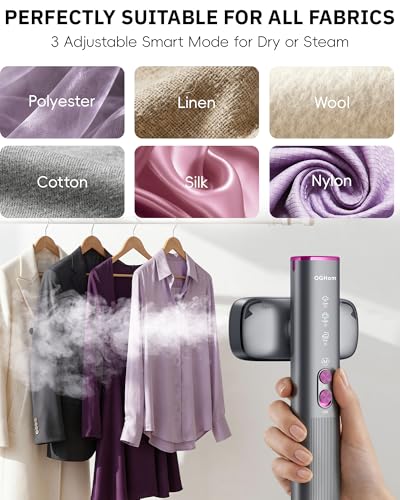


We also considered 10 others:


Our Top Choice
Compare Features


The order above is not editorial opinion, and it is not paid placement. It comes from what shoppers across our network actually do - which garment steamers for clothes they compare, and which they ultimately buy. We re-rank as new data comes in, so the long-term favorites have to keep earning their spot against new entrants. The full method, including how we make money.
Garment Steamers for Clothes Buyer's Guide
Garment steamers are best when you want fast wrinkle release and fabric refreshing without the setup of an iron, but they trade away some crisp pressing power. The sharpest buying concerns are whether the steamer makes steady steam without spitting or soaking clothes, and whether its size, tank, and handling fit your real routine—rushed mornings, multiple garments, or travel touch-ups.
Steam
Steam performance determines how quickly and effectively you can relax wrinkles, especially on heavier fabrics or larger garments. Look for a steamer that produces a steady, strong flow rather than short bursts or sputtering, since inconsistent steam can leave damp spots and make you go over the same area repeatedly. You should also consider whether the steam feels controllable enough for delicate fabrics, where too much heat or moisture can be a drawback.
Look for a steamer that produces continuous, visible steam rather than just a high advertised wattage, and check whether it can be used vertically without sputtering, dripping, or over-wetting fabric. For everyday shirts, school clothes, dresses, and travel-wrinkled garments, a strong setting and steady steam path matter more than novelty attachments; delicate fabrics also benefit from controlled output so you can relax wrinkles without leaving damp spots. Owner feedback supports this priority: shoppers consistently praise fast heat-up, strong steam, and enough output to smooth everyday wrinkles quickly, with several noting that compact units can still perform well when the steam is steady and not soaking clothes.
Usability
A clothes steamer should feel easy to use from fill-up to finish, especially if you plan to use it for quick touch-ups or frequent garment care. Look for intuitive controls, a comfortable grip, manageable weight, a water tank that’s easy to fill and empty, and enough flexibility to steam different fabrics, hanging garments, curtains, or upholstery. Watch out for designs that are awkward to hold, difficult to refill, prone to dripping, or limited by short cords, small tanks, or fussy attachments.
Choose a design that matches how you will actually steam: hanging garments need a comfortable trigger or continuous-steam lock, a cord long enough to reach a closet door or shower rod, and a head shape that can get around collars, plackets, cuffs, hems, and pleats. Avoid units that require awkward tilting if you plan to steam vertically, and check that filling, emptying, and descaling are simple because leftover water can cause spitting, odor, or mineral buildup. Owners tend to value exactly this low-friction experience, describing handheld steamers as easier than setting up an ironing board, simple to fill and switch on, and convenient for curtains, upholstery, linen shirts, pants, and quick garment touch-ups.
Results
You want a clothes steamer that smooths wrinkles quickly and leaves garments looking freshly finished, not damp, spotty, or still rumpled. Look for steady steam output that works across common fabrics and can handle both light touch-ups and deeper creases, while watching out for models that lose power, spit water, or require too many passes to get acceptable results.
Buy a garment steamer for soft wrinkle release and fabric refreshing, not for razor-sharp creases or heavily structured pressing; if you need crisp dress-shirt collars, trouser creases, or flattened seams, you may still need an iron or pressing surface. For best results, look for a steamer with enough heat and steam density to relax cotton, linen, rayon, and travel-packed clothing, plus attachments or a fabric guard if you handle delicates, knits, or embellished garments. Owner sentiment is strongest around quick everyday smoothing: buyers say wrinkles come out quickly, packaged or travel-wrinkled clothes look better with minimal setup, and steamers make de-wrinkling faster and less fussy than traditional ironing for routine garments.
Portability
If you plan to use a clothes steamer while traveling or move it between rooms often, portability affects how easy it is to pack, store, lift, and set up. Look for a compact size and lightweight build that still feels stable in your hand, and watch for trade-offs like smaller water tanks or shorter steam times that can come with travel-friendly designs.
For travel, prioritize leak-resistant construction, compact dimensions, light weight, a secure water cap, and voltage compatibility if you travel internationally; a small steamer that cannot be safely packed wet or used at your destination is more hassle than help. Also check tank size against trip use: ultra-small tanks save suitcase space but may need refilling after one or two garments, while larger tanks are better for several outfits but bulkier in a carry-on. Owners repeatedly highlight compact, lightweight builds as a major plus, saying travel-friendly steamers fit easily into luggage, store without taking much room, and still feel powerful enough for quick touch-ups away from home.
Build
Build quality matters because a clothes steamer is exposed to heat, water, and frequent handling, so weak plastics, loose fittings, or flimsy tanks can lead to leaks, sputtering, or early failure. Look for a sturdy body, secure water-tank connection, durable hose or nozzle materials, and controls that feel solid; be cautious of models that feel wobbly, have poorly sealed caps, or show complaints about cracking, leaking, or inconsistent steam over time.
Inspect build details that affect safety and longevity: a tight-sealing tank, stable base, heat-resistant plastics, protected steam vents, a durable cord strain relief, and clear max-fill markings. Garment steamers fail in practical ways—leaking onto clothes, spitting mineral deposits, losing steam pressure, cracking around the tank, or becoming uncomfortable to hold when hot—so a solid feel and simple, serviceable design matter more than a flashy feature list. Owner feedback supports choosing reliable construction, with buyers praising well-made units that plug in easily, handle regular household routines, deliver consistent steam across several garments, and serve as dependable alternatives to ironing for home or light frequent use.
Speed
Heat-up time matters because a steamer that’s ready quickly is easier to use for last-minute touch-ups, travel, or busy mornings. Look for a clear stated warm-up time and consider whether the water tank size affects convenience: smaller handheld units may heat faster but need refilling sooner, while larger steamers can take longer to get going. Be wary of vague “fast heat” claims without a specific ready-to-steam indicator or practical details.
If you want a steamer for rushed mornings, choose one with a short real-world heat-up time, quick steam recovery after refills, and enough tank capacity to finish the number of garments you normally tackle in one session. Speed is not only preheat time: a weak steamer can heat quickly but still take too long per shirt, so balance rapid readiness with strong continuous steam and straightforward controls you can operate half-awake before work or school. Owners consistently reinforce this point, praising fast heat-up, powerful steam settings, and easy controls that help them finish work shirts, school clothes, casual outfits, and last-minute travel touch-ups quickly without setting up an ironing board.
1,000,000+ shoppers use Buyer's Guide every week to find the best products and services online.

Helping millions of users make smarter purchases online.


