





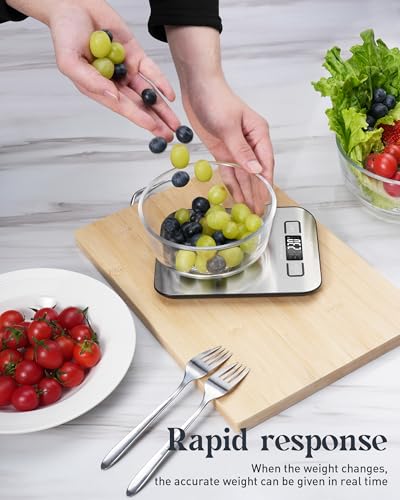

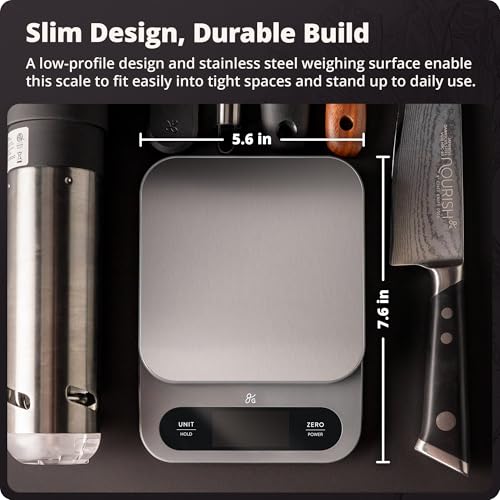
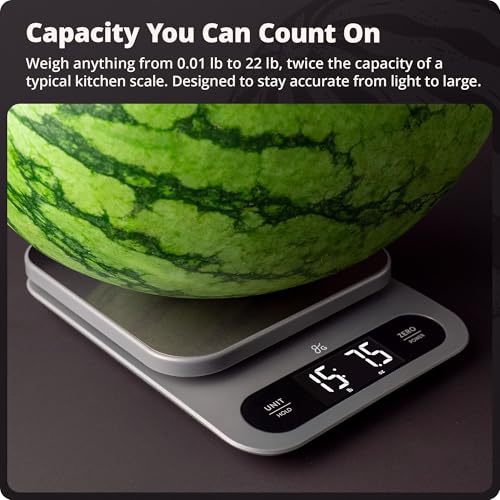


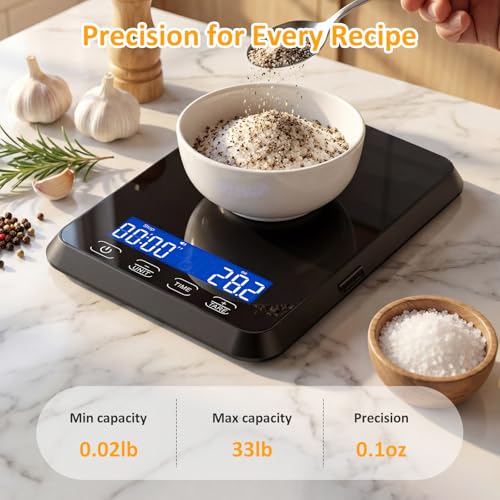





We also considered 10 others:


.png)



Our Top Choice
The order above is not editorial opinion, and it is not paid placement. It comes from what shoppers across our network actually do - which food scales they compare, and which they ultimately buy. We re-rank as new data comes in, so the long-term favorites have to keep earning their spot against new entrants. The full method, including how we make money.
Food Scales Buyer's Guide
Food scales live or die on a tight tradeoff: they must be sensitive enough for gram-level baking and portion control, but practical enough to use under bowls, plates, floury hands, and daily storage constraints. The sharpest risks are readings that drift after tare, displays hidden by containers, and “smart” tracking features that add friction instead of improving meal prep.
Weighing Accuracy
A food scale is only useful if it gives the same answer when the same ingredient is weighed again. Small errors matter most in baking, sourdough, nutrition tracking, spices, yeast, and portion-controlled meals where a few grams can change the result.
Look for gram-level measurement as the baseline, and consider finer resolution only if you regularly weigh yeast, spices, coffee, supplements, or very small portions. Check that readings settle quickly, repeat consistently, and do not drift after you tare a bowl; avoid scales that round too aggressively, lag, or jump between numbers while you add ingredients. Owner sentiment strongly supports this priority: accuracy is repeatedly praised for baking, cooking, sourdough ingredients, meal prep portions, checked weights, and calorie or macro tracking, with buyers especially valuing clean tare resets and consistent gram measurements.
Tare & Units
Most kitchen weighing happens in a container, not directly on the platform. A good tare and unit workflow lets you build a recipe ingredient by ingredient without doing mental math or dirtying extra dishes.
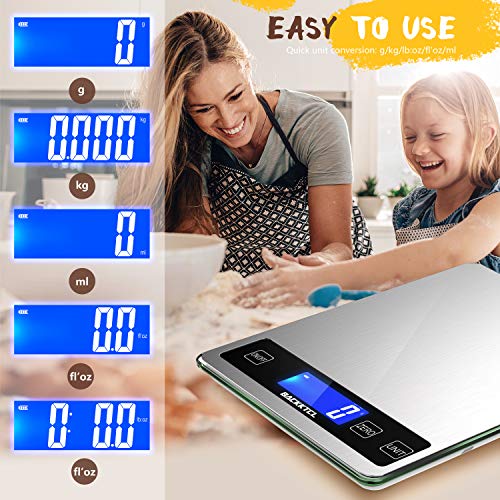
Choose a scale with a dedicated tare/zero control, clear gram and ounce switching, and buttons that are easy to press while a bowl is on the platform. For baking and meal prep, the scale should reset to zero cleanly between additions; for recipes from different regions, unit switching should be obvious enough that you do not accidentally measure in the wrong unit. Owner feedback backs this up: simple tare, straightforward unit changes, and intuitive daily operation are repeatedly called out as making bowls, macro recipes, baking, sourdough prep, and portioning faster and less fussy.
Bowl Fit
A scale that is easy to store can still be frustrating if it cannot support the bowls and portions you actually use. Capacity also matters because the container weight counts against the maximum load after tare.
Match the platform and capacity to your real kitchen containers: mixing bowls for bread dough, plates for portioning, meal-prep containers, and heavier ingredients like flour bags or produce. Make sure large bowls do not tip, cover the controls, or hide the display; if you often weigh big batches, prioritize a larger platform and higher capacity over the thinnest body. Owner sentiment shows both sides of this tradeoff: compact, slim designs are valued for small kitchens and drawer storage, while larger weighing surfaces and higher capacity are praised for mixing bowls, bigger items, and heavier kitchen tasks.
Readable Display
Even an accurate scale slows you down if the number is hard to see while cooking. Display placement is especially important because bowls, plates, and containers can block the screen on compact models.
Prioritize large, high-contrast digits, a viewing angle that works from standing height, and a display that remains visible when a dinner plate or mixing bowl is centered on the platform. Fast settling also matters: when adding flour, oil, or chopped ingredients gradually, delayed readings can cause overshooting. Owner sentiment consistently supports this dimension, with buyers praising readable displays, quick readings, bright screens, and simple visibility during cooking, baking, and food tracking.
Build & Cleanup
Food scales are exposed to flour, oil, sugar, raw ingredients, and spills, so cleanability affects both convenience and hygiene. Build quality also determines whether the platform stays level and the buttons keep working after daily kitchen use.
Look for a smooth wipeable surface, minimal seams around buttons, stable feet, and a platform that does not flex under a loaded bowl. Glass and stainless-style surfaces can be easy to wipe, but they still should not be treated as washable unless the scale is specifically designed for water exposure; avoid deep crevices where flour and sticky residue collect. Owner sentiment reinforces the importance of this: buyers praise sturdy everyday build, solid scale feel, easy-clean glass or sleek surfaces, and dependable no-fuss construction rather than flimsy gadget-like behavior.
Tracking Tools
Nutrition-focused buyers need more than a number on a display; they need a workflow that turns weighed portions into usable food records. App features are only helpful if the scale remains accurate and the tracking process is faster than manual entry.
If your main goal is calorie, macro, or portion tracking, look for reliable phone pairing, a food database that lets you verify entries, custom foods or recipes, and a workflow that supports taring plates or containers before logging. Avoid choosing app features at the expense of basic scale behavior: the scale should still weigh quickly and accurately, and it should remain usable for cooking when you do not want to open an app. Owner sentiment supports this niche need: connected scales are praised when they make calorie, macro, and portion tracking dependable, while buyers still emphasize accurate day-to-day weighing, readable displays, simple unit switching, and easy phone connection.
1,000,000+ shoppers use Buyer's Guide every week to find the best products and services online.

Helping millions of users make smarter purchases online.


