
















Our Top Choice
Why These Features Matter:
A foam cannon is not a personality. It’s a tool for turning a slightly grimy car (or kid-mangled SUV, or city-parked hatchback with “mystery dust”) into something that looks cared for—without spending the entire afternoon hunched over a bucket. The right one lays down that thick, clingy blanket of suds that buys time: time for surfactants to loosen the grit, time for you to grab the mitt, time for the neighbor to stop making eye contact.
The wrong one? Thin, watery foam that runs off like a bad latte; a bottle that tips over the second it meets an uneven garage floor; a dial that feels like it was designed by someone who hates hands. The difference is less about “power” and more about how the thing behaves in real life—wet fingers, cold mornings, tight storage, and a driveway that slopes like a ski jump.
Foam Quality: The “Shaving Cream” Standard
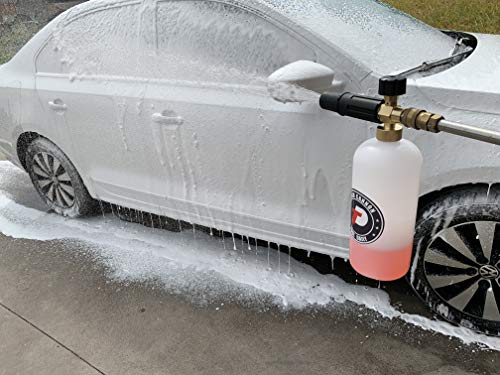
The whole point is dwell time. Thick foam clings, stays put, and softens road film so the wash mitt does less scrubbing (which means fewer chances to grind grit into paint). Thin foam looks busy but behaves like rinse water with ambitions.
- Look for: foam you can see sitting on vertical panels for a minute or two, not sprinting to the ground.
- Why it matters: clinging foam is forgiving when life interrupts—someone needs a snack, the dog escapes, the hose kinks into a modern sculpture.
- Nice bonus: consistent foam across the entire spray pattern (not “thick on the left, sad on the right”).
Adjustability You’ll Actually Use (Not a Dial for Sport)
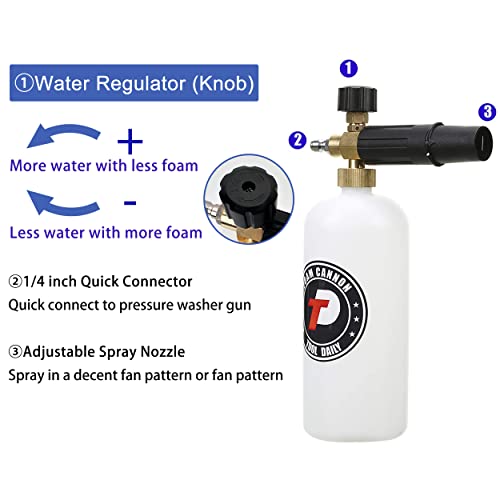
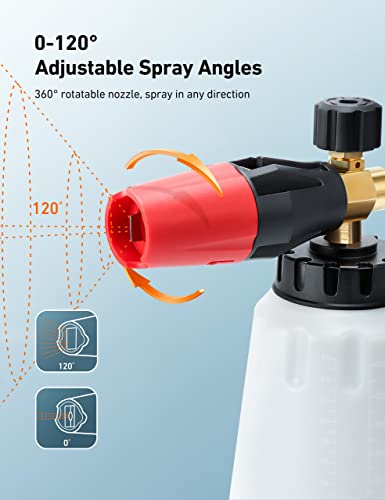
Most foam cannons promise adjustability. Fewer make it pleasant. The useful controls are simple: how much soap gets pulled in, and whether the fan is a wide sheet or a narrower blast for wheels and lower panels.
- Look for: dials that have resistance (so they don’t drift mid-wash) and markings you can read without squinting through suds.
- Real-life win: a wide fan for fast coverage, then a tighter pattern for grimy spots like rocker panels—without feeling like you’re cracking a safe.
- Avoid: tiny, slippery knobs that require “dry hands only,” a fantasy genre.
Build & Materials: Plastic Is Fine Until It Isn’t
Foam cannons live a hard life: dropped on concrete, kicked under a shelf, left in a cold garage, over-tightened while someone insists, “It’s probably leaking.” The best ones feel like they can take a tumble and still thread on smoothly.
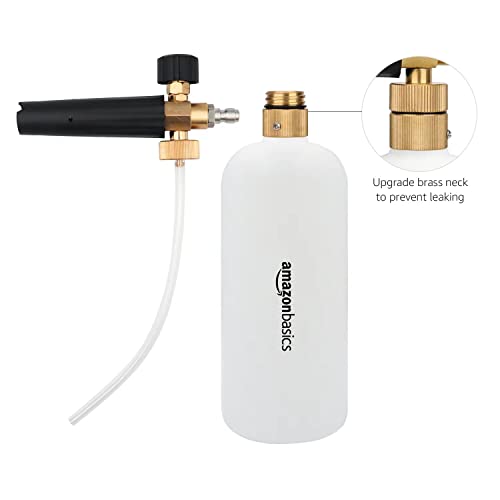
- Look for: solid-feeling connectors, a bottle that doesn’t flex like a disposable water bottle, and threads that start easily (cross-threading is the villain here).
- Nice to have: a wide base so it doesn’t tip over the second you set it down on a driveway crack.
- Subtle quality tell: gaskets that don’t look like they came from a toy aisle. Cheap seals are usually where the “mysterious leak” begins.
The Bottle: Capacity, Shape, and the Annoying Physics of Suds
Bottle size sounds like a non-issue until it’s half-full of soap, your hands are wet, and it’s wobbling like a wine glass on a picnic table. Too small means refills mid-wash. Too large means a top-heavy cannon that’s awkward to handle and annoying to store.
- Look for: a bottle with volume markings you can see (so mixing isn’t guesswork) and a mouth wide enough to pour without baptizing the outside in shampoo.
- Apartment/compact storage reality: shorter, squatter bottles stash better in tight cabinets and are less prone to tipping.
- Minor delight: bottles that stand securely when disconnected—because everyone sets it down “for just a second.”
Connection & Compatibility: The Part That Derails Saturday
The fastest way to ruin a satisfying wash ritual is discovering the foam cannon doesn’t play nicely with the pressure washer, the quick-connect, or the hose setup that’s been working fine for two years. The best experience is boring: it clicks in, seals, and doesn’t spray your shoes.
- Look for: standard quick-connect compatibility (and included adapters that don’t feel like afterthoughts).
- Things that matter more than they should: smooth threading and a connection that doesn’t require Hulk-grip tightness to stop leaking.
- Quiet frustration to avoid: proprietary fittings that send you on a late-night scavenger hunt through reviews and obscure parts listings.
Spray Pattern: Coverage vs. Control
A good foam cannon lays down an even, satisfying sheet—like painting a wall, not spraying a squirt bottle at a window. Coverage matters for speed; control matters for not blasting foam straight into your open garage.
- Look for: an adjustable fan that stays consistent as you move around the car.
- Real-life detail: a uniform fan means fewer “missed islands” that you have to circle back to, dripping and annoyed.
- Caveat: wider isn’t always better; some setups get messy fast, especially in tight driveways or shared parking spots.
Weight, Grip, and One-Hand Use (Because the Other Hand Is Busy)
This is the part most guides ignore: how it feels to hold while the hose tries to wrap around your ankles. A foam cannon that’s too heavy, too long, or too slippery becomes a wrist workout.
- Look for: a balanced shape and a grippy collar or texture where hands naturally land.
- Pay attention to: how easy it is to adjust settings with wet fingers without dropping the whole thing.
- If kids/pets are in the mix: anything that can be safely set down and not immediately tip is worth prioritizing.
Cleaning & Maintenance: The Boring Part That Decides Longevity
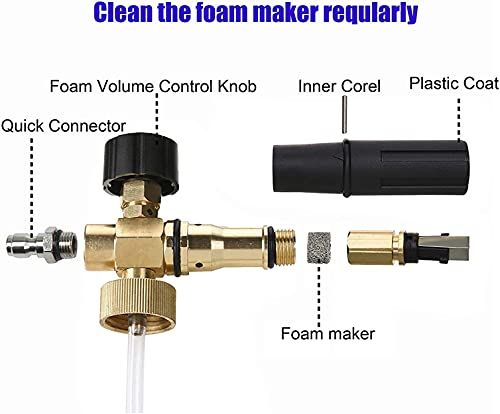
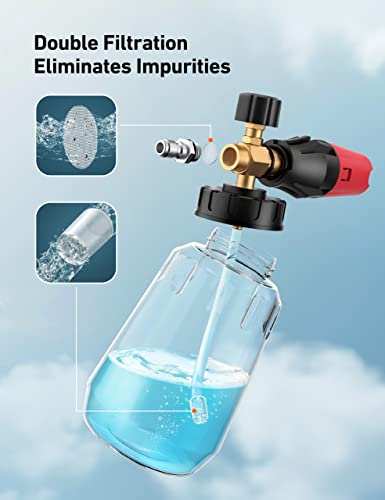
Soap dries. Hard water leaves crust. The foam cannon will not politely stay pristine. The ones worth owning rinse out quickly and don’t trap gunk in places you can’t reach.
- Look for: parts that come apart without requiring a toolkit and seals you can re-seat without a wrestling match.
- Good habit: a quick rinse run with plain water after use prevents that sour “old shampoo” smell and helps keep the internals from getting sticky.
- Honest reality: if maintenance feels fussy, it won’t happen. Choose a design that forgives neglect.
Noise & Overspray: The Neighbor Factor
Pressure washers aren’t subtle, and foam cannons can add a whole new layer of chaos: mist drifting into the air, suds skittering across the driveway, the faint suggestion you’re hosting a rave for cars.
- Look for: a controllable fan and a cannon that produces foam without needing to hover inches from the paint.
- Why it matters: less overspray means less soap on the garage door, less slick driveway, and fewer annoyed looks from anyone sharing the space.
- Small caveat: thicker foam sometimes encourages people to use more product than necessary. Satisfaction is not the same thing as efficiency.
Things to Know Before Buying (So It Doesn’t Become Garage Clutter)
- A foam cannon can’t fix bad soap. If the shampoo is watery or not meant for foam, even a great cannon will struggle to deliver that dense, clinging look.
- Water quality matters. Hard water can make foam collapse faster and leave residue. Not a dealbreaker, just a reality—and a reason to rinse thoroughly.
- Pressure washer setup matters more than people admit. A cannon can only work with what it’s given. If the washer is underpowered or the fittings leak, the foam will reflect that chaos.
- Storage is part of the purchase. If it doesn’t fit neatly on a shelf and the bottle always dribbles, it will quietly migrate to the “later” pile.
How to Choose the Right Foam Cannon for Your Life
- For the tidy, minimal-storage crowd: prioritize a compact, stable bottle, easy disassembly, and a dial that won’t get bumped out of place.
- For families and daily drivers: choose durability and stability over maximum foam theatrics. You want reliable, repeatable results, not a science project.
- For detailing hobbyists: finer adjustability and a consistent fan pattern matter most—especially if washes are frequent and the satisfaction is part of the ritual.
- For shared driveways/urban setups: control overspray. The goal is a clean car, not a soap mist incident.
Honest Caveats (Because Perfect Tools Don’t Exist)
- Some leaking is common. Even good cannons can weep a little at the connection if the gasket isn’t seated perfectly. It’s usually fixable; it’s also annoying.
- Foam can be addictive. Thick suds are satisfying, but it’s easy to burn through soap for the vibes. Dial it back once the novelty wears off.
- They’re all a bit fiddly the first time. Expect one or two sessions of adjusting dilution and fan width before it feels effortless.
The Editor’s North Star: What “Best” Actually Means Here
The best foam cannon isn’t the one that produces the most dramatic snowstorm for Instagram. It’s the one that makes washing the car feel less like punishment: stable bottle, predictable foam, controls that cooperate, connections that don’t leak, and cleanup that doesn’t require a second shower. The right features don’t just make more suds—they make the whole routine smoother, quicker, and calmer. Which, frankly, is the real luxury.
1,000,000+ shoppers use Buyer's Guide every week to find the best products and services online.

Helping millions of users make smarter purchases online.


