












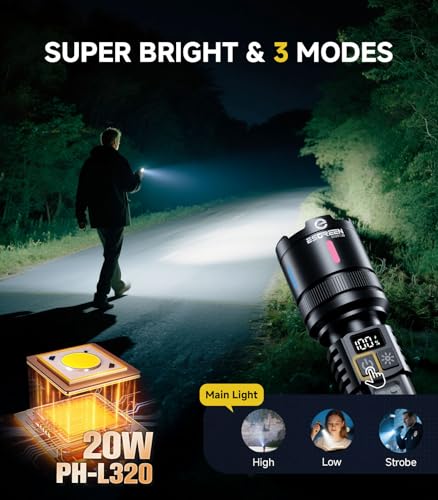


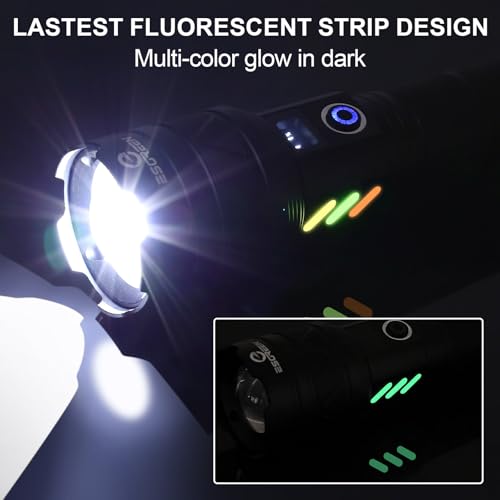


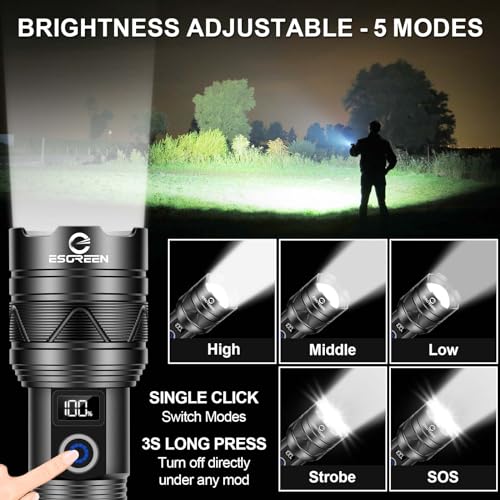
We also considered 10 others:


Our Top Choice
The order above is not editorial opinion, and it is not paid placement. It comes from what shoppers across our network actually do - which flashlights they compare, and which they ultimately buy. We re-rank as new data comes in, so the long-term favorites have to keep earning their spot against new entrants. The full method, including how we make money.
Flashlights Buyer's Guide
Buying a flashlight is a tradeoff between raw brightness, beam control, battery readiness, and whether the light is actually small enough to be where you need it. In this category, the sharpest failures are a light that looks powerful on paper but has an impractical beam, or one that is cheap and compact but not dependable during an outage, roadside check, repair, or night walk.
Beam Power
Flashlights are bought for usable light, and usable light depends on beam shape as much as raw brightness. A good pick should give enough output for the intended distance while still offering a comfortable mode for close work, walking, or power outages.
Start with the beam pattern, not just the lumen claim. For general household, walking, and emergency use, look for multiple brightness levels, a usable low mode, and either a smooth wide flood or an adjustable focus that can widen for rooms and narrow for checking a yard, trail, or distant object. Avoid lights that advertise extreme output but give no useful control, because an overpowered hotspot can be harsh up close and drains power faster than needed. Owner feedback strongly favors flashlights that feel genuinely bright in real use, especially compact models that still light rooms, cars, yards, barns, night walks, and dark work areas. Adjustable or zoomable beams are repeatedly praised because they make one light useful for both close-up tasks and longer-range spotting. Several owners also value lower settings that still provide enough light, which is important for preserving runtime and avoiding glare.
Power Source
A flashlight is only reliable if it can be powered when needed. Battery type, replacement availability, and charging habits determine whether the light is ready during an outage, in a glove box, or on a trail.
Match the battery system to where the flashlight will live. For emergency drawers, vehicles, shelters, and kits, common replaceable cells are easy to store and swap, while rechargeable lights are convenient for frequent everyday carry or work use if you can keep them topped off. Check whether the light uses standard batteries, proprietary packs, or built-in charging, and avoid any setup you cannot quickly power during an outage, trip, or roadside problem. The sentiment provided specifically calls out a practical AA setup as easy to manage, especially when batteries are included and simple to replace. Owners also praise lights that remain useful for emergency prep, cars, camping, and power outages, which makes power availability a real buying concern rather than a spec-sheet afterthought.
Carry Fit
The best flashlight is often the one close enough to reach. Size, weight, clip options, and storage convenience determine whether it becomes everyday gear or stays forgotten in a drawer.
Choose the form factor around the carry location: slim pocket lights for everyday carry, small lights for drawers and glove boxes, headlamps for hands-free hiking or repairs, work lights for garages and automotive tasks, and lantern-style lights for room or campsite coverage. A compact flashlight is only a good choice if the switch, grip, and beam are still usable with cold hands, gloves, or quick nighttime handling. Avoid oversized lights for casual carry and tiny lights as your only emergency source if you need area lighting for a room. Owners repeatedly praise lights that are small, lightweight, and easy to keep in pockets, purses, cars, nightstands, travel bags, hiking bags, dorm kits, glove compartments, closets, and drawers. Everyday-carry models earn strong approval when they disappear into a pocket or bag while still producing useful light. The same sentiment also shows that portable lights are valued because buyers can stash them in many places before a power outage or urgent task.
Ruggedness
Flashlights are often used in bad conditions: darkness, weather, repairs, outages, and rushed handling. A durable body, dependable switch, and resistance to drops or moisture matter because failure usually happens when the light is needed most.
Look for a body and switch built for the abuse your use case creates: aluminum or similarly tough construction for tool bags and workshops, a secure tailcap or charging port cover, impact resistance for drops, and water resistance for rain, camping, car kits, and emergency use. The switch is a common failure point, so favor simple controls that feel positive and do not require fussy mode cycling when you need light quickly. Avoid thin, toy-like housings if the light will live in a vehicle, barn, garage, or emergency kit. Owner sentiment repeatedly highlights sturdy metal bodies, durable construction, water-resistant feel, reassuring weight, and lights surviving drops, workshop use, regular use, and years of frequent use. Reliability is especially tied to emergency readiness, with buyers valuing lights that keep working after occasional drops and long-term use. This makes build quality a core separator, not just a premium extra.
Task Control
A flashlight has to work under stress, in darkness, and often with one hand. Intuitive controls and practical aiming features make it faster to use for repairs, walking, camping, and emergencies.
Prioritize controls you can operate by feel: a clear on/off action, sensible mode order, brightness levels that do not require endless clicking, and an adjustable head, clip, magnet, stand, or headband if the task needs aimed light. For repairs, camping setup, night walking, and power outages, being able to aim the beam without holding the light at an awkward angle is often more useful than maximum output. Avoid interfaces that hide basic modes behind confusing presses or make you cycle through strobe every time. Owners specifically praise tilting lamp heads and easy brightness controls because they make it simple to aim light where needed and switch modes without fuss. Work-light feedback also emphasizes useful illumination for garage, automotive, and project tasks, where positioning and hands-free use can matter as much as brightness. Adjustable beams and lighting modes are repeatedly valued when they make the light more versatile in dark spaces.
Real Value
Flashlights are often bought in multiples because darkness happens in more than one place. Good value comes from having enough dependable lights where they are needed, without sacrificing brightness or durability.
Evaluate value by coverage plan, not just the single-light cost. Multi-packs are useful when you need one in the car, one by the bed, one in an emergency kit, and extras for family members, but only if each light is bright and reliable enough to trust. For a primary EDC or work light, a single higher-quality build may be the better value if it survives daily use and gives dependable performance. Owner sentiment strongly supports multi-packs and two-packs as good value when they let buyers place extras around the house, in vehicles, or in emergency spots. Buyers also connect value with lights that remain bright, durable, functional, and reliable for years rather than merely inexpensive. The clearest lesson is that a bargain flashlight still needs enough output and build quality to be worth stashing or carrying.
1,000,000+ shoppers use Buyer's Guide every week to find the best products and services online.

Helping millions of users make smarter purchases online.


