







We also considered 10 others:


Our Top Choice
Compare Features


The order above is not editorial opinion, and it is not paid placement. It comes from what shoppers across our network actually do - which fire alarm smoke detectors they compare, and which they ultimately buy. We re-rank as new data comes in, so the long-term favorites have to keep earning their spot against new entrants. The full method, including how we make money.
Fire Alarm Smoke Detectors Buyer's Guide
Smoke detectors are a tradeoff between sensitivity and livability: the alarm must respond early to real smoke without creating so many nuisance chirps or steam-triggered alarms that someone disables it. The sharpest buying concerns are matching the detector to the room, wiring, and interconnect system, and verifying that batteries, end-of-life alerts, and maintenance controls will stay reliable for years.
Detection
You want a smoke detector that senses danger quickly and accurately, whether it’s smoke, a gas leak, leakage, or poor air quality, because delayed detection can leave you with less time to react. Look for the right sensor type for your risks, clear alerts, and reliable sensitivity, while watching out for units known to trigger frequent false alarms from cooking steam, dust, humidity, or placement near vents.
Choose the sensing approach for the fire risks and nuisance sources in the exact rooms you are protecting: photoelectric sensing is usually better for slow, smoky smoldering fires and is often the safer default near bedrooms and living areas, while ionization or dual-sensor designs can add responsiveness to fast flaming fires but may be more nuisance-prone near kitchens. Look for current safety listing, a clear test procedure, and placement instructions that keep alarms away from steam, cooking aerosols, vents, and dead-air corners; do not treat a detector as a good buy if owners repeatedly question whether it actually responds consistently. Owner feedback on detection is not uniformly positive, which reinforces that performance consistency matters more than simple feature count.
Reliability
A smoke detector’s reliability matters because you need it to work every time, often after sitting quietly for long periods. Look for signs of solid quality and dependable functionality, such as consistent self-tests, clear alerts for low battery or faults, and a housing that feels durable rather than flimsy. Watch out for reports of nuisance alarms, premature failures, or sensors that become inconsistent over time.
Prioritize alarms with a current manufacture date, a clear end-of-life warning, easy monthly test/silence controls, and a design that lets you clean dust from the sensing chamber area without disabling the unit. For whole-home protection, reliability also means avoiding nuisance chirps that train people to remove batteries, so check for reports of alarms reactivating after silence, unexplained chirping, or failures before the rated service life. Owners often describe well-designed units as dependable replacements that feel sturdy, sound loud, and make them feel safer after installation, but negative reports point to long-term durability, unwanted noise, and alarms that will not clear as the main failure modes to watch.
Installation
You want a smoke detector that fits your home’s existing setup, whether that means a simple battery-powered mount or a hardwired replacement that matches your wiring and mounting bracket. Check the detector’s size, mounting hardware, and power requirements before buying, and watch for models that may need adapter plates, rewiring, or professional installation. Easy installation matters because a detector that is simple to set up correctly is more likely to be installed promptly and positioned where it can protect you.
Before buying, match the detector to your existing setup: battery-only units are easiest for locations without wiring, while hardwired replacements must match the voltage, electrical box, connector, and interconnect requirements, and should not be mixed with incompatible interconnected systems unless the maker explicitly allows it. For older homes, check whether the mounting ring covers the old footprint, whether an adapter is required, and whether you need a whole-home refresh so all units have similar expiration dates and alarm behavior. Owners commonly praise battery-operated and replacement hardwired models for quick, logical installation, with many saying units drop in cleanly when replacing older alarms, especially when the included mounting frame is used and activation steps are followed correctly.
Battery
Battery life matters because a smoke detector only protects you if it has reliable power and alerts you when the battery needs attention. Look for units with long-lasting sealed batteries or easy-to-replace batteries, and consider how often you’re willing to test, maintain, and replace them. Watch out for models with weak low-battery alerts or batteries that are inconvenient to access, especially for high ceilings or hard-to-reach locations.
Decide between sealed 10-year power and replaceable batteries based on maintenance discipline and access: sealed units reduce the chance of missing annual battery changes, but the entire alarm must be replaced if the battery fails early, while replaceable-battery units require a strict replacement schedule and easy access. For hardwired alarms, still require battery backup so protection continues during outages; for rentals, high ceilings, or elderly occupants, sealed batteries can reduce missed maintenance, but do not assume the claimed lifespan is guaranteed. Owners appreciate included batteries and convenient activation, yet sentiment is split on whether sealed 10-year batteries actually last the full term, and some report chirping, nuisance triggering, or battery life that falls short.
Value
You want a smoke detector that feels worth the money because its job is too important to judge on price alone. Look for dependable detection, clear alerts, useful safety features, and easy maintenance, and be wary of cheap units that save money upfront but lack reliability, battery life, or the right sensor coverage for your home.
Judge value by whether the alarm gives the right coverage for the home layout, not by buying the simplest detector available: bedrooms and hallways need dependable smoke coverage, homes with fuel-burning appliances or attached garages may need smoke/CO combination coverage, and multi-level homes often benefit from interconnected alarms so one detection event alerts the whole house. A multipack can be worthwhile for replacing expired units together, but only if every unit fits the intended locations and wiring/battery strategy. Owners tend to see strong value in combination smoke/CO protection, whole-house refresh packs, sturdy construction, and sealed-battery convenience, while mixed feedback shows that value drops quickly if detection consistency, finish, or durability disappoints.
Safety
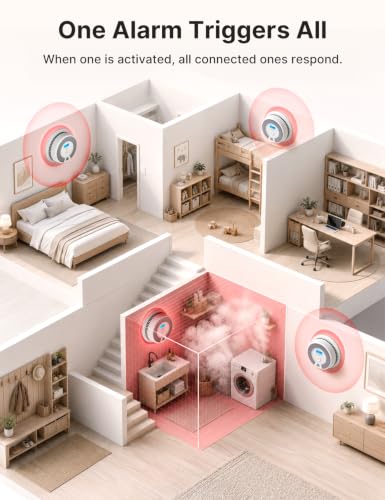
A smoke detector’s safety value comes down to whether you can trust it to warn you early and reliably when there’s danger. Look for dependable sensing performance, clear loud alerts, backup power, and features that reduce nuisance alarms without making you ignore real ones. Also consider whether you need interconnected units so an alarm in one area can alert you throughout the home.
Verify that the alarm is properly listed, loud enough for the sleeping areas it serves, and suited to occupants who may need extra alerts such as strobe lights, bed shakers, or voice/location announcements. Safety also depends on installation coverage: place alarms inside bedrooms, outside sleeping areas, and on each level as required by local code, keep them away from nuisance sources that lead to disabling, and replace units at sensor end-of-life rather than only when they fail. Owners report confidence from loud alarms, digital readouts, clear test sequences, and combination smoke/CO coverage across multiple rooms or floors, supporting the idea that a useful safety device must be both detectable in an emergency and easy to keep active.
1,000,000+ shoppers use Buyer's Guide every week to find the best products and services online.

Helping millions of users make smarter purchases online.


