





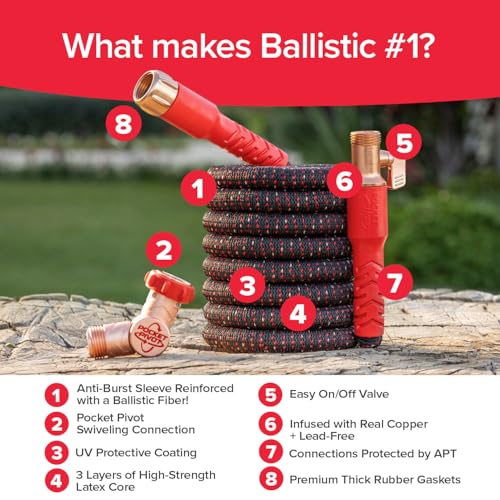


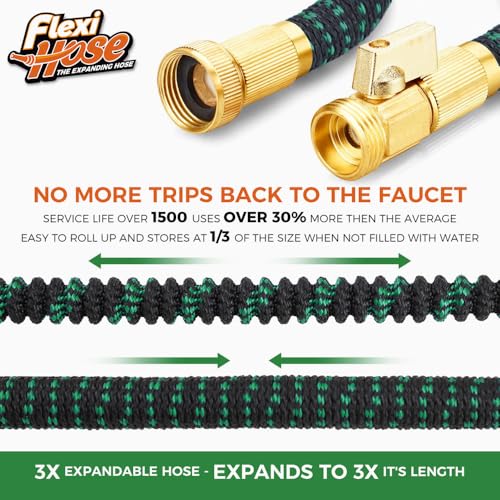
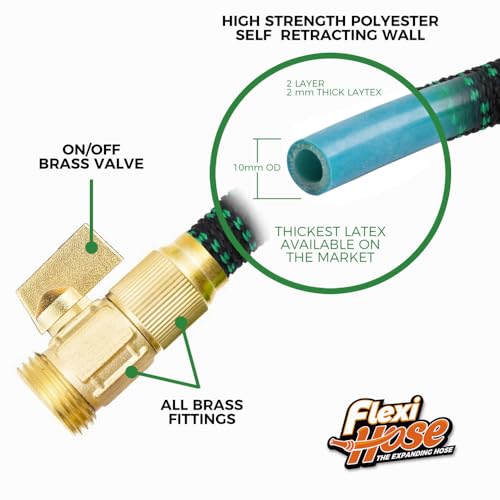


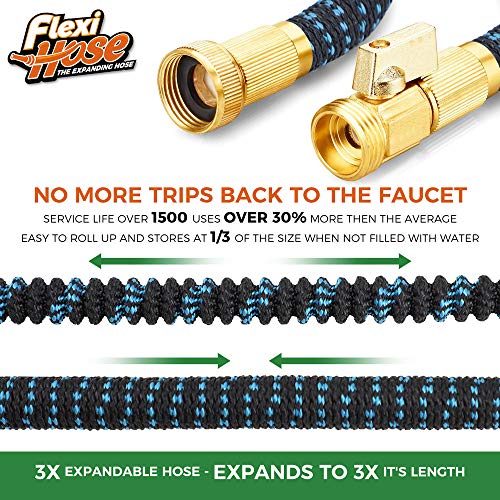



We also considered 10 others:


Our Top Choice
Compare Features


The order above is not editorial opinion, and it is not paid placement. It comes from what shoppers across our network actually do - which expandable water hoses they compare, and which they ultimately buy. We re-rank as new data comes in, so the long-term favorites have to keep earning their spot against new entrants. The full method, including how we make money.
Expandable Water Hoses Buyer's Guide
Expandable water hoses trade the bulk and stiffness of rubber hoses for a bladder-and-fabric design that gets long under pressure and shrinks for storage. The sharpest buying concerns are whether your water pressure will let the hose reach and flow properly, and whether the fittings and inner tube can survive repeated pressurizing, dragging, sun exposure, and storage habits.
Performance
A garden hose is only useful if it delivers steady, reliable water where you need it, whether you’re soaking beds, rinsing tools, or filling containers. Look for a hose that maintains consistent flow without frequent kinking, leaking at the fittings, or losing pressure over longer runs. Pay attention to diameter, length, and material, since each can affect how easily water moves and how dependable the hose feels in everyday use.
For expandable hoses, check the required water-pressure range, actual expanded length under pressure, and inner diameter before buying; a hose that reaches its advertised length on a high-pressure spigot may come up short or deliver weak flow on low-pressure wells, long runs, or sprinkler setups. Look for full-flow fittings, a shutoff valve at the nozzle end, and a design that contracts fully after draining if compact storage is a priority. Owner feedback generally supports good routine performance: buyers often like that these hoses expand with water, stay mostly kink-free, and shrink back down for storage, with reel-style setups especially praised for keeping the hose tidy and reducing twisting.
Build
Build quality matters because your hose has to survive dragging, sun exposure, water pressure, and repeated coiling without cracking, leaking, or kinking. Look for durable materials, reinforced layers, solid couplings, and fittings that resist crushing or corrosion; watch out for flimsy hoses that feel thin, kink sharply, or have weak connection points.
Prioritize reinforced ends, crush-resistant connectors, strain relief where the hose meets the fitting, and an outer jacket that can tolerate dragging over concrete, gravel, deck edges, and thorny landscaping; the bladder-and-fabric construction is convenient but can fail if abraded, over-pressurized, left in sun, or stored pressurized. Avoid vague connector materials, thin collars, and hoses that do not specify burst-pressure or layer construction. Owner sentiment is positive on perceived quality and light handling, including some metal or reel-based designs feeling like upgrades, but the recurring caution is that longevity varies and leaks or failures can eventually make a hose unusable.
Ease
A garden hose that’s easy to use saves you frustration every time you water, wash, or move it around the yard. Look for a hose that feels manageable when full of water, connects securely without fighting the threads, and coils or uncoils without constant kinking. Be wary of hoses that are overly heavy, stiff, or prone to tangling, especially if you’ll be carrying them across beds, patios, or long distances.
Choose the length and storage style around how you actually water: expandable hoses are easiest when they can drain and contract after use, but they can tug backward while contracting and may not suit unattended sprinklers or situations where you need a hose to stay laid out under no pressure. For patios, greenhouses, raised beds, and small yards, look for a light hose with an included hanger, bag, or compact reel; for larger yards, make sure the hose remains easy to pull when full of water. Owners strongly value this category for low-effort handling, saying these hoses are light, flexible, easy to move, and much simpler to roll up or tuck away than conventional rubber hoses.
Leaks
Leaks waste water, reduce pressure, and can turn a simple watering job into a frustrating mess around the spigot or nozzle. Look for a hose with sturdy, well-machined fittings, intact washers, and connections that tighten securely without cross-threading, and watch out for cheap couplings or stiff ends that tend to drip, spray, or loosen under pressure.
Leaks are the failure mode to scrutinize most closely: inspect whether the hose has replaceable washers, solid threaded fittings, anti-bend collars, and a clear warranty process, and avoid leaving it pressurized after use because the internal bladder is often what ruptures first. Be especially cautious if you plan to use high-pressure municipal water, timers, splitters, pressure nozzles, or long sun exposure, since those stresses can accelerate connector leaks, pinholes, and bursts. Owner feedback repeatedly flags leaking as the main downside, with reports of hoses or connectors failing after months, leaking through the body, rupturing, or needing replacement even when the hose was otherwise convenient.
Weight
A lighter hose is easier to carry, drag around corners, and coil up after use, which matters if you have a large yard, limited strength, or need to move it often. Look for a hose that feels manageable when full of water, not just when empty, and remember that very lightweight designs may be more prone to kinking, punctures, or reduced durability depending on the material.
Do not judge weight only when the hose is empty: an expandable hose is very light to carry and store, but it becomes heavier and longer when charged with water, so shoppers with limited grip strength should check filled handling, nozzle-end control, and whether the connector can be supported without strain. For 75- to 100-foot lengths, prioritize lightweight construction plus durable fittings rather than simply choosing the longest hose available. Owners consistently praise the low weight, especially compared with rubber hoses, saying these hoses are easy to carry, reposition, drag around the yard, hang, and roll up with far less effort.
Kinks
A hose that resists kinks, twists, and sharp bends keeps water flowing steadily and saves you from constantly stopping to untangle it. Look for good flexibility paired with enough structure that the hose doesn’t collapse when pulled around corners or coiled, and be wary of hoses described as lightweight or extra soft if they crease easily under pressure.
Expandable hoses reduce traditional kinking because they swell under pressure and contract when drained, but you should still look for flexible outer fabric, swivel fittings, and end strain relief to prevent twisting at the faucet or nozzle. Avoid using them sharply bent around corners, under tires, through door gaps, or with heavy objects on top, because restriction can still reduce flow or damage the inner tube. Owner feedback is broadly favorable here: buyers often say the hoses slide around obstacles, resist twists better than standard hoses, maintain flow during normal watering, and store compactly without fighting stiff coils.
1,000,000+ shoppers use Buyer's Guide every week to find the best products and services online.

Helping millions of users make smarter purchases online.


