

















We also considered 10 others:


Our Top Choice
The order above is not editorial opinion, and it is not paid placement. It comes from what shoppers across our network actually do - which epoxy resins they compare, and which they ultimately buy. We re-rank as new data comes in, so the long-term favorites have to keep earning their spot against new entrants. The full method, including how we make money.
Epoxy Resins Buyer's Guide
Epoxy resin buying is mostly a tradeoff between control and final performance: a thin coating resin can self-level beautifully but may overheat in a thick pour, while a deep-pour resin gives more working time but can test your patience before full hardness. The sharpest concerns are choosing the right formula for the project depth, then managing mix accuracy, bubbles, clarity, and cure conditions so the piece does not stay soft, yellow, cloud, shrink, or flash cure.
Project Fit
Epoxy resins are not interchangeable across every craft, coating, repair, and casting job. The right pick depends on pour thickness, viscosity, heat buildup, bonding needs, sanding plans, and whether the finished piece must be decorative or functional.
Start by matching the resin to the job: use coating/tabletop-style epoxy for thin seal coats and glossy surfaces, casting resin for molds, jewelry, coasters, and embedded objects, and deep-pour epoxy only when the project calls for thicker pours with slower heat buildup. Avoid using a fast, high-build coating resin in a deep mold or river-style pour because excess exotherm can cause overheating, shrinkage, cracking, bubbles, or a failed cure; also check whether the cured resin can be sanded, bonded, or used for repairs if woodworking or fiberglass work is part of the plan. Owner feedback supports this split: dependable results are reported across crafts, woodworking, clear coatings, molds, coasters, jewelry, wood pours, and even repair work, but some buyers also report project-dependent failures where resin did not cure, bond, sand, or hold up as expected.
Mix Control
Two-part epoxy is unforgiving when the resin and hardener are measured or mixed poorly. A formula with a clear ratio, workable viscosity, and enough open time gives beginners more room to pour cleanly while still letting experienced users place pigments, inclusions, or coatings precisely.
Look for a clearly stated mix ratio and buy only if you are comfortable measuring it accurately by volume or weight as directed; common 1:1 systems are convenient for small craft work, while some deep-pour formulas use ratios like 2:1 and require more careful measuring. Prioritize smooth pour behavior, self-leveling for coatings, and a pot life long enough for your mold size, pigment work, and bubble removal; avoid formulas that leave too little working time for your process or that are too thick for detailed molds unless warming and degassing are part of your workflow. Owners repeatedly praise simple measuring, 1:1 mixes, straightforward 2:1 deep-pour mixing, smooth pouring, self-leveling, clear instructions, and beginner-friendly kits, while also noting that following measurements and directions carefully is central to good results.
Clear Finish
For resin art, jewelry, coasters, and clear coatings, the finish is often the product. A good resin should cure water-clear and glossy, hold that clarity as long as possible, and release bubbles well enough that the piece does not need excessive correction.
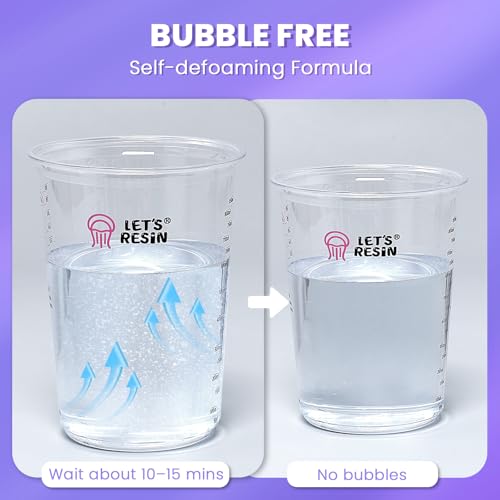
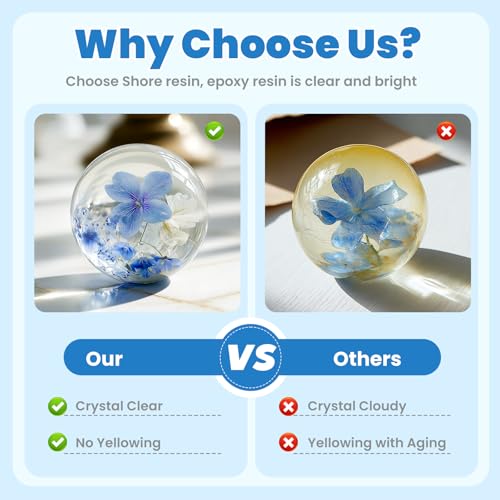
For visible pours, choose resin advertised for crystal-clear curing, high gloss, UV/yellowing resistance, and low-bubble performance; this matters especially for preserved objects, transparent pigments, jewelry, river tables, and clear topcoats. Low-viscosity resins can help bubbles rise in deep or detailed pours, while thicker coating resins may need slower stirring, warm resin, thin passes, alcohol mist, a heat gun, or a quick torch pass; avoid over-torching because heat can distort molds, introduce waves, or accelerate cure. Owner sentiment strongly backs clarity as a deciding factor: finished pieces are often described as clear, glossy, glass-like, and resistant to yellowing, with very few bubbles when mixed and poured properly, though some buyers still find bubble and clarity performance inconsistent across batches or techniques.
Cure Reliability
Epoxy can look finished before it has reached full hardness. Cure reliability depends on accurate ratio, thorough mixing, pour depth, temperature, humidity, batch size, and the resin’s intended working time.
Check both demold time and full-cure time, and plan around the slower number rather than assuming the piece is ready as soon as it feels dry. For hard coasters, trays, jewelry, and sandable woodwork, look for a resin known to cure firm and glossy, then control the environment: work in the recommended temperature range, scrape cup sides while mixing, avoid under-mixing, and do not pour thicker than the formula allows. Owners often report hard, clear, reliable cures when measured and mixed correctly, but the main watch-fors are real: some pieces feel soft the next day, some projects take 24 hours or longer, and failed pours can involve flash curing, shrinking, or not setting as expected.
Kit Setup
Epoxy projects require more than bottles of resin and hardener. Cups, stir sticks, gloves, surface protection, pumps, and clear instructions can reduce setup errors, especially for first-time users or small-batch crafters.
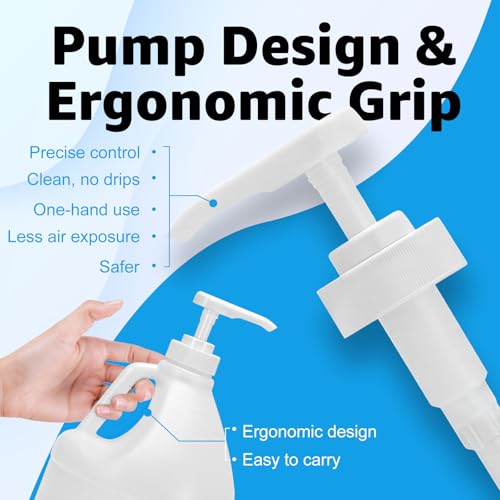
Judge value by usable resin volume plus the accessories that prevent waste: graduated cups, accurate pumps or marked bottles, stir sticks, gloves, spreaders, and a drip sheet can make the first pour cleaner and more repeatable. For larger projects, make sure the kit size matches the total pour volume with extra for sealing coats, test pours, or mistakes; for small crafts, resealable containers and easy measuring matter more than sheer quantity. Owners commonly view complete kits as beginner-friendly and low-hassle, praising included cups, sticks, gloves, drip protection, pumps, and clear instructions, and several owner points describe strong value when the amount and quality of resin are both useful.
1,000,000+ shoppers use Buyer's Guide every week to find the best products and services online.

Helping millions of users make smarter purchases online.