











We also considered 10 others:


Our Top Choice
Compare Features


The order above is not editorial opinion, and it is not paid placement. It comes from what shoppers across our network actually do - which electric start pressure washers they compare, and which they ultimately buy. We re-rank as new data comes in, so the long-term favorites have to keep earning their spot against new entrants. The full method, including how we make money.
Electric Start Pressure Washers Buyer's Guide
Electric-start pressure washers are bought for convenience, but the real tradeoff is start-button ease versus the power, flow, hose quality, and maintenance needed for serious outdoor cleaning. The biggest mistakes are choosing by headline PSI alone or ignoring how the starter battery, cord, pump, fittings, and nozzles will behave on driveways, siding, vehicles, and long wash sessions.
Power
Power matters because it determines how quickly and effectively a pressure washer can lift dirt, mildew, and grime from surfaces like concrete, siding, decks, and vehicles. Look for enough pressure and water force for your toughest jobs, but watch out for models that are too aggressive for delicate surfaces, where excessive water pressure can strip paint, scar wood, or damage finishes.
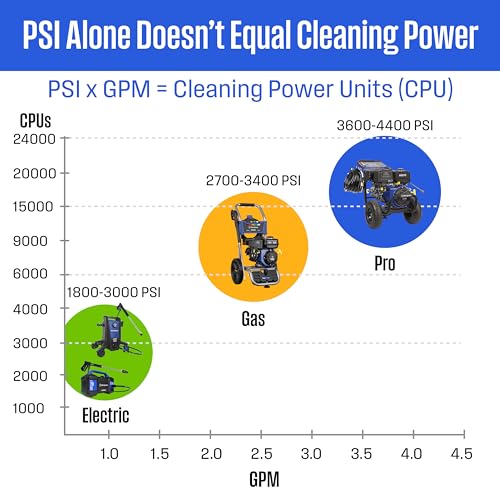
For power, do not shop by peak PSI alone: match PSI and GPM to the surfaces you actually clean, and favor models with adjustable pressure, a proper low-pressure soap mode, and nozzles that let you step down for paint, vinyl siding, vehicles, and deck boards. For concrete, algae, and old stains, higher flow matters because it moves loosened grime faster; for cars and siding, too much concentrated pressure can etch, strip, or force water behind seams. Owner feedback supports this split: buyers consistently praise compact electric-start units that feel stronger than expected, and they especially value machines that can switch between gentle washing and heavier-duty cleaning without repeated passes.
Usability
A pressure washer that’s easy to assemble, move, connect, and control will save you time and make routine cleaning less frustrating. Look for clear setup steps, intuitive controls, secure hose and nozzle connections, manageable weight and wheels, and storage that keeps cords and accessories organized. Watch out for awkward hose reels, hard-to-reach switches, stiff fittings, or confusing nozzle changes, since small usability hassles can matter a lot during longer jobs.
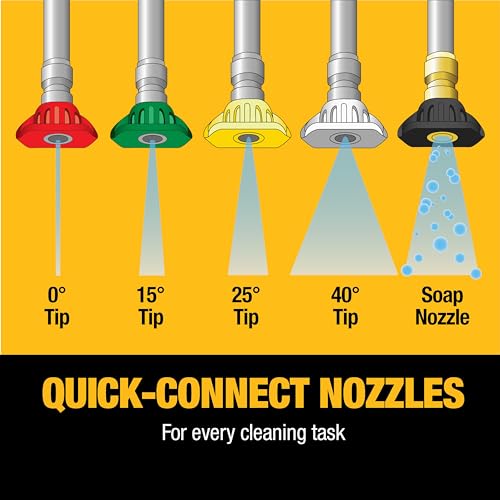
For usability, focus on the starting system and connection workflow: check whether the electric start uses a rechargeable onboard battery, removable tool-style battery, or corded power, and make sure the controls are reachable without choking, priming, or repeated restarts. Look for quick-connect spray tips, clearly labeled hose and wand fittings, a trigger that is comfortable for long sessions, and a layout that does not make you fight the hose every time you move around a vehicle or house. Owners most often back up these priorities by praising straightforward assembly, secure hose connections, simple attachments, quick-connect nozzles, and the convenience of avoiding hard-starting gas units or restrictive corded setups.
Build
Build quality matters because a pressure washer has to handle water pressure, vibration, hose strain, and frequent setup without cracking, loosening, or leaking. Look for sturdy fittings, secure hose and wand connections, a stable frame, and components that feel well-aligned rather than flimsy; watch for owner reports of leakage, weak plastic parts, or poor fit that can shorten the tool’s useful life.
For build, inspect the pump, hose, fittings, frame, and start-system protection before anything cosmetic: brass or metal hose connections, a kink-resistant high-pressure hose, sturdy wheels, protected battery/ignition components, and a stable frame matter more than a sleek shell. Electric-start gas models also need accessible oil fill/drain points, air-filter access, and battery storage that will not be soaked during washing; electric-powered models should have strain relief, GFCI protection where applicable, and weather-resistant switchgear. Owner sentiment aligns with this: buyers respond well when a washer feels sturdy, seals securely at the hose connections, stays compact but solid, and includes a hose setup that resists the kinking and flimsy feel common in cheaper designs.
Cleaning
Cleaning performance matters because it determines whether you can remove built-up dirt, mildew, and grime quickly without repeated passes or excessive scrubbing. Look for a pressure washer with enough cleaning power for your typical surfaces and messes, but watch out for models that rely on pressure alone without good water flow, since that can make jobs slower and less effective. The best fit should save you time while still being controllable enough to avoid damaging softer materials.
For cleaning, buy around your dirtiest recurring task, not the easiest one: concrete, barns, oily wheels, and algae-stained siding need more flow, better detergent delivery, and a surface-cleaner-compatible output, while vehicles, patio furniture, and painted trim need reliable pressure reduction and wider fan tips. Check whether the detergent system works only at low pressure, whether the hose length lets you work without dragging the machine constantly, and whether the nozzle set includes both broad rinse patterns and a more aggressive tip for masonry. Owners report the strongest satisfaction when machines clean concrete, decks, siding, vehicles, driveways, patios, and older stains quickly enough that they do not have to scrub by hand or make repeated passes.
Value
You want a pressure washer that offers enough cleaning power, build quality, and included accessories to justify what you spend. Look for a model that matches your typical jobs without making you pay for capacity or features you won’t use, and watch for bargain units that cut corners on hose quality, fittings, pump durability, or warranty support.
For value, count the full working kit rather than the machine alone: included hose quality, nozzle variety, wand length, detergent capability, battery/charger requirements, surface-cleaner compatibility, replacement pump parts, and warranty support can change the real cost of ownership. A cheaper unit is a poor buy if it lacks enough flow for driveways, uses proprietary fittings, has a weak hose, or requires add-ons before it can do the jobs you bought it for. Owners tend to call these washers a strong value when power, water flow, sturdy-feeling materials, and included features are good enough for regular residential cleaning without renting equipment or stepping up to a bulkier machine.
Portability
Portability matters because you’ll often be moving a pressure washer between the garage, driveway, deck, and outdoor spigots, so weight, wheel quality, handle design, and overall size can affect how easy it is to use. Look for a compact size that stores neatly, stable wheels for uneven surfaces, and cord or hose storage that keeps setup and cleanup manageable; watch out for bulky frames, awkward handles, or heavy units that are difficult to lift or maneuver.
For portability, balance weight against hose reach and stability: a compact electric-start washer is useful only if you can roll it over thresholds, gravel, grass, and hose loops without tipping it or constantly carrying it. Look for large enough wheels, a low center of gravity, onboard wand/nozzle storage, a tidy hose reel or wrap, and a power setup that fits your property—corded models need safe outlet reach, battery models need runtime, and gas electric-start models still need fuel and battery care. Owners frequently praise smaller frames, lightweight low-profile designs, easy storage, maneuverability, and retractable or onboard hose storage, especially when the unit still delivers enough pressure for normal homeowner jobs.
1,000,000+ shoppers use Buyer's Guide every week to find the best products and services online.

Helping millions of users make smarter purchases online.


