






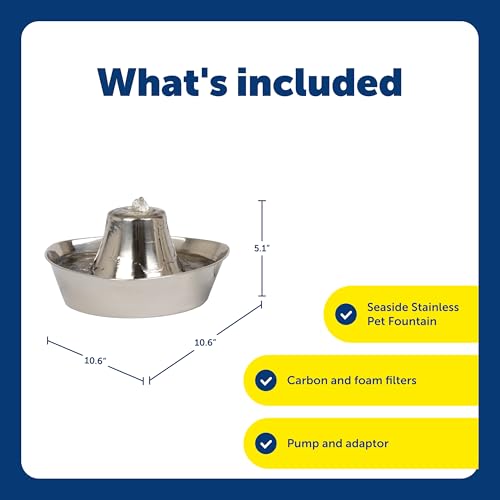


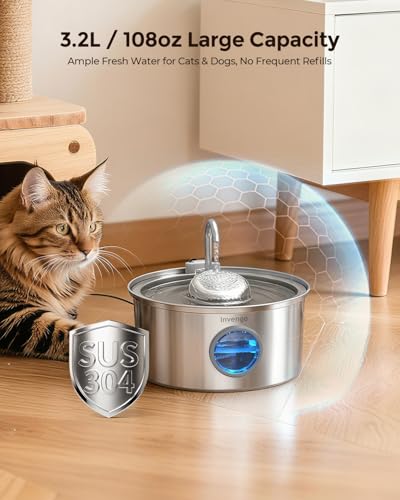


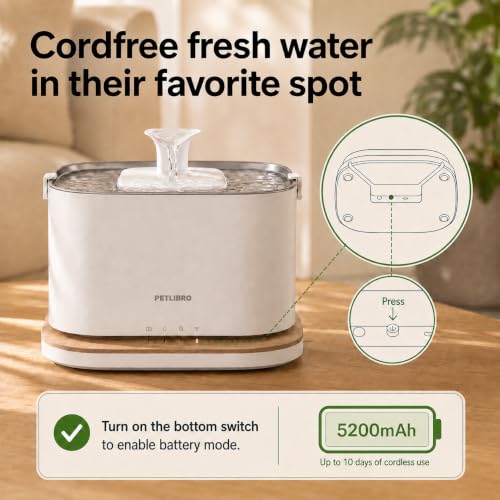


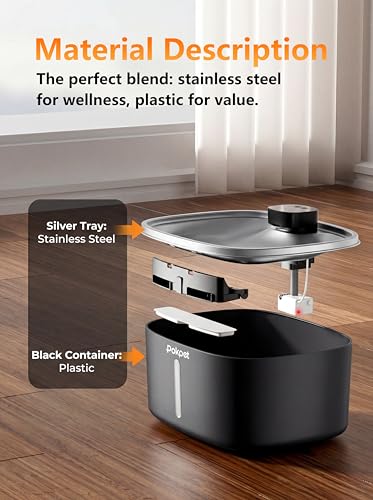
We also considered 10 others:


Our Top Choice
The order above is not editorial opinion, and it is not paid placement. It comes from what shoppers across our network actually do - which dog fountains they compare, and which they ultimately buy. We re-rank as new data comes in, so the long-term favorites have to keep earning their spot against new entrants. The full method, including how we make money.
Dog Fountains Buyer's Guide
A dog fountain has to balance always-available moving water with the realities of dog hair, slobber, chewers, large drinking volumes, and an electric pump sitting near pets. The best picks are sized for your dog’s actual daily demand, stay quiet enough not to scare nervous drinkers, and come apart fully for sanitation before the pump or filter becomes the weak link.
Reservoir Fit
Dogs can drink in bursts, and large breeds can empty an undersized fountain faster than expected. A properly sized reservoir keeps water available, protects the pump from running dry, and makes the fountain practical instead of becoming another bowl that needs constant attention.
Choose capacity by dog size, number of pets, and how long the fountain must safely go between refills, not by countertop-style compactness. For large dogs or multi-pet homes, look for a wide, stable reservoir with enough volume that the pump will not be exposed after a few heavy drinking sessions; avoid tiny cat-oriented basins that tip, splash, or run low quickly. Owner feedback strongly supports capacity as a separator: large reservoirs were repeatedly praised for big dogs, busy households, and multi-pet homes because they held plenty of water and reduced constant refilling.
Clean Hygiene
Dog fountains collect hair, saliva, and biofilm faster than a plain bowl because water recirculates through the same parts. Easy sanitation matters for taste, odor control, and pet health, and it also determines whether owners keep using the fountain after the novelty wears off.
Prioritize stainless steel or another nonporous, washable basin, especially for dogs that drool, shed, or leave food debris in the water. Look for parts that lift out without tools, smooth corners that do not trap slime, and a base that can be washed and sanitized; avoid designs with hidden crevices, decorative channels, or plastic surfaces that are difficult to scrub. Owners repeatedly liked stainless, minimalist designs because they looked clean and made maintenance easier than older plastic fountains, and they described simple disassembly and washable bases as major everyday advantages.
Quiet Flow
A fountain that sounds fine to a person can still discourage a noise-sensitive dog from drinking. Quiet, steady flow helps the fountain become part of the room rather than a distracting appliance, while excessive hum or splashing can reduce the hydration benefit entirely.
For anxious dogs, choose a fountain with a low-vibration pump, a gentle stream, and no loud splashing drop from a tall spout. The goal is audible water movement without a mechanical buzz; avoid fountains where the stream falls far into a shallow basin or where the pump is hard-mounted against thin plastic or metal without damping. Owner sentiment is especially strong here: quiet operation was repeatedly praised, with several owners saying the pump and water flow were barely noticeable and suitable even around nervous dogs.
Pump Upkeep
Dog hair and debris are hard on small recirculating pumps, especially if the water level drops or filters clog. A serviceable pump and realistic filter routine can extend useful life and prevent the most common failure mode: weak flow or a stopped pump.
Treat the pump and filter system as service parts, not invisible extras. Look for an accessible pump housing, a removable impeller area, hair prefiltering, widely available replacement filters, and clear instructions for how often to rinse or replace media; avoid sealed pump assemblies or filter layouts that clog quickly with fur. Owner reports show why this matters: many fountains worked well, but mixed feedback centered on pump failures and filter systems stopping within months, with ongoing filter upkeep becoming a concern for some owners.
Daily Handling
Even a hygienic, quiet fountain fails if it is annoying to refill or easy for a dog to disturb. Simple handling reduces skipped cleanings, improper reassembly, and low-water operation that can shorten pump life.
Check the refill path, assembly steps, cord routing, and water-level visibility before choosing. A good dog fountain should be easy to lift, refill, reassemble correctly, and place where a dog cannot chew the cord or shove the unit across the floor; avoid designs that require awkward flipping, fragile clips, or guesswork after cleaning. Owners consistently valued simple setup and daily use, describing fountains that were easy to assemble, take apart, refill, and clean as more practical long-term.
1,000,000+ shoppers use Buyer's Guide every week to find the best products and services online.

Helping millions of users make smarter purchases online.


