



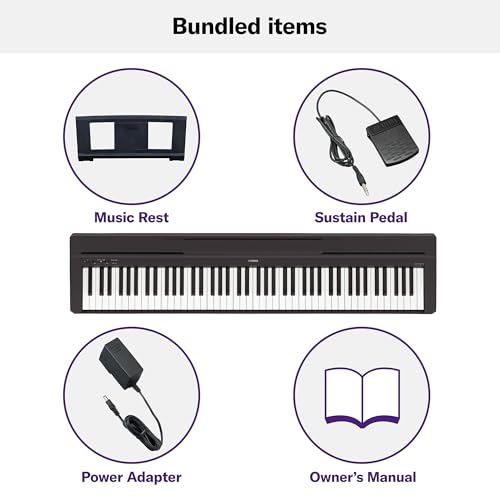


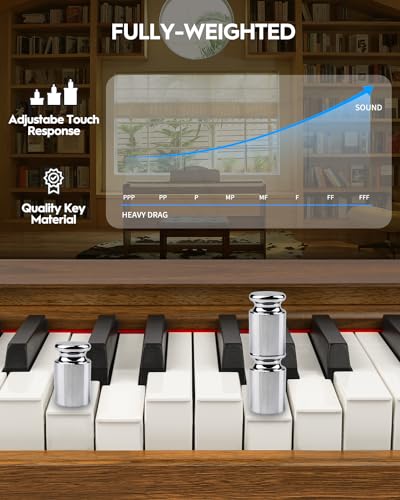


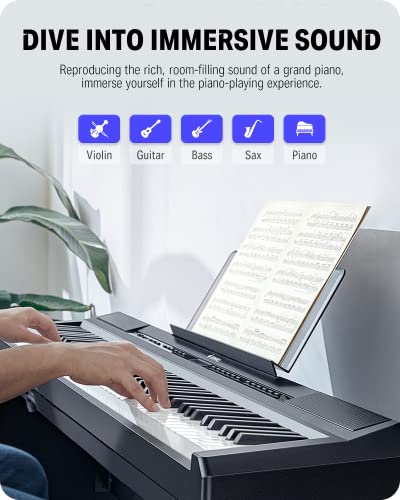


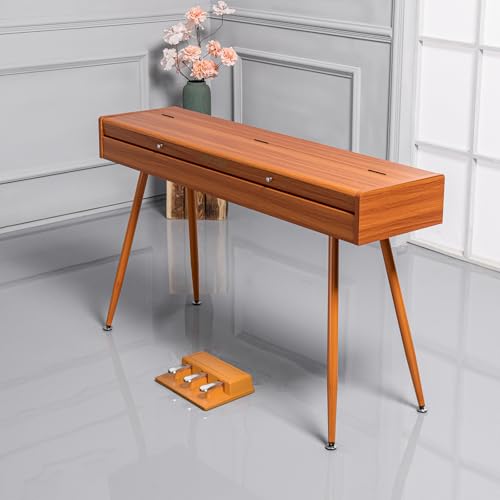


We also considered 10 others:


Our Top Choice
Compare Features


The order above is not editorial opinion, and it is not paid placement. It comes from what shoppers across our network actually do - which digital pianos with weighted keys they compare, and which they ultimately buy. We re-rank as new data comes in, so the long-term favorites have to keep earning their spot against new entrants. The full method, including how we make money.
Digital Pianos with Weighted Keys Buyer's Guide
Weighted-key digital pianos are a tradeoff between acoustic-like practice feel and the size, weight, and cost of an 88-key instrument. The sharpest checks are whether the action is truly suitable for building piano technique—not just labeled “weighted”—and whether the sound, pedals, stand, and speakers support real daily practice rather than only casual playing.
Keys
The keys determine how natural and controlled the keyboard feels under your hands, especially if you’re learning proper piano technique or moving between a keyboard and an acoustic piano. Look for full-size keys with enough resistance and responsiveness to support dynamics, and choose weighted or hammer-action keys if you want a more piano-like feel. Be cautious with very light, small, or springy keys, which can make practice less transferable and limit expressive playing.
Prioritize a full-size 88-key action with true hammer weighting, preferably graded heavier in the bass and lighter in the treble; be cautious of listings that say “semi-weighted,” “touch-sensitive,” or “weighted feel” without confirming hammer action, because those can train a lighter keyboard touch that does not transfer as well to acoustic piano. Check for adjustable touch curves, even key resistance across the board, acceptable action noise for apartment practice, and a solid sustain pedal input—especially if the player is taking lessons or returning to classical repertoire. Owner feedback supports this focus: buyers most often praise models that feel close to an acoustic piano, with weighted keys and touch sensitivity repeatedly described as satisfying for beginners, returning players, and people comparing the instrument with a real piano.
Portability
Think about where you’ll play and store the keyboard, because size and weight can make the difference between an instrument you use often and one that stays tucked away. If you need to move it between rooms, take it to lessons, or store it in a closet, look for a lighter, more compact design; if it will stay in one spot, a larger keyboard may feel more stable but will be harder to relocate.
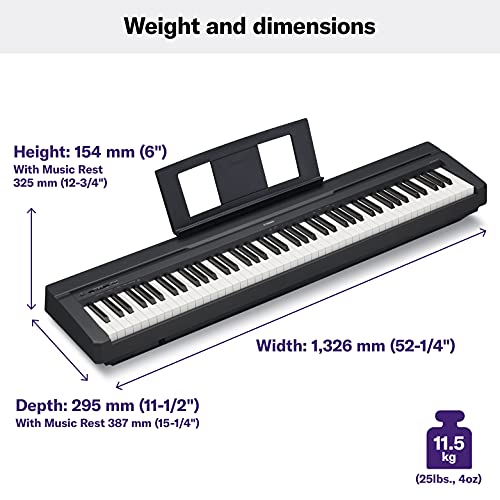
For portability, measure the actual 88-key length and weight before buying: even a “portable” weighted digital piano is long, awkward to carry alone, and may need a padded case if it will leave the house. If it will stay in a small room, look for a detachable stand, rear-panel access that still works against a wall, manageable speaker placement, and enough stability that the keyboard does not bounce under heavier playing; if it will travel, confirm the power supply, pedal, stand, and music rest pack down safely. Owners often like compact, lighter builds for apartments, offices, and moving around the home, but their mixed comments also show the core tradeoff: full 88-key models are far easier than acoustic pianos to move, yet the long package can still be cumbersome and lighter builds may feel less substantial.
Quality
A piano keyboard should feel solid and dependable every time you sit down to play, so pay attention to build quality, keybed sturdiness, and whether the body flexes or rattles under normal use. If it includes a stand, make sure it feels stable at your playing height and doesn’t wobble, shift, or make the keyboard feel unsafe during more energetic playing.
Judge quality by the parts that affect daily practice: consistent key return, minimal side-to-side key wobble, quiet-enough action, firm pedal jacks, non-wobbly stand hardware, reliable headphone output, and a cabinet or chassis that will not flex during forte playing. Also check delivery and assembly risks for furniture-style models, because a good keybed can be undermined by damaged panels, misaligned screw holes, unstable stands, or pedals that slide around. Owner sentiment generally reinforces that many full-size weighted models feel sturdy and well made for home use, with buyers often describing them as solid, good-looking instruments that arrive in usable condition and provide the essential 88-key experience.
Value
You want a piano keyboard that gives you strong core performance for what you spend, especially realistic key feel, dependable sound quality, useful learning or connectivity features, and solid build quality. Watch out for models that seem feature-packed but compromise on the basics, since extras matter less if the keys feel cheap, the speakers are weak, or the instrument won’t support your playing as you improve.
The best value in this category is not the cheapest keyboard with 88 keys; it is the least expensive setup that still gives a realistic weighted action, full-size layout, usable piano tone, headphone practice, a stable stand, and a pedal that supports proper technique. Avoid paying for large voice counts, flashy rhythms, or bundled extras if the action is vague, the sustain pedal is a simple on/off switch, or the speakers distort at practice volume; for lessons, the feel and pedal compatibility matter more than novelty features. Owner feedback supports this value standard: shoppers repeatedly feel they get strong value when a model delivers a sturdy full-size weighted-key instrument for learners, returning players, or affordable home practice.
Sound
Sound quality shapes how satisfying and realistic your playing feels, especially if you’re using the keyboard to learn dynamics, practice regularly, or perform for others. Look for natural piano tones with clear bass and treble, enough volume for your space, and speakers that don’t distort when played loudly; be wary of thin, artificial sounds or notes that fade unnaturally.
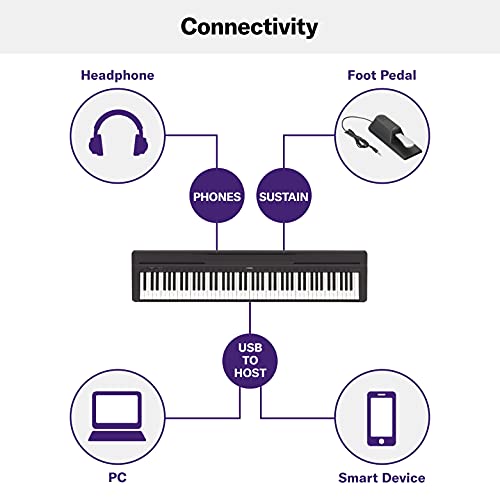
For sound, listen for a convincing main acoustic-piano voice across the whole keyboard, smooth changes from soft to loud playing, no obvious looping or harshness in the upper register, and enough polyphony to handle sustain-pedal passages without notes cutting off. Built-in speakers should be clear at normal practice volume, but also check headphone sound, since many learners practice silently; if recording or using apps, confirm USB/MIDI and audio options separately rather than assuming they are included. Owner reports align with these priorities: clear, realistic-enough piano tones and grand-piano-style sounds are frequently praised as good for practice, home playing, casual performance, and exploring extra voices, with volume often described as sufficient without needing maximum output.
Learning
If you’re buying for a beginner or child, the right keyboard can make early practice feel approachable instead of frustrating. Look for age-appropriate size, simple controls, built-in lesson or practice features, and keys that support good technique; be cautious of toy-like models that may be fun at first but can limit progress.
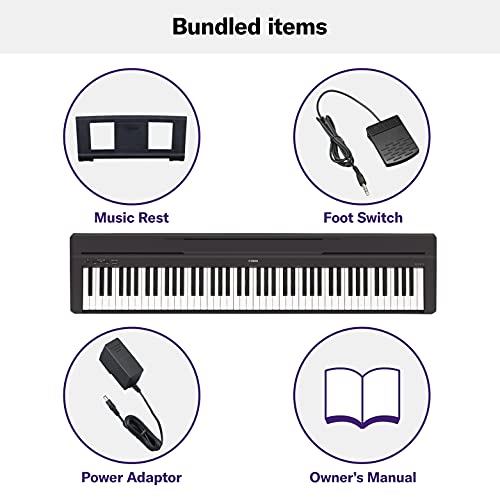
For learning, choose an instrument that matches what a teacher will expect: 88 full-size keys, weighted touch, a usable music rest, metronome or app connectivity, headphone output, and a sustain pedal setup that can be upgraded if needed. For children, make sure the bench height, stand stability, and key weight are appropriate; for adults returning to piano, prioritize acoustic-like resistance and dynamic control over lesson-light features that may be outgrown quickly. Owner sentiment backs this approach: buyers repeatedly describe full-size weighted models as strong starter instruments, useful for proper finger control, satisfying for beginners and returning players, and credible substitutes for acoustic pianos during home practice.
1,000,000+ shoppers use Buyer's Guide every week to find the best products and services online.

Helping millions of users make smarter purchases online.


