


- Power Source: Corded electric 15 amps
- Depth: 5 positions, from -0.5" to 0.25"
- Width: 16"
- Collection Bag: Yes





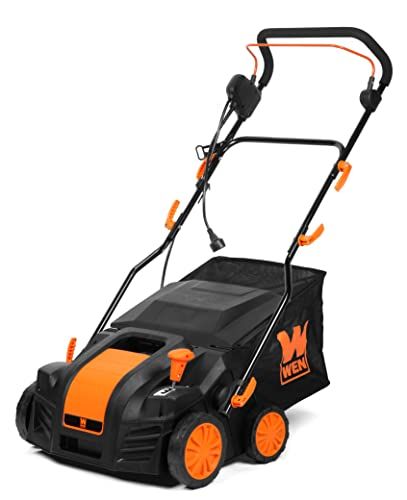
Wen DT1516 Electric Dethatcher & Scarifier
Performance, Design, and Real-World Use

The Wen DT1516 Electric Dethatcher & Scarifier is built for homeowners who want a practical way to revive tired grass without moving up to a gas machine or hiring seasonal lawn services. Its core job is to remove the layer of dead grass, moss, and organic debris that collects at the soil surface and can prevent water, oxygen, and nutrients from reaching the roots. In day-to-day use, the DT1516 feels like a purpose-built tool for that “early spring or early fall reset” when a lawn starts looking thin, spongy, or patchy even though you’re watering and fertilizing. It aims to make dethatching and light scarifying approachable for average yards, especially where storage space, noise levels, and maintenance are concerns.
What stands out most is the combination of dethatching and scarifying in one electric unit. Dethatching typically relies on spring tines that comb through the turf and pull up loose thatch and moss, while scarifying uses more aggressive blades to score the soil surface and loosen compacted debris so seed can find contact with soil. The Wen’s ability to switch modes means you can tailor aggressiveness to the lawn’s condition. For a first-time user who is unsure how severe their thatch problem is, that flexibility can prevent going too hard too fast. In practice, many lawns benefit from starting with the gentler pass and then stepping up only if the lawn still feels spongy and matted.
As an electric unit, the DT1516 generally delivers consistent power without the tuning and fuel management that comes with gas equipment. That said, its performance depends heavily on technique. You’ll get the best results by mowing a bit shorter than usual beforehand, letting the lawn dry, and working in overlapping passes. When the thatch layer is significant, you should expect to stop periodically to manage the debris and make multiple passes rather than trying to remove everything in one aggressive run. This is also where users often discover the “hidden cost” of dethatching: the cleanup can be substantial, and the volume of pulled-up material can surprise you even on a lawn that looked fine from the street.
Handling and comfort are important for a tool that you may push for an hour or more. The Wen DT1516 is designed to be manageable for typical homeowners, and electric operation keeps vibration and noise more tolerable than many gas alternatives. It can still feel like a workout, particularly if your yard is uneven, if you’re scarifying more deeply, or if you are navigating turns and edges. Expect it to be most at home on small to mid-size lawns with typical residential contours rather than heavily sloped or rough terrain.
What to Consider Before Buying (and What Matters Most)
Before choosing the Wen DT1516, the first factor to consider is the size of your yard and how quickly you want to finish. Electric dethatchers are often a sweet spot for homeowners who want strong results without the complexity of gas, but they are typically best suited to modest yard sizes. If your lawn is large and you expect to dethatch multiple areas or help neighbors, you may find yourself wishing for a wider, faster machine or a more commercial-grade option. For most single-family lawns, the Wen’s approach is usually adequate as long as you plan for the time needed to do multiple passes and clean up thoroughly.
The second factor is your tolerance for cord management. The DT1516 is corded electric, which is often a good trade for consistent power and lighter weight compared to battery models. However, it does require an extension cord and some strategy. You’ll want to make sure you have a cord that is rated appropriately for outdoor use and the tool’s power draw, and that it is long enough to reach the farthest corner without strain. If you dislike the idea of shepherding a cord around trees, beds, and garden furniture, that may be the single most frustrating aspect of ownership. If you are comfortable working in lanes and keeping the cord over your shoulder or routed away from the working path, it becomes routine.
The third factor is what your lawn actually needs: dethatching, scarifying, or just better cultural practices. Not every lawn needs heavy dethatching every year, and overdoing it can stress grass and create bare spots that invite weeds. If your lawn is already thin, recently seeded, or struggling in heat, a more conservative plan might be better. The Wen DT1516 makes it easier to do “just enough” because you can choose the less aggressive approach first. The most important purchase decision here is honestly assessing your lawn condition. If you have a dense turf with a springy feel and water tends to run off rather than soak in, you are a better candidate than someone who simply has a few brown spots from summer stress.
Another key consideration is adjustability and depth control. Depth settings matter because different grass types and seasonal conditions require different levels of agitation. A tool that can be dialed in helps you avoid scalping or tearing healthy crowns. With the Wen DT1516, the practical approach is to start shallow and increase only if you’re not pulling meaningful debris. The most important part is resisting the temptation to set it deep immediately, because scarifying can quickly turn “revitalize” into “renovate,” especially if the soil is dry or the turf is weak.
Storage, maintenance, and overall ownership cost are also worth weighing. Electric units generally win on maintenance because you aren’t dealing with carburetors, fuel stabilizers, or oil changes. You’ll still need to keep the underside clear, inspect the working attachments for wear, and store it somewhere dry. The cleanup time and the need for a yard waste plan can be an overlooked cost. If your municipality limits yard waste volume, you may need extra bags, a compost plan, or multiple disposal trips. In terms of what matters most, matching the tool to your yard size and your willingness to manage a cord will determine satisfaction more than almost anything else.
Common Questions
Does the Wen DT1516 replace aeration? No, it typically complements it. Dethatching removes the barrier of dead material at the surface, while aeration relieves soil compaction by creating holes that improve air and water movement. If your soil is hard and compacted, aeration may still be necessary even after dethatching, and doing both at the right time can produce a noticeable improvement.
How often should I use a dethatcher or scarifier? Many lawns only need dethatching every one to three years, depending on grass type, mowing habits, and how quickly thatch accumulates. Scarifying can be more stressful, so it’s usually done less frequently or more lightly, often as part of overseeding or renovation. If you pull up lots of healthy green runners and see significant thinning, you likely went too aggressive or did it at the wrong time.
Is it normal for the lawn to look worse right after using it? Yes. Immediately after dethatching or scarifying, the yard can look rough, with exposed soil and scattered debris. The key is to rake or collect the material, water appropriately, and consider overseeding and a light topdressing if needed. Most healthy lawns rebound well when the work is done during an active growing season for your grass type.
What’s the best time of year to use it? The ideal timing depends on whether you have cool-season or warm-season grass. Cool-season lawns often respond best in early spring or early fall, while warm-season lawns are usually best handled in late spring to early summer when growth is vigorous. Avoid periods of extreme heat or drought stress, because recovery will be slower and damage risk is higher.
Will it work if I have a lot of moss? It can help remove moss and the dead material around it, but moss usually signals underlying issues such as shade, poor drainage, acidic soil, or compaction. You may see immediate cosmetic improvement, but lasting results typically require addressing the root cause through soil amendments, drainage changes, trimming shade, or adjusting watering practices.
Overall, the Wen DT1516 Electric Dethatcher & Scarifier is a sensible, homeowner-friendly tool for improving turf health when thatch or surface debris is holding your lawn back. Its biggest strengths are electric convenience and the option to switch between gentler dethatching and more assertive scarifying, while the biggest make-or-break factors are yard size, cord management, and using the right depth at the right time. If you’re prepared for the cleanup and you treat the process as a seasonal tune-up rather than a one-pass miracle, it can be a satisfying upgrade to your lawn-care routine.