
Join the millions that have trusted BuyersGuide.org to help them make smarter buying decisions. Let our independent expert reviews and data-driven shopping recommendations help you find the one that's right for you.





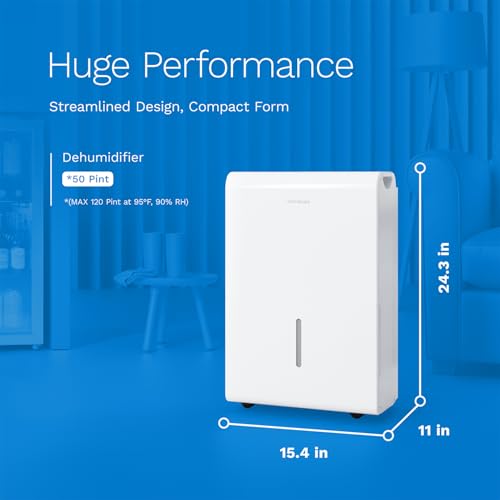


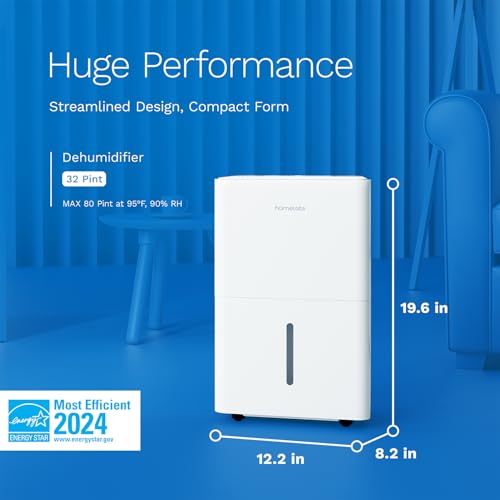


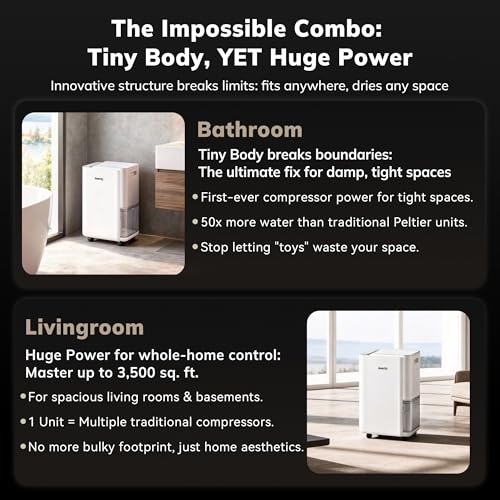


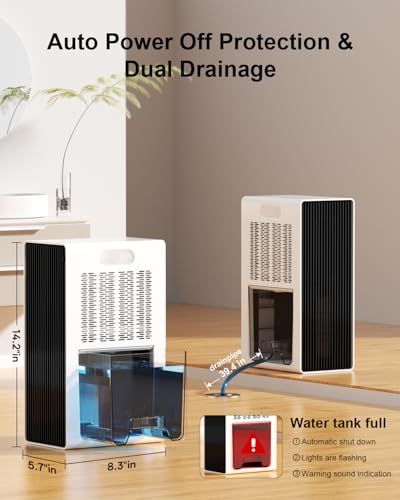


We also considered 10 others:


Our Top Choice
Compare Features


Why These Features Matter:
A dehumidifier is one of those appliances you don’t daydream about buying — until your towels never quite dry, your closet smells like a basement, and your bathroom mirror stays fogged long enough to feel personal. The right one makes your home feel quietly “handled.” The wrong one becomes a heavy, sloshy side quest you resent twice a day.
Here’s what actually matters in daily life — not in a lab, not in a marketing brochure, but in the real world where you’re stepping over laundry baskets and trying to keep a plant alive.
How it feels to live with (not just own)
The best dehumidifiers are the ones you stop noticing — because the air feels normal again. Less clingy. Less musty. Less “why does this room smell like wet cardboard?” You’ll notice fewer damp surprises: shoes that never fully dry, a bedroom that feels vaguely maritime, windows that wake up crying.
- Comfort shift: Your space feels less sticky even at the same thermostat setting. Fans work better. Sleep gets easier.
- Smell control: Musty odor is often just moisture with an attitude. Pull the moisture down and the smell usually follows.
- Damage prevention: You’re not buying “better air,” you’re buying fewer warped drawers, peeling paint bubbles, and suspicious closet corners.
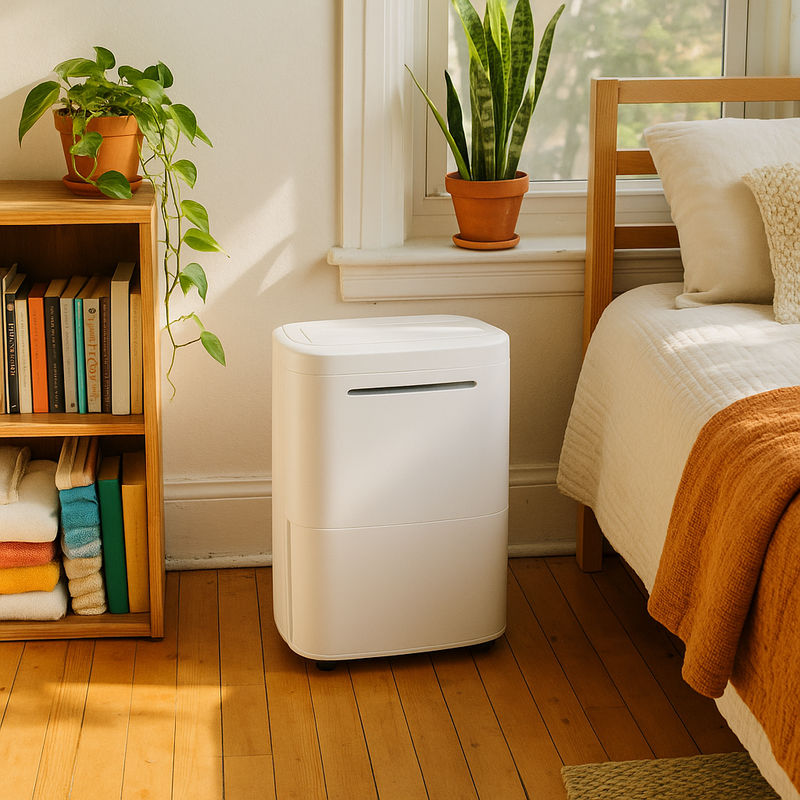
Noise: the detail that becomes your personality
Every dehumidifier makes noise. The question is whether it’s “soft box fan in the background” noise or “mini fridge with opinions” noise. If it’s going in a bedroom or a WFH space, the tone matters as much as the volume — a low, steady hum disappears; a rattly oscillation will drive you into a spiral.
- Look for: A steadier, lower-frequency hum, especially on the lower setting.
- Pay attention to: Vibration on hardwood floors (some units kind of… skitter if they’re unbalanced).
- Real-life tip: If you’re sensitive to sound, plan on running it harder during the day and using a quieter mode at night — if it actually has one you can live with.
Tank logistics: you’re either a “drain hose” person or you’re not
This is the make-or-break factor no one wants to admit. A dehumidifier that fills up quickly is effective, yes — and also means you’re carrying a tank of warm swamp water across your nice rug twice a day like it’s a strange new hobby.
- Bigger tank: Fewer trips to the sink, heavier when full. (And it will slosh. It always sloshes.)
- Smaller tank: Easier to lift and pour, but you’ll empty it more often — especially in humid summers or damp basements.
- Continuous drain option: The closest thing to set-it-and-forget-it, if you can place it near a floor drain, sink, or sump. The hose setup is occasionally fussy but worth it if you’re dealing with chronic moisture.
Small but revealing detail: Some tanks are weirdly hard to slide back in. If you’ve ever fought with a finicky espresso water reservoir, you understand the rage.
Portability is not optional — because you will move it
Even if you swear it will “live in the basement,” you’ll end up dragging it upstairs after a shower-heavy week, or rolling it near the laundry when everything smells a little too… organic. Weight and wheels matter. Handle placement matters. Cord length matters more than anyone wants to discuss.
- Wheels: Must roll smoothly and not feel like supermarket-cart wheels that only turn when they feel respected.
- Handles: Side handles are great until you’re carrying it around a tight corner and your knuckles meet a doorframe.
- Cord length: Short cords are a quiet tyranny. If you’ll need an extension cord, plan that now, not during a thunderstorm.
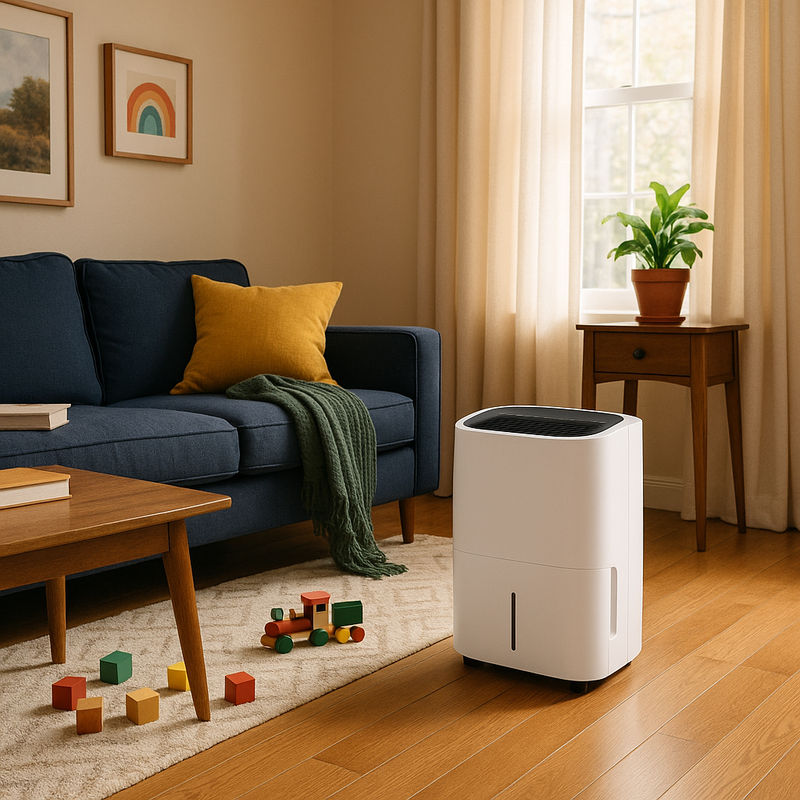
Controls you won’t hate at 11 p.m.
A dehumidifier is an appliance you operate while tired. You don’t want to interpret a glowing abstract symbol language to set a reasonable humidity level. Simple controls matter, and so does a display that isn’t bright enough to host a small concert.
- Helpful: Clear humidity readout, a straightforward target setting, a timer you can set without consulting a manual PDF.
- Nice-to-have: Auto mode that doesn’t overcorrect and turn your room into a crunchy desert.
- Bedroom reality: Display dimming or lights-off mode. Otherwise you’ll be sleeping next to an enthusiastic nightlight.
Maintenance: the part nobody romanticizes
You will have to clean something. If you don’t, the machine slowly becomes its own damp ecosystem, which is… not the vibe. The good news is maintenance is usually simple — if the design isn’t actively trying to make you give up.
- Filter access: Easy pop-out filters are the difference between “sure, I’ll rinse this” and “I’ll ignore it for six months.”
- Tank shape: Wide openings are easier to rinse; narrow ones collect gunk in corners like they’re building a little community.
- Odor watch: If the water starts smelling funky, it’s often a cue to clean the tank and filter, not a sign your home is doomed.
What size you actually need (without turning your life into math)
You don’t have to calculate the dew point like you’re launching a satellite, but you do need to be honest about the space. A small unit in a big damp basement is like lighting a single candle and asking it to “handle winter.”
- Small spaces: Bedrooms, closets, laundry nooks — you can often get away with a compact unit, but expect more frequent emptying.
- Open-plan apartments: You’ll want something stronger, or you’ll be playing humidity whack-a-mole from room to room.
- Basements: Prioritize power, drainage, and durability. This is where you’ll feel the difference between “consumer appliance” and “workhorse.”
Honest caveats: a dehumidifier won’t fix your house’s drama
It can improve comfort dramatically, but it can’t solve structural moisture problems. If you’ve got persistent water intrusion, mold you can see, or that “wet wall” smell that keeps returning, you may need to pair a dehumidifier with actual fixes (sealing, ventilation, drainage). Think of it as excellent skincare: it helps, but it won’t change your bones.
- It’s not silent. The quiet ones are quieter, not silent.
- It adds a little heat. Pulling moisture out of air generates warmth. In summer, that’s… a compromise.
- You’ll still have weather. Humidity spikes happen. The goal is recovery time and consistency, not perfection.
My practical checklist (the one I’d actually use)
- Can I empty the tank without spilling it on myself? (Try to picture it. Over a rug. Half asleep.)
- Will I hate the sound in the room I plan to use it? If yes, it doesn’t matter how well it performs.
- Do I have a realistic drainage plan? If you can set up a hose, your future self will feel emotionally supported.
- Will the lights annoy me at night? If you’re light-sensitive, don’t gamble.
- Can I move it easily? Because you will, even if you insist you won’t.
Bottom line: what “best” really means here
The best dehumidifier is the one that fits your space and your tolerance for small annoyances: noise, emptying, wheeling it around, and cleaning a filter occasionally like an adult. Get that match right, and your home stops feeling damp in a way you can’t quite explain — it just feels cleaner, crisper, and less like it’s quietly trying to rot.
1,000,000+ shoppers use Buyer's Guide every week to find the best products and services online.

Helping millions of users make smarter purchases online.

