


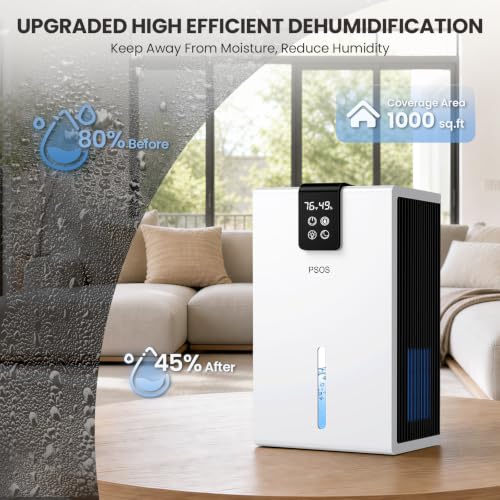


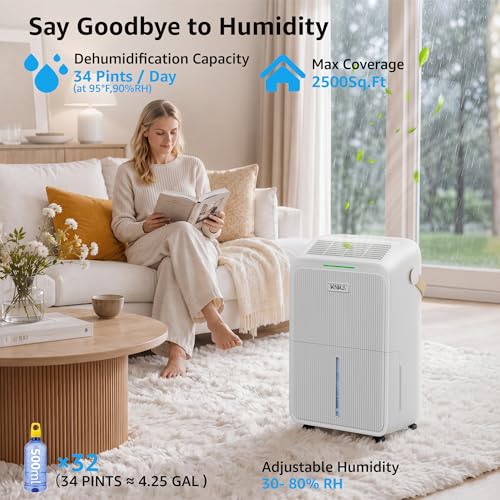


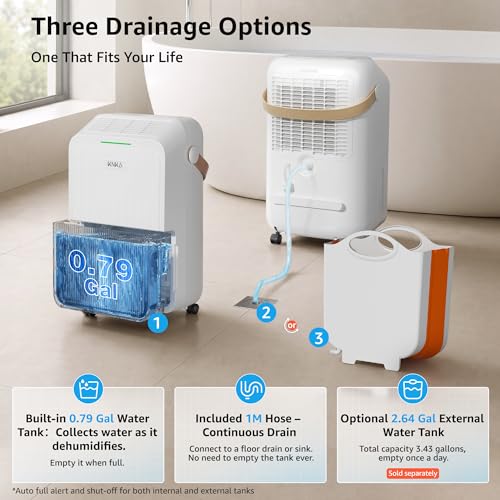


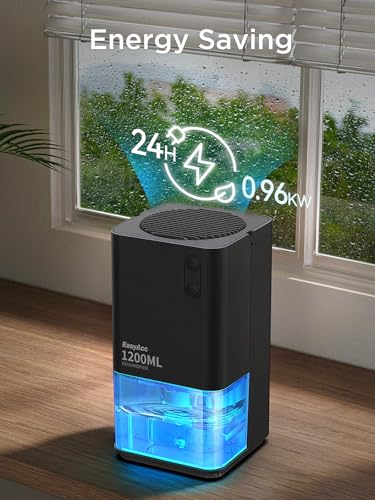







We also considered 10 others:


Our Top Choice
Compare Features


The order above is not editorial opinion, and it is not paid placement. It comes from what shoppers across our network actually do - which dehumidifiers they compare, and which they ultimately buy, together with the product traits and the commercial relationships that keep this site free. We re-rank as new data comes in, so the long-term favorites have to keep earning their spot against new entrants. The full method, including how we make money.
Dehumidifiers Buyer's Guide
Dehumidifier shopping is a tradeoff between pulling enough water for the space and living with the noise, heat, drainage, and maintenance that come with that moisture removal. The sharpest checks are capacity for the actual dampness level, not just room size, and whether the unit can drain safely without leaks or constant bucket emptying.
Performance
Performance matters because a dehumidifier that can’t remove moisture fast enough will leave your space feeling damp, musty, and uncomfortable even if it runs constantly. Look for a unit sized for your room and humidity level, with dependable humidity control and enough water removal capacity for the conditions you’re dealing with. Watch out for models that work well only in small or mildly damp areas if you need steady dehumidification in a basement, laundry room, or other high-moisture space.
Choose capacity by moisture load, not just square footage: a cold, wet basement or laundry area needs a higher pint-per-day rating, auto-defrost, and ideally continuous drainage, while a bedroom or closet can use a smaller unit if the target is only mild dampness. Check the rating standard and look for a real humidistat/auto mode so the unit cycles to a set RH rather than just running blindly; undersized units fill constantly, overwork the compressor, and may never reach the usual 45–50% comfort range. Owners most often praise units that visibly lower humidity in basements, bathrooms, bedrooms, and other damp rooms, with fast bucket fill-ups making moisture removal obvious and auto operation
Build
A dehumidifier often runs for hours at a time in damp conditions, so solid build quality can affect how reliably it performs and how long it lasts. Look for a sturdy housing, well-fitted water tank, durable controls, and components that do not feel flimsy or rattle during operation. Watch out for units with cheap-feeling plastic, awkward tank mechanisms, or repeated owner complaints about leaks, failures, or declining performance.
Prioritize leak control and long-term water handling: inspect for a sturdy bucket seal, well-supported drain fitting, washable filter access, corrosion-resistant coils, and a cabinet that will not flex when the full bucket is removed. For basements or unattended operation, avoid flimsy hose connections or awkward bucket designs because the common failure mode is not poor dehumidifying at first—it is leaking, cracked parts, or component failure after months of wet duty. Owner feedback supports this split: many find the build solid, leak-free, easy to set up, and practical with displays, casters, and clean housings, but durability complaints center on leaks or failures after roughly a year or
Ease
A dehumidifier that’s easy to use is more likely to run consistently, so look for straightforward setup, clear controls, an easy-to-read humidity display, and simple modes for your space. Pay attention to maintenance details like how easily the water tank removes, whether the filter is accessible, and if continuous drain setup is practical for where you’ll place it. If you plan to move it between rooms, consider handle design, cord storage, weight, and overall versatility.
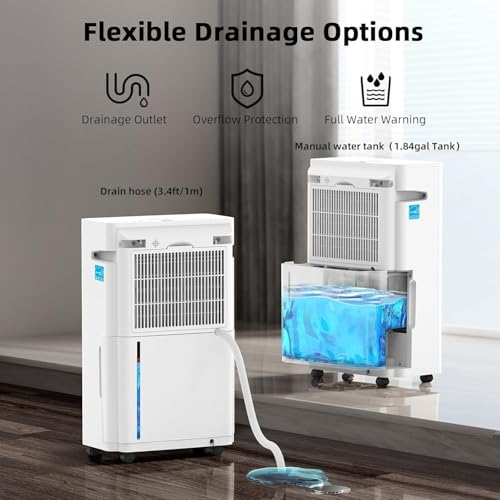
For daily use, make sure the maintenance path matches where it will run: a basement unit should have gravity-drain or pump-drain capability to a floor drain/sink, while a living-area unit needs a bucket you can lift, carry, and re-seat without spilling. Look for auto shutoff, restart after power loss, accessible filter cleaning, clear humidity controls, and a drain hose connection that uses a standard, secure fitting; avoid models that require frequent awkward bucket emptying if the room starts very humid. Owners commonly say simple controls, easy-empty tanks, casters, auto shutoff, plug-in setup, humidity displays, and included drain hoses make day-to-day operation much easier.
Noise
A dehumidifier may run for hours at a time, so noise level matters if you’ll use it in a bedroom, office, or main living area. Look for quiet operation at the fan speeds you expect to use, not just the lowest setting, and watch out for rattling, compressor hum, or frequent on-off cycling that can be more distracting than steady airflow.
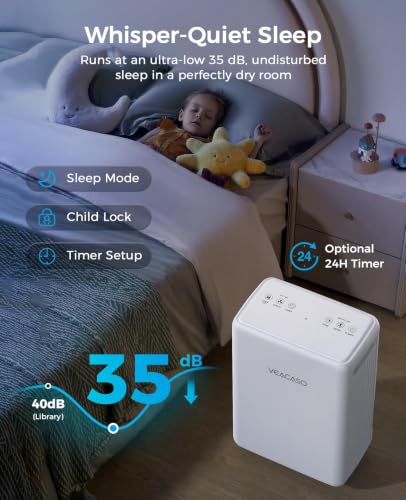
Match noise expectations to placement: for bedrooms, nurseries, home offices, or TV rooms, look for a low fan setting, sleep/continuous-fan options, and a published dB rating measured honestly; for basements, airflow noise may be acceptable if moisture removal is strong. Compressor dehumidifiers also produce vibration and cycling sounds, so check for stable feet/casters and avoid placing them on resonant floors or against walls. Owner sentiment is divided in exactly this way: many buyers are comfortable running units near sleeping or family areas as white noise, while others find the fan sound too noticeable for living spaces and better suited to basements.
Size
You need a dehumidifier that fits the room you actually plan to use it in, not just one with the right moisture-removal capacity. Check the footprint, height, clearance needs, and whether it can sit comfortably near an outlet, drain, or airflow path without blocking walkways. A compact size is useful for bedrooms, bathrooms, and closets, but watch out for units that save space by using very small water tanks that require frequent emptying.
Size the physical footprint around airflow and water service, not only storage space: most dehumidifiers need clearance around intake/exhaust grilles, room to pull the bucket straight out, and a safe route for a drain hose without kinks or tripping hazards. If it will move between a bathroom, bedroom, closet, or basement, check weight with a full tank, handle placement, casters that work on the intended floor, and whether the unit is stable on uneven basement surfaces. Owners tend to appreciate compact, clean designs that fit living spaces and small damp areas, and portability features like handles and wheels make room-to-room use easier.
Value
A dehumidifier that offers good value for money should balance moisture-removal performance, energy use, tank capacity, noise level, and helpful features without charging you for extras you do not need. Look for a unit sized appropriately for your space, because an undersized model can run constantly while an oversized or feature-heavy one may cost more than it justifies. Also watch for ongoing costs like energy consumption, filter upkeep, and durability, not just the upfront price.
Judge value by delivered moisture control over time: the better buy is the unit that reaches your target RH, drains safely, has accessible filters, and can survive continuous seasonal use without leaks—not simply the smallest or cheapest-looking option. Factor in energy use, bucket capacity, drain hardware, warranty support, and whether you need features such as auto-defrost or a pump; paying for capacity you do not need wastes energy, but undersizing can mean nonstop running and constant emptying. Owners say value feels strong when units produce visible humidity reduction without seeming costly to run, and reliable, leak-free operation is what makes the purchase feel worthwhile.
1,000,000+ shoppers use Buyer's Guide every week to find the best products and services online.

Helping millions of users make smarter purchases online.


