













We also considered 10 others:


Our Top Choice
Compare Features


The order above is not editorial opinion, and it is not paid placement. It comes from what shoppers across our network actually do - which deep space telescopes they compare, and which they ultimately buy. We re-rank as new data comes in, so the long-term favorites have to keep earning their spot against new entrants. The full method, including how we make money.
Deep Space Telescopes Buyer's Guide
Deep space telescopes are a tradeoff between light gathering, tracking accuracy, and setup burden: the best choice depends on whether you want visual views of faint objects or app-assisted imaging of nebulae and galaxies. The sharpest concerns are aperture and mount stability for dim targets, plus whether the finding/tracking system can reliably put barely visible objects in view.
Ease
A telescope that’s easy to use helps you spend more time observing and less time troubleshooting alignment, focusing, or shaky adjustments. Look for intuitive controls, clear setup steps, smooth mount movement, and stable construction; watch out for designs that require frequent recalibration or make basic aiming and tracking feel tedious.
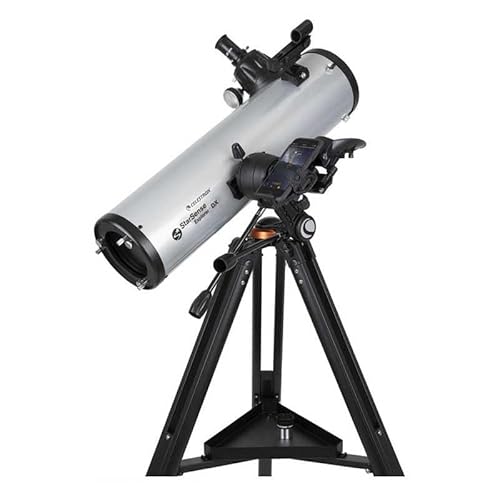
For deep-space targets, “easy” should mean easy target acquisition and repeatable alignment, not just simple assembly: look for a mount, finder, app-assisted pointing, or GoTo system that can reliably place faint galaxies, nebulae, and clusters in the eyepiece, because many deep-sky objects are too dim to locate by casual scanning. Avoid setups that rely only on high magnification and a shaky manual mount; for beginners, a wide-field eyepiece, clear alignment workflow, and phone/app guidance can matter more than maximum power. Owner feedback supports this priority: buyers often describe beginner models as straightforward to assemble and use, and phone-dock or app-guided systems are repeatedly praised for making object-finding much easier than traditional star-hopping.
Optics
Optics determine how sharp, bright, and detailed celestial objects look, so you should prioritize clear image quality over simply chasing the highest magnification. Look for a telescope with good sharpness across the field of view, smooth and precise focus, and enough aperture to support useful magnification without making the image dim or blurry. Watch out for exaggerated magnification claims, since poor optical quality or a shaky setup can make planets, stars, and deep-sky objects harder to see clearly.
For deep-space observing, prioritize aperture and light-gathering over advertised magnification: larger objectives reveal fainter nebulae, galaxies, and globular clusters, while overly high-power eyepieces can make dim objects darker and harder to track. Check focal ratio for your use case—faster optics are helpful for wide-field nebulae and imaging, while longer focal lengths favor planets and small bright targets—and make sure the focuser accepts practical low-power eyepieces for wide views. Owner sentiment lines up with this: larger optics are praised for noticeably brighter, more detailed views, while entry-level scopes are commonly reported to give sharp, rewarding views of the Moon, planets, stars, and some brighter deep-sky objects.
Build
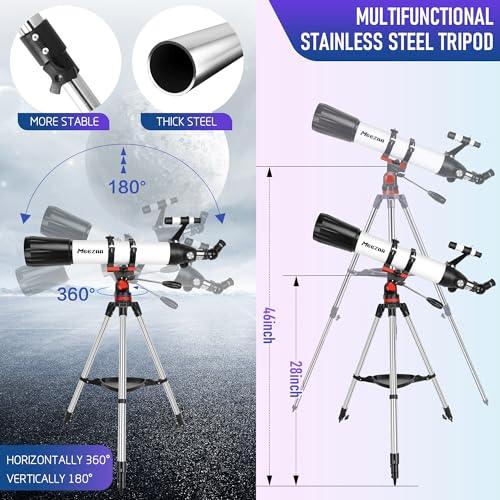
Build quality matters because a telescope needs to stay stable, aligned, and usable through repeated setup, transport, and outdoor conditions. Look for solid materials, smooth-moving parts, secure fittings, and a sturdy mount or tube assembly; watch out for flimsy plastics, loose knobs, wobble, or parts that feel prone to flexing or misalignment.
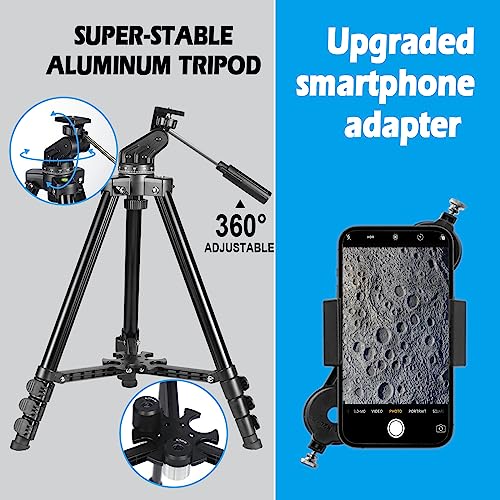
For deep-sky use, the mount and tripod are as important as the optical tube: faint objects need steady viewing, smooth tracking, and minimal vibration because even small shakes can make a dim galaxy or cluster disappear. Look for rigid legs, secure altitude/azimuth or equatorial adjustments, a stable focuser, and a tube that can hold collimation; be cautious of lightweight packages that look impressive optically but wobble at usable magnifications. Owners generally describe many starter packages as capable, well packaged, and rewarding for beginners, but the best long-term fit is the one whose mechanical stability matches the optical ambition.
Features
Features determine how much you can actually do with a telescope beyond basic viewing, from app-guided object finding and tracking to astrophotography support and the usefulness of included accessories. Look for capabilities that match your goals and experience level, and watch out for bundles that emphasize lots of extras while skimping on core performance, stable mounts, or optics that will matter most in real use.
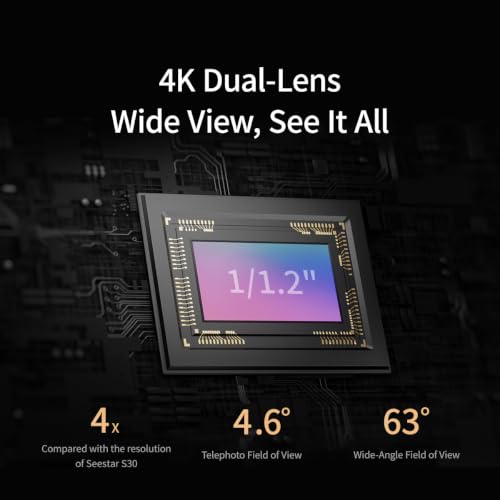
For deep-space targets, the most useful features are object-finding, tracking, and image stacking—not novelty accessories. App-assisted pointing, GoTo, motorized tracking, live stacking, and plate-solving can dramatically improve success on faint nebulae and clusters, especially under suburban light pollution; for visual-only observing, also look for a good finder, smooth focuser, and low-power eyepiece support. Owner feedback strongly reinforces this: app docks, automatic finding, tracking, phone viewing, and internal or app-based stacking are repeatedly credited with making deep-sky viewing and beginner astrophotography feel far more approachable.
Value
Value matters because a telescope’s price should match the quality of its optics, mount, accessories, and ease of use—not just its magnification claims. Look for a package that performs well out of the box and leaves room to grow, and watch out for cheap bundles that include shaky mounts or low-quality eyepieces that make observing frustrating.
For this category, value is not the longest accessory list—it is enough aperture, a stable mount, usable low-power eyepieces, and a path to either visual deep-sky observing or basic imaging without immediately replacing core parts. Avoid paying for inflated magnification claims, flimsy tripods, or many low-quality accessories if the telescope lacks light gathering or tracking; conversely, a simpler visual scope can be excellent value if it has a solid mount and meaningful aperture. Owners often view beginner packages as strong values when they feel reliable, include practical starter accessories, and provide satisfying family or backyard observing without requiring a much higher-tier setup.
Setup
Setup matters because a telescope that’s hard to assemble or align can turn a clear night into a frustrating one, especially if you’re new to observing or need to move your gear often. Look for clear instructions, manageable parts, stable mounting, and an alignment process that matches your patience and experience level. Be cautious of systems that promise advanced tracking or automation but require complicated calibration before you can reliably start viewing.
For deep-space observing, setup should be judged by how quickly and accurately you can align, focus, and begin tracking faint targets in the dark. Check whether the telescope needs collimation, leveling, star alignment, firmware/app setup, power, Wi‑Fi/Bluetooth connection, or polar alignment, and choose a workflow you will actually repeat on cold nights; a scope that is technically powerful but slow to deploy may see less use. Owner reports are encouraging here: many buyers say assembly is straightforward, app/finder setup can be quick, and first Moon views or useful images often happen soon after opening the box when directions are followed carefully.
1,000,000+ shoppers use Buyer's Guide every week to find the best products and services online.

Helping millions of users make smarter purchases online.


