





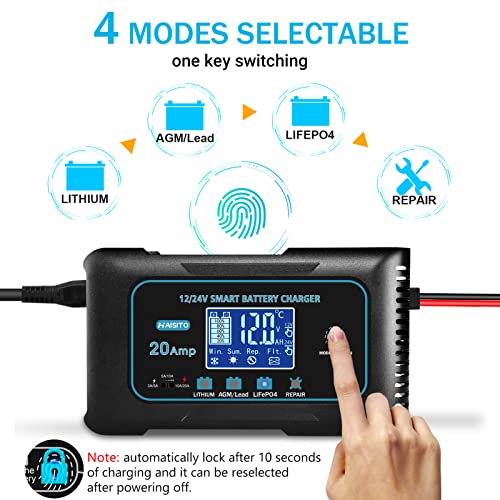
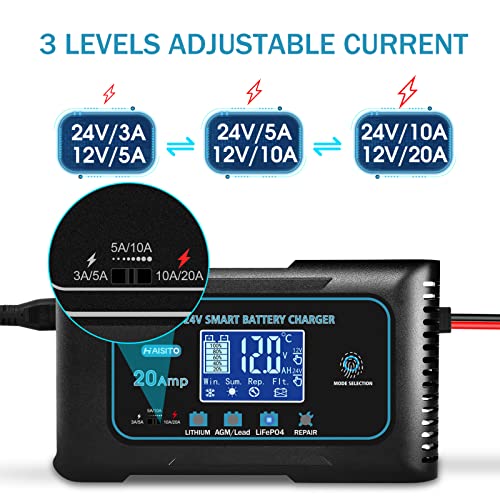
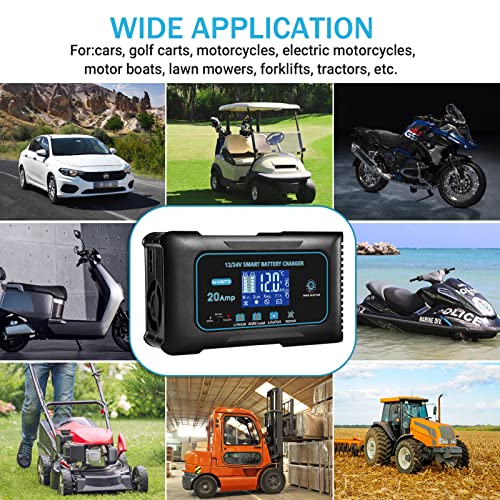




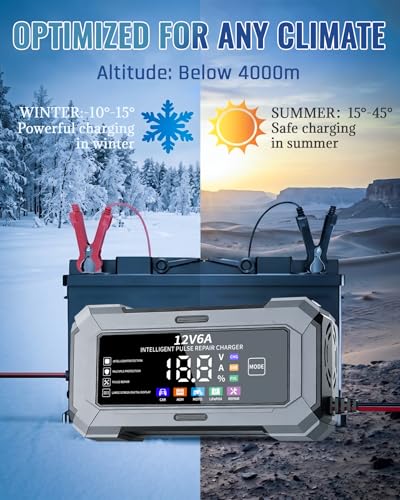

We also considered 10 others:




Our Top Choice
Compare Features


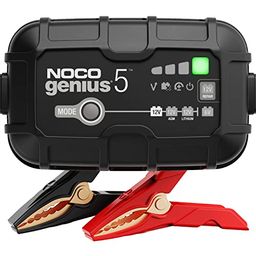
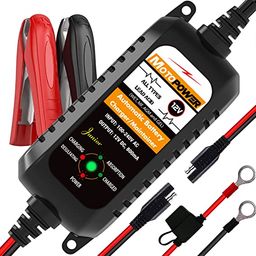


The order above is not editorial opinion, and it is not paid placement. It comes from what shoppers across our network actually do - which dead battery chargers they compare, and which they ultimately buy. We re-rank as new data comes in, so the long-term favorites have to keep earning their spot against new entrants. The full method, including how we make money.
Dead Battery Chargers Buyer's Guide
Dead battery chargers sit between two jobs that need different behavior: reviving a battery that is so low a smart charger may not recognize it, and safely maintaining a battery for weeks or months without overcharging it. The most important checks are chemistry/voltage compatibility, low-voltage recovery capability, and whether the charger is safe to leave connected for the way you actually store vehicles or equipment.
Charging
You want a charger that matches your battery type and size, delivers enough output for the way you’ll use it, and charges reliably without overheating or cutting out too soon. Pay attention to charging speed, boost or jump-start capability if you need it, and whether the charger can maintain, recover, or condition batteries safely rather than simply pushing maximum power.
For a truly dead battery, choose a charger with enough output for the battery size and the right behavior at very low voltage: smart units may refuse to start if they cannot detect the battery, while a manual or dedicated recovery/force mode can be useful for deeply discharged lead-acid batteries. Look for selectable charge rates so you can use higher amperage for a car or truck battery when time matters, then drop to a low-amp maintenance mode for smaller mower, motorcycle, marine, or stored batteries; avoid using a high-amp setting on small batteries unless the manual explicitly allows it. Owner feedback supports this distinction: shoppers often praise fast charging, easy automatic operation, and successful revivals of weak batteries, while manual-style chargers are especially appreciated when smart chargers hesitate on very dead batteries.
Battery
A good charger should protect battery life as much as it restores charge, so look for smart maintenance features like automatic shutoff, float or trickle modes, and safeguards against overcharging or overheating. If you need to revive weak or neglected batteries, recovery or repair modes can help, but they cannot fix every battery, so be wary of chargers that overpromise dramatic capacity restoration.
Match the charger to the battery’s chemistry, voltage, and use pattern before thinking about convenience: flooded lead-acid, AGM, gel, and lithium batteries may require different charge profiles, and a charger meant only for one chemistry can undercharge, overcharge, or damage another. If the goal is storage rather than emergency recovery, prioritize a maintainer with float/maintenance mode, temperature compensation if the battery sits in a cold garage or hot shed, and automatic shutoff to prevent overcharging; if the battery is old and sulfated, treat revival as temporary unless it can still hold charge under load. Owner sentiment backs this up, with many users valuing chargers that keep seldom-used vehicles and equipment ready, extend usable battery life, and prevent premature replacement, while also noting that a revived old battery may not stay healthy forever.
Compatibility
Make sure the charger supports the battery types and sizes you actually use, since the wrong compatibility can mean slow charging, poor fit, or unsafe operation. Look for clear support for your battery chemistry, voltage, and physical format, plus the right ports or clamps for your charging situation. If you charge different devices or vehicles, prioritize versatile charging options, but avoid assuming “universal” means it works with every battery.
Check compatibility at the label level: required input power, 6V/12V/24V support, battery chemistry modes, minimum detectable voltage, and whether the clamps or ring terminals fit the battery posts on cars, motorcycles, powersports equipment, mowers, campers, or marine batteries. Automatic voltage detection is convenient, but for this category it can be a failure point—if a deeply discharged 12V battery is misread as 6V or not detected at all, you need a manual voltage selection or force/recovery mode and a clear display to verify what the charger is doing. Owners often like versatile chargers that handle lead-acid and lithium, show voltage/amperage/charge status, and support charging, maintaining, boosting, or start-assist modes, but some report misidentification or incomplete charging when detection does not work correctly.
Reliability
You want a charger that works consistently every time you connect a battery, because unreliable charging can leave you stranded or force you to keep troubleshooting instead of getting the job done. Look for models known for stable operation, accurate status indicators, and dependable automatic shutoff or maintenance modes, and watch out for complaints about error codes, failed starts, overheating, or chargers that stop recognizing batteries.
Reliability here means safe unattended behavior as much as whether the charger powers on: look for reverse-polarity protection, spark suppression, overcharge protection, thermal protection, and a proven float/maintenance algorithm if it will stay connected for days, weeks, or months. For emergency use, also consider whether the charger reliably starts charging low-voltage batteries rather than timing out, and whether it can handle repeated seasonal use across vehicle and equipment batteries without drifting, overheating, or giving false full-charge indications. Owner reports generally support dependable charging and long-term maintenance performance, with many users saying their chargers keep sitting batteries healthy for years and are simple enough to leave connected after charging when the unit is designed for that use.
Usability
A battery charger should be easy to set up, read, and control so you can connect it correctly and start charging without guesswork. Look for clear clamps or connectors, straightforward mode selection, and a display that shows charging status, errors, and battery condition at a glance. Watch out for chargers with confusing buttons, vague indicator lights, or instructions that make common tasks feel harder than they should.
Prioritize controls and indicators that prevent mistakes: clear 6V/12V/24V and chemistry selection, obvious clamp polarity markings, battery-status or voltage readout, charging-stage indicators, and instructions that explain what to do when the battery is too dead to detect. A dead-battery charger should not force guesswork—automatic operation is helpful, but you still want enough information to know whether it is charging, maintaining, in recovery mode, or refusing the battery for safety reasons. Owners consistently praise plug-in, connect-and-wait operation, automatic reading, charge-percentage displays, indicator lights, shutoff, and included connection accessories, which all reduce the chance of user error.
Build
You want a charger that feels solid enough to handle regular use, storage, and the occasional bump without cracked housings, loose ports, or flimsy clamps. Look for durable cables with enough length to reach comfortably, secure connectors that grip well, and a design that manages heat without getting excessively hot during longer charging sessions.
Choose a build suited to where the charger will actually live: garage and shop units should have durable clamps, strain relief at the cables, a stable case, cooling capacity for higher-amperage charging, and enough cable length to reach a battery safely without stretching leads across sharp metal or hot engine parts. For marine, camper, or outdoor-adjacent storage, check the enclosure rating and corrosion resistance rather than assuming any charger can tolerate damp air; avoid flimsy trickle chargers for frequent recovery of large dead batteries because heat and weak cables become failure points. Owner feedback favors units that feel solid, garage-ready, durable, and well engineered, with confidence-inspiring automatic maintenance modes and long service life.
1,000,000+ shoppers use Buyer's Guide every week to find the best products and services online.

Helping millions of users make smarter purchases online.


