








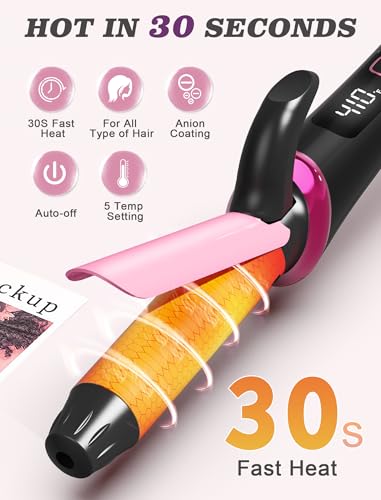


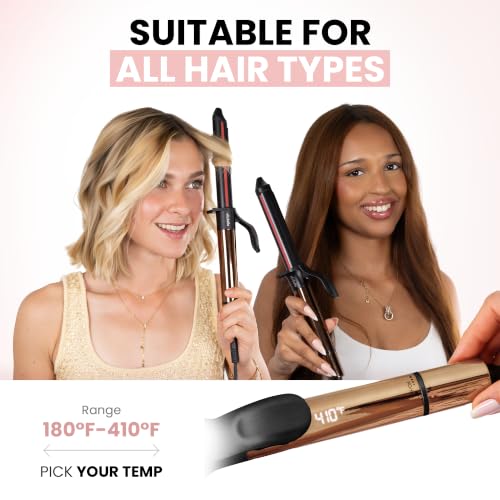


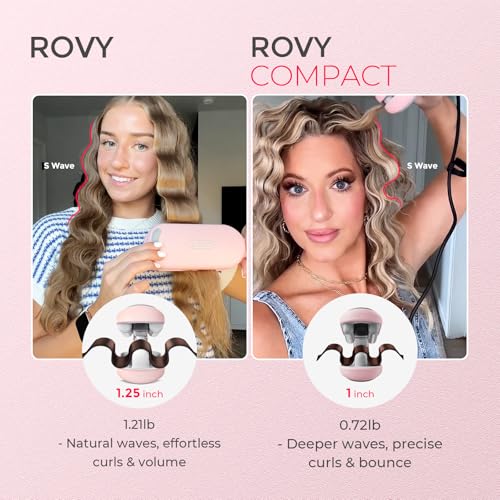


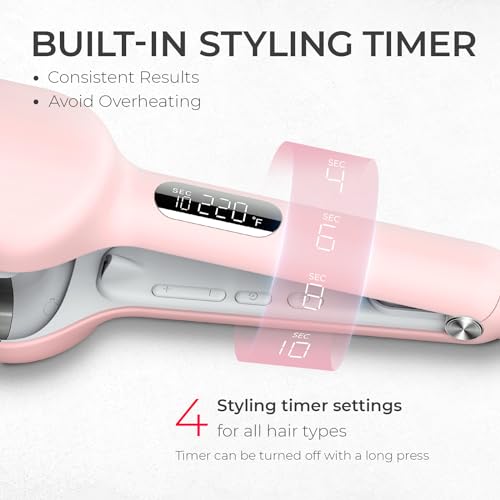


We also considered 10 others:


Our Top Choice
Compare Features


The order above is not editorial opinion, and it is not paid placement. It comes from what shoppers across our network actually do - which curling irons for short hair waves they compare, and which they ultimately buy. We re-rank as new data comes in, so the long-term favorites have to keep earning their spot against new entrants. The full method, including how we make money.
Curling Irons for Short Hair Waves Buyer's Guide
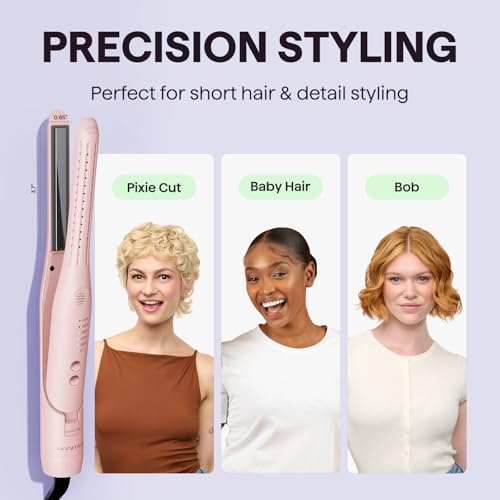
Short hair needs a curling iron that can grab very short layers without turning the style into tight poodle curls or leaving straight, unwrapped ends. The biggest checks are barrel size and control near the scalp: too large a barrel won’t form waves on bobs, pixies, and cropped layers, while poorly insulated tips or awkward clamps raise the risk of burns around ears, neck, and hairline.
Curls
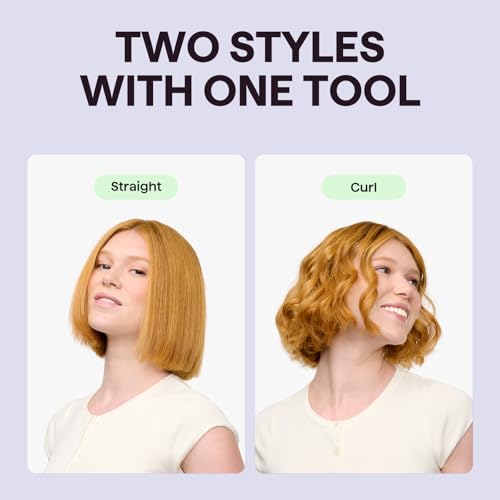
You want a curling iron that can create the curl shape you actually like, whether that’s defined ringlets, loose waves, or polished bends, and leave the finish smooth rather than limp, uneven, or frizzy. Look for consistent curl formation from root to end, enough hold for the style to last, and a barrel design that matches your preferred look; watch out for irons that create hot spots, snag hair, or make curls fall flat quickly.
For short-hair waves, prioritize a small barrel or wand that can make at least a partial wrap on your shortest layers—often around 0.5 to 1 inch depending on whether you want tight definition or brushed-out beach waves. Avoid oversized barrels that need long hair to wrap around them, and look for a smooth barrel, usable clamp or tapered wand shape, and enough heat control to set a curl quickly without scorching exposed ends. Owner feedback supports this: shoppers repeatedly report defined, polished curls, beachy waves, tight ringlets on short hair, and curls that form quickly with only a brief hold.
Hold
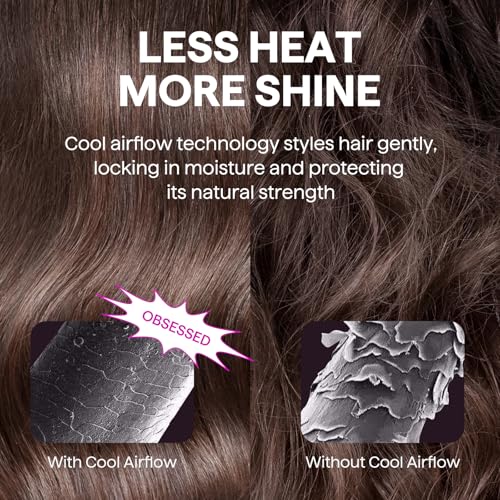
Hold matters because it determines whether your curls or waves keep their shape for the day or fall flat soon after styling. Look for a curling iron that reaches an effective, consistent heat for your hair type and creates smooth, even contact with the barrel, since uneven heat or tugging can shorten curl retention. If your hair is fine, heavy, very straight, or humidity-prone, pay extra attention to temperature control and barrel size, as both can affect curl duration.
For lasting waves on short hair, choose a tool that creates a defined curl first, because short layers often need to be curled tighter and then brushed or finger-combed into a softer wave. Adjustable temperature matters: fine or color-treated short hair may need lower heat to avoid crispy ends, while coarse or very straight hair may need higher, steady heat so the wave does not drop immediately. Owner sentiment lines up with this guidance, with many buyers saying curls hold through the day, remain after brushing into softer waves, and in some cases last until the next wash.
Ease
A curling iron that’s easy to use helps you style more consistently without fighting the tool, especially when wrapping hair, adjusting heat, or reaching the back of your head. Look for intuitive controls, a comfortable grip, a cord that doesn’t get in the way, and a clamp or barrel design that matches your styling habits. Watch out for buttons you might accidentally press, awkward weight balance, or controls that are hard to read while the iron is hot.
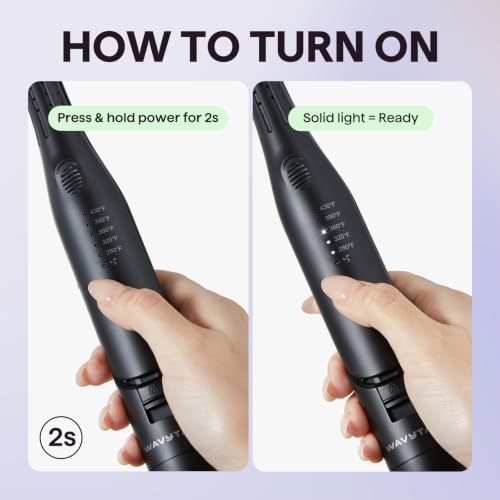
For ease on short hair, look for a compact, lightweight tool that is easy to maneuver at the crown, nape, bangs, and around the ears; a swivel cord, simple controls, cool tip, and comfortable handle are more important here than a bulky salon-size body. If considering an automatic or rotating design, make sure it can actually catch short sections without tangling or leaving the roots flat; if choosing a clipless wand, a heat glove becomes much more important because your fingers work close to the barrel. Owners reinforce these priorities by praising small, easy-to-handle tools for pixies and very short hair, quick heat-up, comfortable use, beginner-friendly controls, rotating cords, and designs that reduce the learning curve.
Build
A well-built curling iron should feel solid in your hand, with sturdy controls, a secure barrel, and a cord that doesn’t seem flimsy or prone to fraying. Good quality and durability matter because heat tools are handled often, dropped occasionally, and exposed to high temperatures, so weak hinges, loose buttons, uneven clamps, or cheap plastic can lead to unreliable performance or early failure.
For build quality in this niche, inspect the parts that affect short-section control: a clamp that closes evenly, a barrel coating that does not snag fragile ends, a stable kickstand, a cool tip, a burn-resistant handle, and secure attachment locks if it is a set. Short hair puts the hot barrel closer to skin, so flimsy stands, slippery handles, exposed hot edges, or awkward seams are bigger problems than they might be on long hair. Owner feedback is generally supportive, with buyers describing sturdy, capable tools, lightweight bodies, straightforward controls, burn-resistant handles, included gloves, and dependable performance that feels strong for the money.
Speed
Speed matters because a curling iron that heats up quickly can save you time and make styling easier when you’re getting ready in a hurry. Look for consistent heat recovery as you work through sections, not just a fast warm-up, since drops in temperature can lead to uneven curls or extra passes. Be wary of irons that get hot fast but lack clear temperature control or safety features, especially if your hair is fine or damage-prone.
For speed, choose fast heat-up plus efficient curl formation, but do not treat maximum heat as the shortcut—short hair exposes the scalp and ends, so a tool that curls in a few seconds at the right adjustable temperature is safer than one that simply gets extremely hot. Timers, beeps, or rotating/automatic barrels can help with consistency, especially when working around the back of a bob or pixie, but only if the chamber or clamp accepts shorter sections cleanly. Owners commonly praise quick warmup, fast section-by-section curling, brief barrel contact, automated curling, timed cues, and adjustable settings that make daily touchups feel less time-consuming.
Value
A curling iron’s value comes down to whether its heat performance, build quality, and ease of use justify what you spend. Look for consistent temperature control, durable materials, and features you’ll actually use, rather than paying extra for attachments or settings that do not improve your routine. Watch out for very cheap options that heat unevenly or wear out quickly, since they can cost more in frustration and replacement over time.
For value, do not pay for a large multi-tool set unless the included barrels actually suit short hair; one well-controlled small-barrel iron may be more useful than several oversized attachments. The best-value package for this category includes the right barrel size, adjustable heat, a safe grip, swivel cord, stand, auto shutoff if available, and ideally a glove—features that prevent burns and make short layers easier to style. Owner sentiment supports the idea that shoppers find strong value when tools feel sturdy, perform reliably, include useful safety accessories, offer multiple genuinely useful styling options, and produce lasting results without requiring a premium spend.
1,000,000+ shoppers use Buyer's Guide every week to find the best products and services online.

Helping millions of users make smarter purchases online.


